

Handheld Oscilloscope METRIX
A Quick Look at Handheld Oscilloscopes in 2026
In electronics repair and circuit development, an oscilloscope is the tool used to visualize waveforms and signal noise. Handheld models introduced over the past few years allow users to carry them directly to the job site and perform quick checks without setting up a large bench-top unit. Despite their compact size, these instruments now play an important role in many daily tasks of technical professionals.
We can clearly see strong competition among well known and widely used brands. These include Keysight, Fluke, OWON, Rohde & Schwarz, and Hantek. Each brand follows a different approach, yet all share the same goal of helping users observe signal behavior wherever they work.
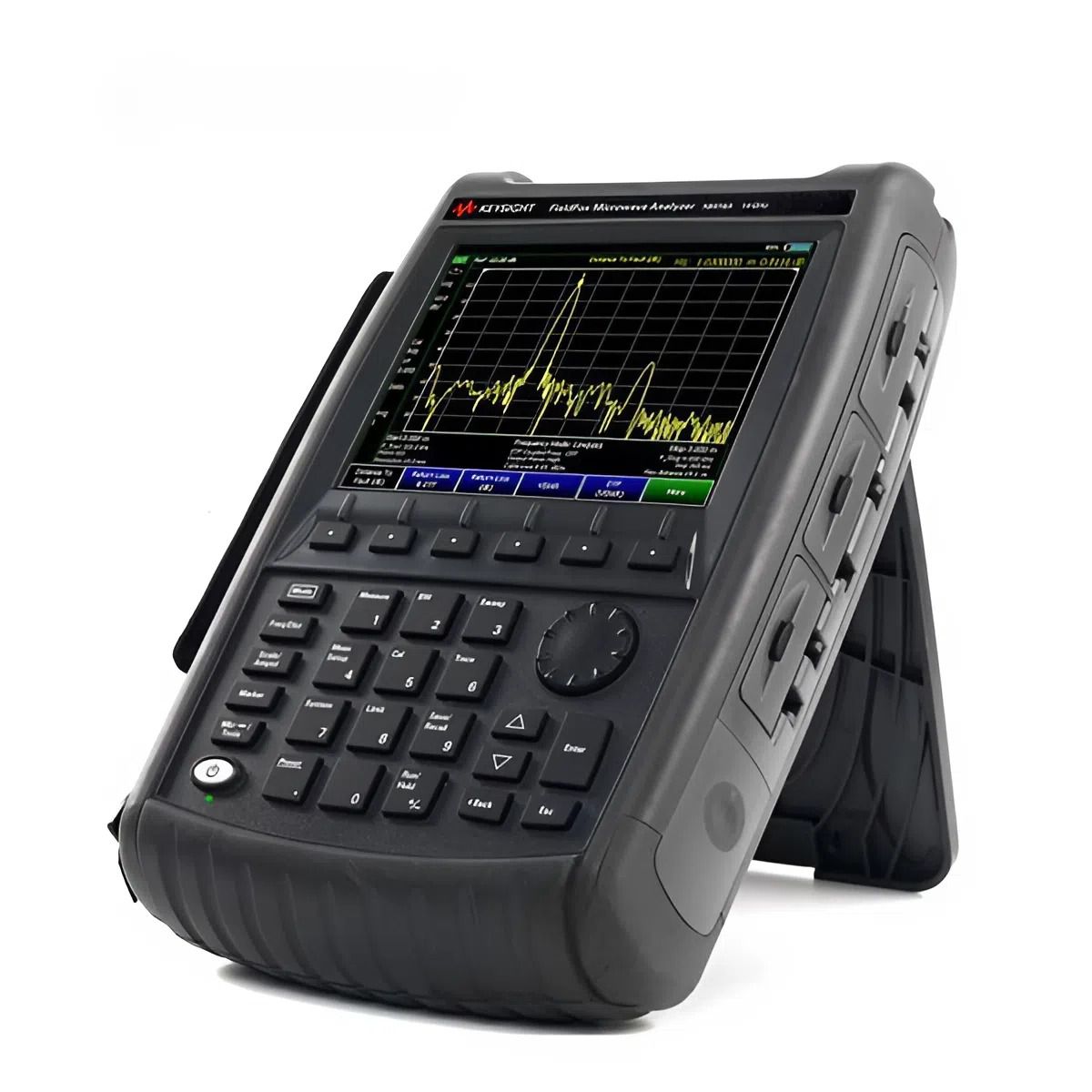
Do handheld oscilloscopes really shut down unexpectedly during measurement
One common concern is that a handheld oscilloscope may suddenly lose power or shut down while measuring. In practice, there is little reason to worry. Modern handheld oscilloscopes use lithium batteries with sufficient capacity to operate continuously for about four to six hours. Sudden shutdowns usually occur when the screen brightness is set too high or when multiple heavy analysis functions run at the same time while the battery level is overlooked. Another factor is that some older models lack thermal protection modes, causing the instrument to protect itself by powering off when overheated.
Handheld oscilloscopes from Fluke and OWON support charging via USB Type C. In field work, you can carry a power bank compatible with smartphones, allowing you to measure and recharge at the same time without interrupting the inspection process.
Does a small screen make waveform viewing difficult
A frequent question is whether a small screen makes it hard to view complex waveforms. With high resolution displays and improved panels, waveforms now appear clear rather than blurred or jagged.
On newer generations from Rohde & Schwarz and Hantek, touchscreens allow users to zoom into areas of interest, rotate the display orientation, and adjust settings directly on the screen. A display size of around five to seven inches is sufficient for monitoring waveforms in tight spaces such as electrical cabinets or on engine components.
Is the difference between handheld and bench oscilloscopes significant
Many people still believe that bench oscilloscopes always deliver better results than handheld ones. The factor that determines measurement quality is not simply the physical size of the instrument, but whether the bandwidth and sampling rate match the signal being observed.
If your work involves inverter repair, automotive sensor checks, or fault inspection on industrial boards, handheld models typically offer bandwidth specifications several times higher than the required signal range. In such cases, the displayed waveform closely reflects real signal behavior. The main difference lies in handling multiple channels simultaneously or performing complex mathematical processing, which is rarely required in field conditions.
Read more
Why should you buy a handheld oscilloscope?
-
-
-
-
-
-
-
-
-
-
-
-
-
-
-
-
-
-
-
-
-
-
-
-