

Moisture Meter for Agriculture PCE
Agricultural Moisture Meters for Quality Control and Production Optimization
In agricultural cultivation and procurement, the moisture content of grains is a key factor that directly affects storage conditions and end use value. When moisture exceeds allowable levels, the risk of mold growth, deterioration, and material loss increases rapidly. Agricultural moisture meters are used to monitor this parameter either directly in the field or during raw material inspection.
The device provides practical benefits for producers and processing facilities.
• Identify suitable harvest timing to reduce post harvest losses
• Quickly check the moisture condition of agricultural products before storage
• Actively select appropriate drying and storage methods for each type of grain
As a result, the production process can be better controlled from the very beginning.
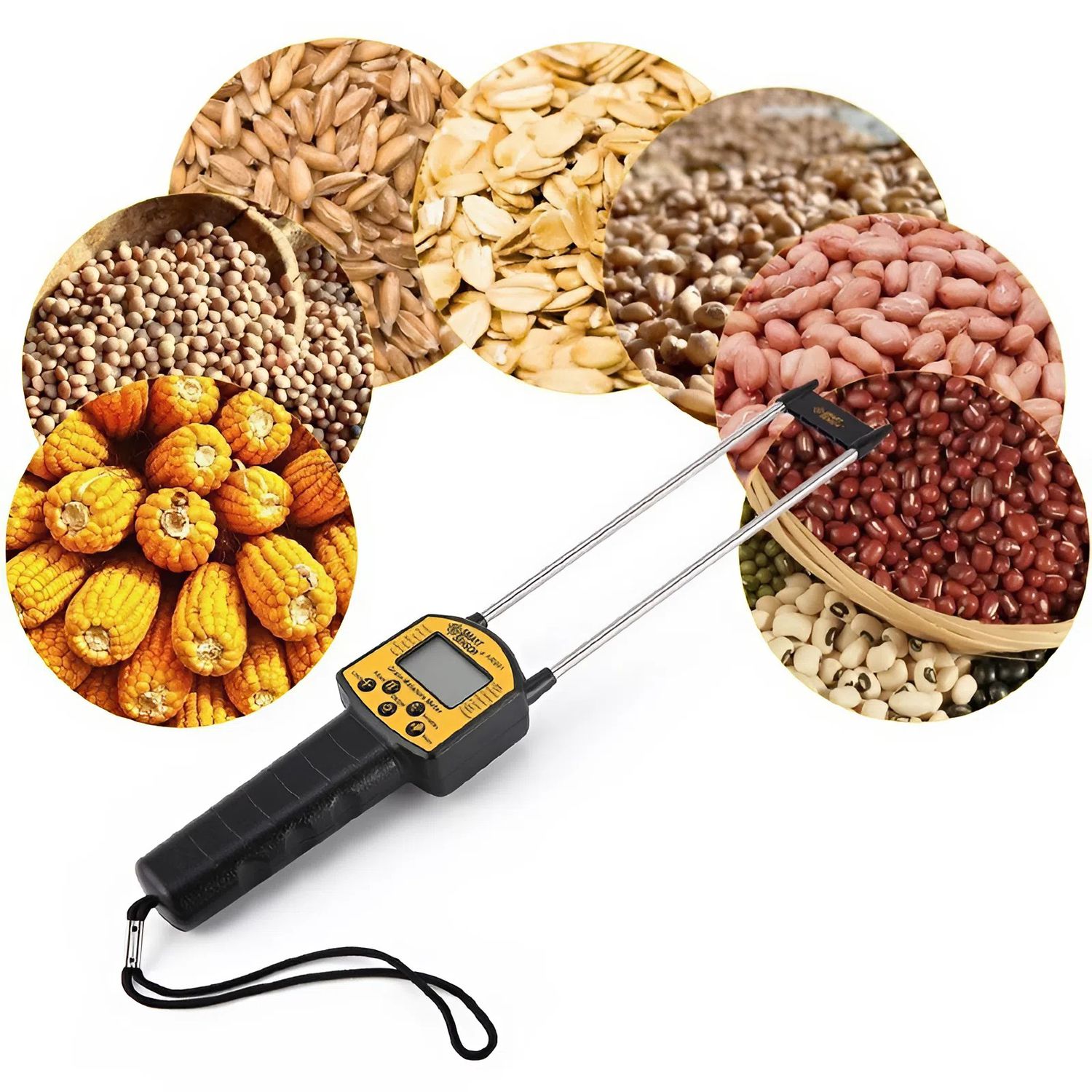
Operating Principles of Agricultural Moisture Meters
To determine the water content in grains, agricultural moisture meters may operate based on one of the following principles.
1. Electrical Resistance Principle
When the water content in grains changes, their electrical resistance changes accordingly. The instrument uses this variation to display the measurement result.
2. Capacitance Principle
Moisture affects the ability of a material to store electric charge. The capacitive sensor detects this change and converts it into a measured value.
3. Loss on Drying Method
The sample is dried under defined conditions. The mass loss after drying reflects the amount of water contained in the agricultural product.
Each method is suitable for different usage requirements.
Common Types of Agricultural Moisture Meters
Depending on the working environment and measurement purpose, users can select an appropriate type of instrument.
1. Direct Moisture Meters
The sample is inserted directly into the device for testing. This method usually provides fast and convenient results.
2. Indirect Moisture Meters
The sensor is positioned outside the sample. This type is suitable for situations where direct sampling is not possible.
3. Handheld Moisture Meters
Compact in size and easy to carry, suitable for use in the field or at procurement points.
4. Benchtop Moisture Meters
Commonly used in quality inspection rooms or processing facilities, meeting the need for repeated measurements under strict control requirements.
Benefits of Using Agricultural Moisture Meters
Equipping moisture meters brings practical value to production and processing activities.
• Significantly reduced inspection time
• Simple operation and easy familiarization
• Suitable for a wide range of agricultural products
• Reduced risk of damage caused by high moisture levels
With effective moisture control, production and storage efficiency are clearly improved.
Product References:
For coffee measurement, refer to: G-won GMK-303C Coffee Bean Moisture Meter (6.5~21.0%)
For agricultural grains: PCE GMM 10 Grain Moisture Meter (6~40%, ± 0.5%)
For cereal moisture measurement: Kett PT-2756 Grain Moisture Meter
Applications of Agricultural Moisture Meters
The device is widely used across various sectors.
- In agriculture: Monitoring moisture levels of rice, paddy, corn, beans, coffee, and cashew nuts during harvesting and storage.
- In the food industry: Inspecting incoming raw materials to ensure suitable processing conditions.
- In processing operations: Monitoring product moisture before packaging or dispatch.
-
-
-
-
-
-
-
-
-
-
-
-
-
-
-
-
-
-
-
-
-
-
-
-