

Thread Ring Gage INSIZE
Why are Thread Ring Gauges the Standard in QC?
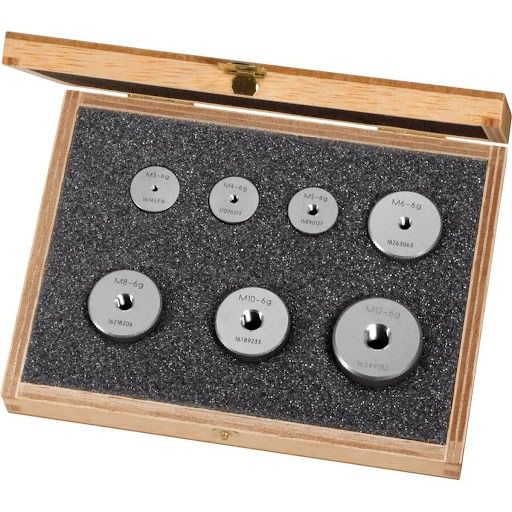
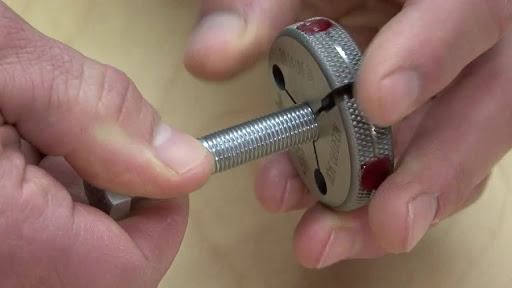
A standard external thread ring gauge set typically consists of two separate rings. The "Go" ring is designed according to the maximum material limit of the thread, requiring the part to screw in smoothly across its entire length. Conversely, the "No-Go" ring represents the minimum limit; if the part screws in more than two turns, it means your product has been over-machined.
Using these gauges eliminates human subjectivity. You don't need to read tiny numbers on a scale; simply sensing the rotation of your hand is enough to know if the part meets the standard.
According to the ISO 1502 standard, thread ring gauges must inspect the thread flanks and lead with tight tolerances of 0.01mm. You should clean the threads with alcohol before use to prevent dust from skewing the results. A temperature of 20°C is mandatory for maximum measurement accuracy.
Key Considerations When Using Thread Gauges
Material Selection and Hardness
High-quality external thread ring gauges are usually made from special alloy steel, heat-treated to a hardness of 58-62 HRC. This hardness is critical because every time you screw a part into the gauge, friction wears down the thread peaks. For example, the INSIZE 4129-16R (for M16x1.5mm threads) is made from HRC60 hardened steel with a GO/NO-GO error margin of only 0.002mm, making it perfectly suited for automotive hydraulic cylinders.
Using gauges with finely treated surfaces minimizes wear-related errors. Notably, the Sub-zero heat treatment process stabilizes the steel structure, preventing the gauge from deforming due to environmental temperature changes—a technical factor many often overlook.
Tips for Purchasing Standard Thread Gauges
In a market crowded with various measuring devices, finding an external thread ring gauge with the correct color coding and precise specifications can be challenging for newcomers.
Verify Origin and Calibration Certificates
A standard gauge must come with a calibration certificate from the manufacturer or a reputable metrology agency. You should prioritize long-standing brands like Insize or Niigata Seiki, where every gauge is strictly inspected for pitch and crest angle before leaving the factory.
Proper Maintenance
The most common mistake is allowing dust or metal shavings to accumulate on the gauge during measurement. Before threading a part into the gauge, ensure both the part and the gauge are cleaned with specialized oil. After use, applying a thin layer of anti-rust oil is mandatory to prevent oxidation.
-
-
-
-
-
-
-
-
-
-
-
-
-
-
-
-
-
-
-
-
-
-
-
-