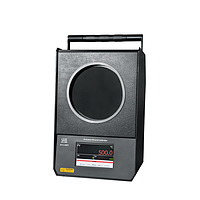
Dry block, Bath calibrator
Accurate temperature verification often depends on choosing the right calibration method for the sensor, process range, and working environment. For maintenance teams, laboratories, and instrument technicians, Dry block, Bath calibrator systems provide practical ways to compare probes, RTDs, thermocouples, and other temperature instruments against a stable reference source.
This category covers solutions used for contact temperature calibration across low, medium, and high temperature ranges. Depending on the application, users may prefer a dry block for portability and faster setup, or a liquid bath for better immersion conditions, higher uniformity, or support for multiple probes in the same test.
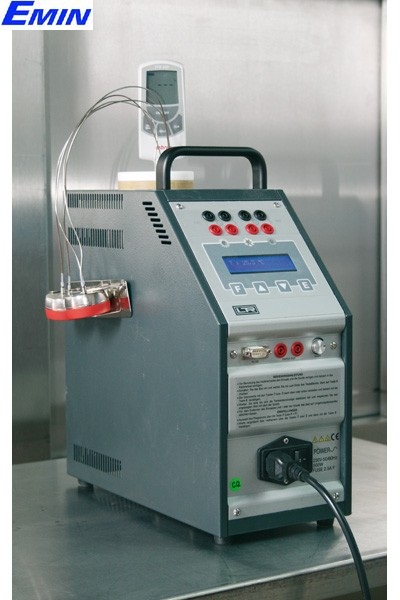
Where dry block and bath calibrators fit in temperature calibration
These instruments are widely used when a temperature sensor must be checked, adjusted, or compared under controlled thermal conditions. Typical use cases include calibration of Pt100 sensors, RTDs, thermocouples, process probes, transmitters with temperature input, and field instruments used in manufacturing, utilities, food processing, pharmaceuticals, and test laboratories.
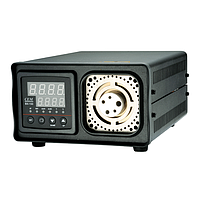
A dry block calibrator heats or cools a metal block with precision-machined wells, allowing direct insertion of probes. A bath calibrator uses a liquid medium to improve thermal contact and immersion characteristics, which can be especially helpful for irregular probe shapes, multiple sensors, or applications requiring strong temperature uniformity through the immersed section.
Dry block or bath: how to choose the better approach
Dry block units are often selected when portability, clean operation, and ease of use matter most. They are convenient for on-site calibration because there is no liquid handling, startup can be straightforward, and interchangeable inserts help support different probe diameters. For field service or plant maintenance, this format is usually the faster option.
Bath calibrators are often preferred when the sensor under test benefits from deeper immersion, better heat transfer, or comparison of several probes at once. They can be especially useful for low-temperature work and for probes that do not fit standard dry block insert sizes. If your work frequently involves difficult geometries or high-accuracy comparative measurements, a liquid bath may be the more suitable choice.
For buyers who want to compare adjacent product types, it can also be useful to review dedicated dry block calibrator options or browse separate blackbody calibrators for infrared thermometer and thermal imaging applications.
Important selection criteria for B2B buyers
Temperature range is usually the first filter. Some applications focus on low-temperature validation near sub-zero conditions, while others require elevated process temperatures or furnace-level calibration. In this category, examples range from low-temperature bath systems such as the BalunTech BL633-60A to high-temperature dry block style equipment like the PCE DBC 650, which is suited to demanding upper-range sensor work.
After range, buyers should look at stability, uniformity, resolution, insert or well dimensions, heat-up and cool-down time, and physical portability. These factors affect not only achievable uncertainty, but also how practical the calibrator will be in day-to-day use. For production environments, interface options, data storage, and power requirements may also matter when the instrument is part of a documented calibration workflow.
- Range: match the full operating span of the sensor or process point.
- Stability and uniformity: important for repeatable comparison and lower uncertainty.
- Well or aperture size: must fit the sensor diameter and immersion depth requirements.
- Mobility: portable units suit field service, while larger systems suit laboratory setups.
- Interface and records: useful for traceability and documented calibration procedures.
Examples of equipment found in this category
The product mix in this category shows how different calibration tasks require different source designs. The PCE DBC 650 from PCE represents a high-temperature calibrator/simulator format with broad operating capability, touch display control, internal memory, and multiple sensor opening sizes in the insert. This type of instrument is relevant when users need a compact source for elevated temperature sensor verification.
For low-temperature bath work, BalunTech models such as the BL633-10A and BL633-60A illustrate liquid bath calibration for applications extending below ambient temperature while maintaining fine resolution and strong stability. These are better aligned with users who need immersion-based comparison rather than dry insert-based testing.
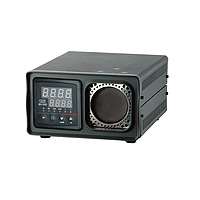
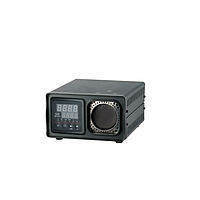
Although some listed products in the wider temperature calibration ecosystem serve different purposes, they help clarify category boundaries. For example, the Triplett PCAL100-NIST is a signal-based temperature calibrator rather than a dry block or bath source, while several BalunTech blackbody models are intended for non-contact infrared calibration. If your work includes radiation thermometry, the BalunTech brand page can provide broader context across related calibration technologies.
Typical applications in industry and laboratories
Dry block and bath calibrators are common in preventive maintenance programs, instrument workshops, and quality systems where temperature sensors must be checked on a routine schedule. They support incoming inspection, loop verification, shutdown maintenance, and post-repair calibration of temperature probes used in machines, ovens, pipelines, tanks, and controlled process equipment.
In laboratory and metrology settings, bath systems can support comparison methods where several probes are immersed together with a reference thermometer. In industrial settings, dry block systems are often chosen for their convenience when technicians must move between calibration points. The best choice depends less on product format alone and more on the combination of required uncertainty, temperature span, sensor geometry, and available working time.
Why temperature range and immersion matter so much
One common purchasing mistake is selecting by maximum temperature alone. In practice, the effective calibration result also depends on immersion depth, the thermal mass of the sensor, stem conduction effects, and the difference between source stability and actual sensor equilibrium. A unit with the right range but poor fit for the probe may not deliver the consistency the user expects.
This is why insert dimensions, bore size, well depth, and bath volume deserve close attention. A low-temperature bath with adequate immersion can be more effective for long or sensitive probes, while a high-temperature dry block can be ideal for rugged industrial sensors that need fast, repeatable checks. Understanding the sensor type and the real calibration method is usually more important than comparing headline numbers alone.
Choosing a manufacturer based on workflow, not just brand name
Different buyers prioritize different things: portable service use, broader process coverage, laboratory-style comparison, or integration into documented calibration routines. This category includes manufacturers such as PCE, Triplett, and BalunTech in representative products, while the broader portfolio also references established names including Fluke (Calibration), Additel, Julabo, OMEGA, and Cole parmer.
For procurement teams, a practical approach is to define the required range, media preference, portability, and documentation needs first, then compare available models within those constraints. That usually leads to a better fit than starting from brand preference alone, especially when the application may call for a dry block, a bath, or even a separate infrared calibration method.
Final considerations before ordering
Before selecting a unit, confirm the sensor types you need to calibrate, the target temperature points, the expected immersion depth, and whether the work will be done in the field or in a controlled lab environment. It is also worth checking power supply, physical size, warm-up behavior, and whether multiple probes must be tested together.
A well-matched dry block or bath calibrator can simplify routine verification, improve repeatability, and support more reliable temperature measurements across the process. By focusing on calibration method, usable range, and probe compatibility, buyers can choose equipment that fits real operating needs rather than just a specification sheet.
Get exclusive volume discounts, bulk pricing updates, and new product alerts delivered directly to your inbox.
By subscribing, you agree to our Terms of Service and Privacy Policy.
Direct access to our certified experts