Safety Boot
Foot protection becomes critical as soon as the work area includes slipping hazards, sharp debris, wet floors, heavy materials, or uneven outdoor ground. In these environments, choosing the right Safety Boot is not only about compliance but also about day-to-day comfort, durability, and reducing the risk of preventable injuries across industrial and utility operations.
This category brings together safety wellington and protective boot options suited to demanding workplaces where impact resistance, underfoot protection, and practical wearability matter. Whether the requirement is for general site work, maintenance tasks, or wet-area use, the right pair should match both the hazard level and the working conditions.
Where safety boots are commonly used
Protective footwear is widely used in factories, warehouses, construction support areas, utility work, maintenance environments, and outdoor industrial sites. In many of these settings, workers are exposed to dropped tools, puncture risks, slippery surfaces, and long hours on their feet, making proper footwear a basic part of personal protective equipment.
Safety wellington boots are especially relevant where water, mud, cleaning chemicals, or wet process areas are involved. Their enclosed design can help support routine work in harsher conditions where standard work shoes may not provide enough coverage or resilience.
Key points to consider when selecting a safety boot
The first step is to look at the actual hazard profile of the workplace. Some users primarily need toe protection from impact, while others also require underfoot resistance against sharp objects on the ground. In wet or outdoor applications, the boot style itself can also be just as important as the protection rating.
Material, fit, sole grip, and expected wearing duration should also be reviewed carefully. A boot that offers suitable protection but is uncomfortable over a full shift may affect worker mobility and compliance. For that reason, buyers often compare not only certification-related features but also practical factors such as ease of cleaning, flexibility, and suitability for site conditions.
Understanding common protection features
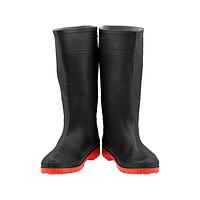
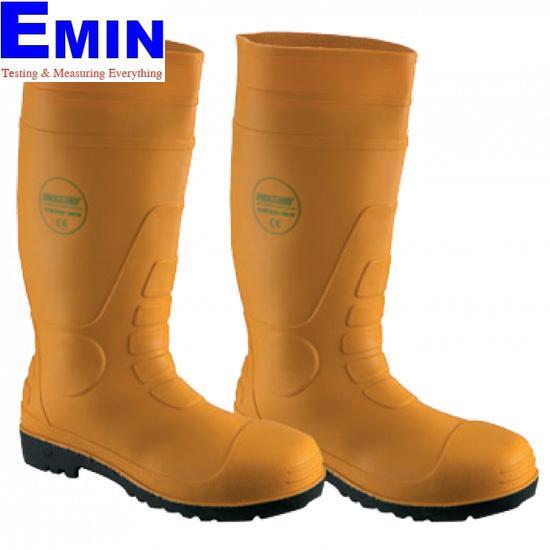
Many industrial users look for a combination of toe protection and underfoot protection in one product. For example, the PROGUARD R219MSTC Safety Wellington Boot is listed with a steel toe cap and steel midsole, making it relevant for workplaces where both falling-object and puncture-related risks need to be considered.
The same model is also noted as complying with EN 20345, a commonly referenced footwear standard in workplace safety. When evaluating products in this category, it is useful to confirm whether the required level of protection aligns with site policy, risk assessment, and the real operating environment rather than choosing only by appearance or price point.
Examples from this category
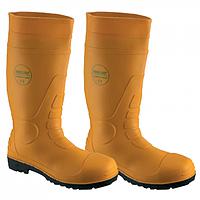
For buyers seeking recognizable options in protective footwear, PROGUARD is represented here by the PROGUARD R219MSTC Safety Wellington Boot. Its wellington-style format makes it a practical reference point for wet, dirty, or outdoor industrial conditions where easy cleaning and lower-leg coverage may be beneficial.
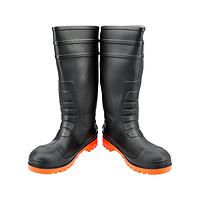
This category also includes the Helios UBH-CN-069 Safety Wellington Boot from Helios. While product selection should always follow the site-specific hazard assessment, having more than one manufacturer option can help procurement teams compare design preferences, fit expectations, and application suitability within a similar protective footwear range.
How safety boots fit into a broader workplace protection setup
Protective footwear rarely works in isolation. In many industrial and utility settings, it is one part of a wider safety framework that may also include hand protection, electrical protection, and emergency preparedness. For example, jobs around electrical systems may require users to review related products such as insulating gloves and insulating boots where the application specifically calls for electrical insulation rather than general mechanical foot protection.
Likewise, site safety planning often extends beyond footwear to response readiness and area protection. Depending on the work environment, teams may also review first aid supplies as part of a more complete protection strategy for maintenance crews, field teams, and industrial operators.
Choosing for procurement, maintenance, and operational consistency
For B2B purchasing, selecting safety boots is often about more than one-off buying. Consistency across teams can simplify training, replacement cycles, and PPE management, especially where multiple workers operate under similar site rules. Standardizing around appropriate boot types can also help reduce confusion about what is suitable for different areas of a plant or project.
It is also useful to consider cleaning routines, storage conditions, replacement frequency, and the typical environments where the boots will be worn. Wellington-style safety boots may be particularly relevant when footwear is regularly exposed to moisture, mud, or contamination that requires quick washdown and repeat use.
Find the right safety boot for your application
A suitable safety boot should reflect real workplace hazards, not just a generic footwear requirement. By comparing protection features, work conditions, and manufacturer options, buyers can narrow the selection to products that support both safety performance and practical daily use.
In this category, products such as the PROGUARD R219MSTC Safety Wellington Boot and Helios UBH-CN-069 Safety Wellington Boot provide useful starting points for industrial footwear sourcing. If your application involves wet environments, impact risks, or underfoot hazards, reviewing the available models in this range can help identify a more appropriate solution for your team.
Get exclusive volume discounts, bulk pricing updates, and new product alerts delivered directly to your inbox.
By subscribing, you agree to our Terms of Service and Privacy Policy.
Direct access to our certified experts