Panel Meters
When operators need fast, at-a-glance visibility inside an electrical cabinet or control panel, a clear local display is often the simplest and most reliable solution. Panel meters help turn electrical or process signals into readable values at the point of use, making them useful for machine builders, maintenance teams, and small to mid-size industrial systems.
On this page, you can find panel-mounted display instruments suited for monitoring current, voltage, and related control signals. The range includes compact loop-powered models for standard 4 to 20 mA applications as well as programmable touchscreen units for more flexible visualization and control-oriented monitoring.
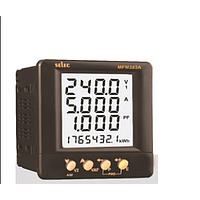
Where panel meters are typically used
These instruments are commonly installed in control cabinets, operator panels, utility skids, production equipment, and building automation enclosures. Their main role is to provide local indication so technicians can verify operating conditions without connecting a laptop or opening a software interface.
In practice, panel meters are often selected for monitoring DC voltage, loop current, scalable analog signals, or simple alarm-related values. For applications focused more specifically on signal display and scaling, you may also want to review process indicators as a related category.
Common panel meter types in this category
The selection shown here reflects several practical design approaches. Some models are straightforward digital displays built for compact installation and routine signal readout, while others add touchscreen interfaces, programmable scaling, and support for multiple input types.
A compact example is the Dwyer DPMF Flush Mount LCD Digital Panel Meter, which is suited to 4 to 20 mA loop monitoring where space is limited and low-power operation matters. For users who need a larger, more configurable display, models such as the Dwyer SPPM-35, SPPM-28, and SPPM-24 series provide color touchscreen interfaces for voltage or current monitoring in panel-mounted systems.
At the higher end of visualization, the Dwyer SPPM2-43 and SPPM2-43-D illustrate how a panel meter can become part of a broader control and monitoring concept, with color display, multiple input support, digital I/O, and communication capability. That makes them relevant when a simple numeric readout is no longer enough.
How to choose the right meter for your panel
The first step is to match the instrument to the signal you actually need to display. In this category, common inputs include voltage input, current input, and 4 to 20 mA loop signals. Choosing the correct input type from the start helps avoid unnecessary signal conversion and simplifies commissioning.
Mounting style is the next practical consideration. Most products here are intended for panel mounting, but the physical form still varies, from flush-mount compact units to larger touchscreen meters. In retrofit projects, the available cutout space and front-panel visibility are often just as important as electrical specifications.
Display format also affects day-to-day usability. Traditional segmented LCD meters work well for stable numerical indication, while color touchscreen displays are more suitable when operators need clearer visualization, easier scaling setup, or access to several monitored values from one device.
Features that matter in industrial operation
A good panel meter should be easy to read, easy to wire, and stable enough for routine industrial use. Important selection factors often include display size, update rate, power supply method, and terminal style. In many cabinets, screw terminals and standard DC supply ranges are preferred because they speed up installation and maintenance.
Some units in this category are powered directly from the loop, which can be useful in simple 4 to 20 mA systems with minimal wiring. Others are externally powered and offer broader functionality, including programmable display scaling, alarm outputs, or communication options such as RS232 on selected models.
If your application requires broader scaling and signal handling rather than simple indication alone, it may also be helpful to compare these products with process meters, especially in systems where analog values need more advanced interpretation or operator interaction.
Examples from the current product range
Dwyer is one of the most visible manufacturers represented in the featured products for this category. The product mix spans from compact LCD indicators to more advanced smart programmable touchscreen meters, giving buyers options for both basic cabinet monitoring and more configurable HMI-style display tasks.
For simple loop-powered indication, the Dwyer DPMF and selected DPML models are a practical fit where a stable digital readout of current or voltage is the main requirement. The DPML series, for example, is relevant when users want a traditional panel format with digit-based display and straightforward front-panel readability.
For modernized control panels, the SPPM series is better aligned with applications that need graphical display, scalable inputs, and touchscreen interaction. The SPPM-35-C, SPPM-28-C, and SPPM-24-C focus on current-based monitoring, while the SPPM-35, SPPM-28, and SPPM-24 variants shown here are oriented toward voltage monitoring. The SPPM2-43 models go further by supporting a wider mix of voltage, current, and digital I/O signals.
Panel meters versus other indicator categories
Although the categories can overlap in real-world use, panel meters are usually selected when the priority is fixed installation in a machine or cabinet door with a dedicated local display. They are especially useful where operators need continuous visual feedback without depending on external software or a separate portable instrument.
In applications centered on thermal monitoring, a more targeted option may be temperature meters and indicators. The right category depends on whether you are primarily displaying electrical signals, process values, or temperature-specific measurements.
This distinction helps buyers narrow down the selection faster. Instead of treating every display instrument as interchangeable, it is better to define the signal type, installation location, and level of user interaction required at the panel.
Practical buying considerations for B2B projects
For OEM builds, maintenance replacements, or panel shop integration, it is worth checking a few details before ordering: input signal range, supply voltage, mounting style, display readability, and whether any alarm or communication function is needed. These factors affect not only compatibility but also long-term serviceability.
It is also helpful to think about who will use the meter. A maintenance technician may only need a clear numeric display for quick verification, while an operator-facing machine panel may benefit from a larger color interface that simplifies status checking and setup. That difference often determines whether a compact LCD meter or a programmable touchscreen model is the better fit.
For projects that may expand later, choosing a meter with configurable scaling or communication support can reduce redesign work. At the same time, simpler loop-powered or fixed-function displays remain a strong option when reliability, cost control, and easy replacement are the top priorities.
Choosing with confidence
The right panel meter depends less on having the most features and more on matching the device to the signal, panel layout, and operator needs. Whether you are specifying a basic 4 to 20 mA display or a more advanced touchscreen meter for control and monitoring, a well-chosen local indicator can make troubleshooting faster and everyday operation more transparent.
Use this category to compare display styles, input types, and mounting formats across available models. A clear understanding of the application will usually lead to a better selection than simply choosing the most complex unit on the page.
Get exclusive volume discounts, bulk pricing updates, and new product alerts delivered directly to your inbox.
By subscribing, you agree to our Terms of Service and Privacy Policy.
Direct access to our certified experts