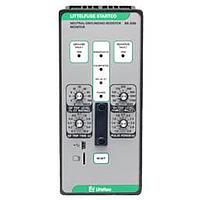
Safety relay
Protecting motors, operators, and control circuits requires more than simple switching. In many industrial panels, a relay is expected not only to respond to a signal, but also to help isolate faults, detect abnormal current conditions, and support safer system behavior during overload events or abnormal machine states. That is where Safety relay solutions become relevant in practical machine and panel design.
Within this category, buyers typically look for devices that fit industrial control applications where dependable relay behavior and protection logic matter. The selection shown here is especially relevant for motor-related protection scenarios, with several OMRON models designed for 3-phase motor protection and overcurrent monitoring across different current setting ranges.
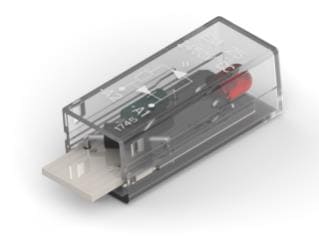
Where safety relays fit in industrial control systems
In automation environments, relays are used for far more than basic on/off control. They can support monitoring functions, protective shutdown logic, and interface duties between field devices and the control cabinet. A safety-focused relay category is therefore relevant when the goal is to reduce risk, detect unsafe electrical conditions, or improve the reliability of protective actions.
For users comparing relay technologies across a broader control system, it can also help to review related options such as industrial relays and accessories, especially when building a complete relay architecture that includes protection, signaling, and general-purpose switching in the same panel.
Typical applications for this category
These products are commonly considered in motor control panels, pump systems, conveyors, process equipment, and other installations where a 3-phase motor must be monitored for abnormal current conditions. In these environments, a relay may act as part of a protective chain that helps prevent prolonged overload, nuisance downtime, or damage to connected equipment.
Because application requirements vary, engineers usually match the relay to the motor’s operating current range, the expected trip behavior, and the overall control design. This is particularly important in systems where compact integration is preferred and where an integrated current transformer can simplify panel layout and device selection.
OMRON examples in this safety relay range
This category includes multiple OMRON motor protection relay models that illustrate how current range selection affects product suitability. Examples include the OMRON K2CU-F10A-F for lower current applications in the 4-10A setting range, the K2CU-F20A series for 8-20A, the K2CU-F40A series for 16-40A, and the K2CU-F80A series for 32-80A applications.
These models are described as 3P motor protection relays with overcurrent protection and instant operation. Rather than treating each model as interchangeable, it is better to view them as part of a range intended to cover different motor loads while keeping a familiar device format. That makes selection more straightforward when standardizing across multiple panels with different motor sizes.
How to choose the right relay for your load
The first step is to confirm the motor or circuit current under normal operating conditions and compare it with the relay’s setting range. A relay selected too close to nominal current may create nuisance trips, while an oversized range can reduce the effectiveness of protective monitoring. For that reason, buyers often shortlist models by current band before comparing mounting and control requirements.
It is also useful to consider how the relay will work with other panel components. In some projects, a safety relay is only one part of a larger protection and control structure that may also include contactors, overload devices, and monitoring relays. If your application involves specialized relay behavior elsewhere in the system, related categories such as high frequency relay / RF relay products or low signal relay - PCB devices may be relevant in adjacent circuits, although they serve different purposes from motor protection relays.
Why current range matters in motor protection
Current range is one of the most practical filters on this page because it directly influences deployment suitability. A model such as the OMRON K2CU-F10A-F is aimed at lower current motor circuits, while K2CU-F20A, K2CU-F40A, and K2CU-F80A variants extend coverage to progressively larger loads. This helps maintenance teams and panel builders align device choice with real operating conditions rather than relying on a one-size-fits-all approach.
Another point to consider is consistency across installations. When multiple machines use similar protection logic but different motor ratings, choosing from the same relay family can simplify spare parts planning, commissioning, and troubleshooting. That is often more efficient than mixing unrelated relay types throughout a facility.
Selection considerations for panel builders and MRO teams
For OEMs, system integrators, and maintenance buyers, the most useful evaluation criteria usually include current setting range, protection function, response behavior, and fit within the control cabinet. The products highlighted in this category are presented as compact units with overcurrent protection for 3-phase motors, making them relevant where electrical protection must be integrated into a practical control design.
Brand preference can also play a role, especially when a site already standardizes around a known automation ecosystem. In that context, buyers may compare OMRON alongside other relay and control brands such as Eaton for wider panel design planning, while still selecting the exact product based on application requirements rather than brand name alone.
Finding the right safety relay for your application
A good category page should help narrow the search quickly: start with the load profile, identify the needed protection behavior, and then compare models by usable current range. For many motor protection tasks, the OMRON K2CU series shown here provides a clear example of how relay selection changes from small to medium and higher current applications without changing the overall product concept.
If you are selecting for a new panel or replacing an existing protection relay, focus on the operating conditions of the motor, the expected protective response, and compatibility with the surrounding control hardware. That approach leads to a more reliable shortlist and helps ensure the chosen safety relay supports both protection performance and maintainable system design.
Get exclusive volume discounts, bulk pricing updates, and new product alerts delivered directly to your inbox.
By subscribing, you agree to our Terms of Service and Privacy Policy.
Direct access to our certified experts