Disconnect Switches
Protecting equipment during maintenance or emergency shutdown starts with the ability to isolate power quickly and clearly. In industrial panels, machinery, and distribution assemblies, disconnect switches play a practical role in creating a visible, reliable separation point so downstream circuits can be serviced more safely and with less ambiguity.
This category is relevant for engineers, panel builders, maintenance teams, and procurement specialists who need dependable switching and isolation components for low-voltage power systems. Depending on the application, the right solution may involve the switch itself, compatible fuse holders, protective accessories, or related circuit protection hardware that supports coordinated system design.
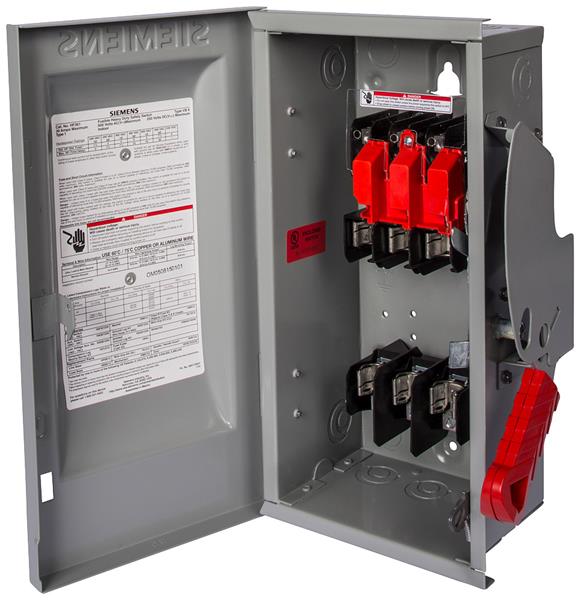
Why disconnect switches matter in industrial power systems
A disconnect switch is typically selected to provide a clear means of isolating electrical power from a machine, enclosure, or branch circuit. In real installations, this supports lockout and maintenance procedures, reduces uncertainty during troubleshooting, and helps separate live supply from the section of the system being worked on.
In many projects, isolation is only one part of the broader protection strategy. Designers often evaluate how disconnect devices work alongside fuses, holders, terminal hardware, and other protective components so the overall assembly is easier to service and better aligned with the application’s electrical demands.
Common application contexts
These products are widely used in control panels, machine power entry points, HVAC equipment, distribution assemblies, and industrial OEM builds. The exact configuration depends on current level, available space, mounting method, and whether the design needs a fused or non-fused arrangement.
For some systems, isolation may be paired with a dedicated protective path using fuse blocks or holders. In applications where personnel protection or controlled shutdown behavior is especially important, buyers may also compare nearby categories such as safety switches or explore complementary hardware in other switch accessories.
How to evaluate the right device for your installation
The first consideration is usually the electrical duty of the circuit. Buyers should confirm voltage class, current rating, number of poles or circuits, and the type of load being isolated. Even when a page includes related protective parts, the selection process should focus on the actual operating environment rather than choosing by appearance or footprint alone.
Mechanical fit is equally important. Mounting style, enclosure layout, wiring access, and termination method all affect installation time and long-term maintainability. In compact panels, chassis-mount or panel-oriented parts may be preferred, while higher-current systems may require more robust lug or bolted terminations.
It is also useful to think in terms of serviceability. A good disconnect arrangement should make replacement parts easy to identify and provide a straightforward path for inspection, testing, and maintenance without unnecessary panel rework.
Related protection components often used with disconnect solutions
Although this category focuses on switching and isolation, many real-world assemblies incorporate fuse holders and protection accessories around the disconnect point. That is especially common when designers need both manual isolation and overcurrent protection in the same section of the system.
Examples from this broader ecosystem include the Eaton T60030-3CR fuse block, which is designed for chassis mounting and multi-circuit use, and the Eaton HMEG fuse holder for screw-mounted blade fuse applications. For smaller-format or board-level support within protected assemblies, products such as the Eaton HLS-11-SL fuse holder and the Eaton HET-AW-RYC holder illustrate how fuse accommodation can vary by mounting approach and fuse format.
Surge-related protection may also appear in adjacent designs. For instance, the Bourns TISP4219J3BJR-S shows the kind of specialized protective component used where transient events are part of the design concern, even though it serves a different role from a disconnect device itself.
Brands commonly considered in this space
Procurement teams often standardize around manufacturers that are already approved for panel components or circuit protection hardware. In this category context, Eaton appears prominently through several related products, particularly around fuse holders, fuse blocks, and supporting protection parts used in industrial assemblies.
Bourns is another relevant name when the application extends into surge and protective component selection. Burndy also appears in the available product set with supporting circuit protection miscellaneous hardware, which may be useful where connection and protection hardware need to be considered together rather than as isolated line items.
Brand choice should still follow application requirements, approved vendor lists, and maintenance strategy. For many B2B buyers, consistency of fit, documentation, and replenishment path can matter just as much as the component category itself.
Selection factors that affect long-term reliability
Reliability in disconnect installations is shaped by more than just the switch mechanism. Termination quality, conductor sizing, enclosure conditions, and the coordination between switching and protective devices all influence performance over time. A properly matched solution reduces heat buildup, simplifies inspection, and lowers the risk of downtime caused by loose or unsuitable connections.
Where the project requires broader isolation planning, it can be helpful to review adjacent options such as solid state switch technologies for electronic switching behavior, or compare with disconnect switch solutions when a visible mechanical isolation point is required. The right choice depends on whether the design priority is maintenance isolation, load switching behavior, compact integration, or a mix of these factors.
What B2B buyers typically look for on a category page
For engineering and sourcing teams, a useful category page should help narrow choices quickly by application logic. That includes understanding whether the requirement is for a standalone disconnect device, a fused arrangement, a chassis-mount support part, or related protection hardware that belongs in the same build of materials.
It also helps to compare parts by practical attributes such as mounting type, termination style, circuit count, and compatibility with the intended fuse family or assembly concept. This reduces the risk of selecting a part that fits electrically but complicates assembly, service access, or future replacement.
Choosing with the full system in mind
Disconnect switches are most effective when treated as part of the wider electrical architecture rather than as a single standalone purchase. Isolation, overcurrent protection, maintenance access, and enclosure layout should be reviewed together so the finished system is safer to work on and easier to support throughout its lifecycle.
If you are comparing options in this category, start with the circuit’s isolation requirement, then verify the supporting protection hardware, mounting constraints, and maintenance expectations. That approach usually leads to a more durable and service-friendly solution for industrial control and power distribution projects.
Get exclusive volume discounts, bulk pricing updates, and new product alerts delivered directly to your inbox.
By subscribing, you agree to our Terms of Service and Privacy Policy.
Direct access to our certified experts