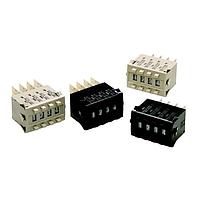
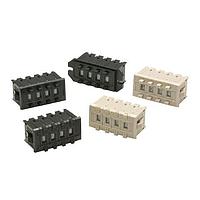
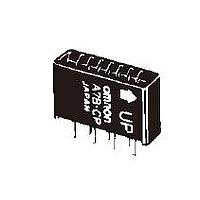
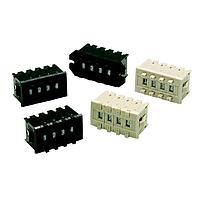
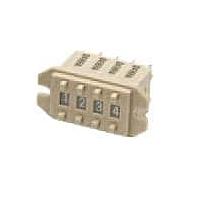
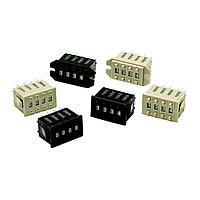
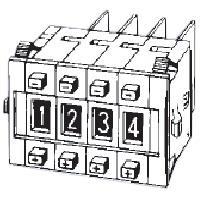
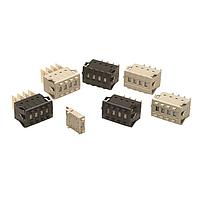
Thumbwheel & Pushwheel Switches
When a machine, control panel, or instrument needs a simple and direct way to set values locally, mechanical digital switches are still a practical choice. Thumbwheel & Pushwheel Switches are widely used where operators need quick manual selection of digits or coded positions without relying on a touchscreen or more complex interface hardware.
In industrial and electronic assemblies, these switches help create compact input points for address selection, preset values, configuration settings, and numeric control. They are especially useful in applications that benefit from visible position indication, repeatable manual adjustment, and straightforward panel or PCB integration.
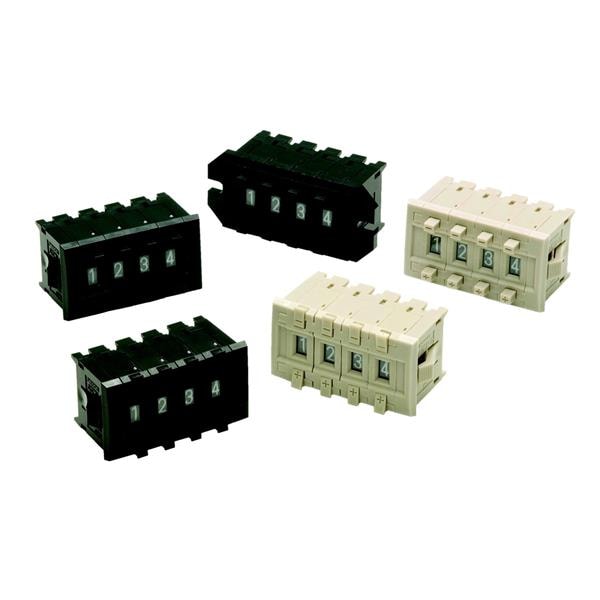
Where thumbwheel and pushwheel switches fit in
Unlike general-purpose on/off devices, this category is designed for manual value selection. A user rotates or presses individual wheels to choose numbers or coded outputs, making these switches suitable for equipment that requires local setup or mode selection. Common use cases include industrial controls, test equipment, communication hardware, and embedded electronic systems.
Because the selected value is shown directly on the switch, operators can confirm settings at a glance. That makes these products useful in environments where simplicity, immediate visual feedback, and low-power mechanical input are preferred over more complex operator interfaces.
Typical formats and mounting considerations
Within this category, buyers will usually encounter variants optimized for panel mounting or PC board mounting, along with related accessories that support assembly layout. Some designs focus on a compact footprint, while others provide wider spacing or larger digit presentation for improved handling and readability.
For applications where multiple switch units are combined side by side, spacing and alignment matter just as much as the switching function itself. Accessories such as the OMRON A7P-PA Spacer, OMRON A7B-PA Spacer, and OMRON A7B-PA-1 Spacer can play an important role in maintaining proper installation geometry in a modular switch bank.
Examples from leading manufacturers
This category includes products from established manufacturers such as OMRON, Littelfuse, and APEM. These brands are commonly specified in industrial and electronic applications where stable mechanical operation and familiar integration formats are important.
Representative examples include the OMRON A7BS-206-S-1 Thumb-Pushwheel Switch, OMRON A7BL-206-1, OMRON A7BL-207-1, and OMRON A7PS-207-D-1, as well as the Littelfuse 3P4210100 and Littelfuse 302119000. For compact applications, the APEM PICOD137AK2 is another relevant example within the broader ecosystem of thumb-operated coded switching devices.
How to choose the right switch for your application
The first step is to define how the switch will be used in the system. Consider whether the operator needs to set a single value or a multi-digit sequence, whether the switch will be mounted on a front panel or directly onto a board, and how much physical space is available. Mechanical dimensions such as width and height can become critical when several switches must fit into a dense control layout.
Electrical and operational requirements should also be checked carefully. Depending on the design, buyers may need to consider the switching format, current and voltage limits, coding style, and expected operating life. In applications exposed to vibration, repeated manual adjustment, or service access constraints, the robustness of the actuator and the clarity of the digit indication can influence long-term usability.
Why these switches remain relevant in industrial design
Even with the growth of programmable displays and digital HMIs, mechanical code-setting switches continue to offer advantages in many B2B applications. They simplify operator input for fixed functions, reduce software dependency for basic settings, and provide a clear hardware-defined state that can be useful during commissioning or maintenance.
They are also attractive in designs where engineers want a dedicated local interface that remains readable without powering up a full display system. For replacement projects, matching an existing thumbwheel or pushwheel format can help maintain compatibility with legacy equipment and established control schemes.
Related switch categories in a broader system
Thumbwheel and pushwheel devices are often selected as part of a larger control architecture rather than as isolated components. Depending on the application, engineers may also evaluate products such as safety switches for machine protection, solid state switch solutions for electronic switching, or other switch accessories to support mounting and integration.
Looking at the surrounding hardware can make selection easier, especially when the final assembly must balance operator input, enclosure space, serviceability, and control reliability across the whole system.
Selection tips for buyers and maintenance teams
For new designs, it helps to confirm actuator style, visible digit format, mounting method, and the need for accessory parts before finalizing a bill of materials. For maintenance and replacement, the priority is often form-fit-function compatibility: matching the existing layout, number of positions, and installation method so downtime can be minimized.
If your project involves a multi-unit switch arrangement, be sure to review whether spacers or related hardware are required in addition to the main switching element. That small detail can make a significant difference in assembly consistency and field replacement speed.
Find the right thumbwheel or pushwheel configuration
This category supports applications that need simple numeric or coded manual input in a durable and compact format. Whether you are sourcing a replacement switch, building a control panel, or specifying components for embedded equipment, the right choice usually comes down to operating format, installation style, and layout compatibility.
Review the available product options, compare representative series from OMRON, Littelfuse, and APEM, and check accessory requirements when combining multiple units. A well-matched thumbwheel or pushwheel switch can provide a reliable, easy-to-read input method that fits naturally into industrial and electronic control systems.
Get exclusive volume discounts, bulk pricing updates, and new product alerts delivered directly to your inbox.
By subscribing, you agree to our Terms of Service and Privacy Policy.
Direct access to our certified experts