Specialty Data Loggers
When standard monitoring tools are not enough, a more application-specific recorder can make the difference between collecting raw numbers and capturing data that is actually useful for diagnosis, validation, or compliance. Specialty Data Loggers are typically selected for demanding measurement tasks such as shock and vibration tracking, heat flux studies, transport monitoring, and controller I/O expansion where operating conditions, event capture, and signal handling matter as much as the data itself.
In this category, the focus is on devices built for targeted measurement needs rather than general-purpose logging alone. That includes compact field recorders for transportation shock studies, heat flux data acquisition hardware, and specialized modules that support broader control and monitoring architectures in industrial environments.
Where specialty data loggers are used
Specialty logging solutions are often chosen when the measurement environment is dynamic, mobile, or difficult to reproduce in a lab. Common use cases include package testing, in-transit monitoring, machinery shock recording, thermal performance studies, and distributed control systems that need additional data points or event visibility.
Compared with broad-use electric datalogger products, this category is better aligned with users who need a device tailored to a specific physical phenomenon or system architecture. In many projects, the right choice depends on whether the priority is capturing vibration events, measuring low-level thermal signals, or expanding digital I/O capacity within an automation platform.
Shock and vibration logging for transport and field monitoring
One of the strongest application areas in this category is shock and vibration data logging. These instruments are used to record real-world handling and transport conditions so teams can evaluate product durability, packaging effectiveness, or supply chain risk. Instead of relying on assumptions, engineers can review actual acceleration events, environmental exposure, and movement history from field conditions.
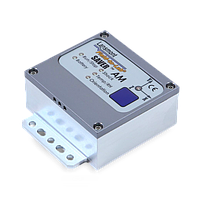
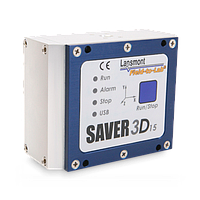
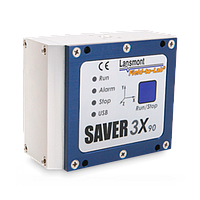
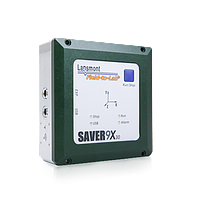
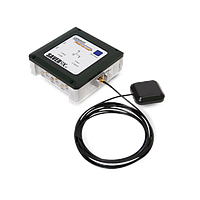
Lansmont is represented here with several purpose-built recorders, including the SAVER 9XGPS, SAVER 9X30, SAVER 3X90, SAVER 3D15, and SAVER AM. Across these models, the context shows triaxial sensing, multiple selectable acceleration ranges, and configurable sampling rates, which are all important when matching the logger to expected shock severity, transport profile, and event duration.
For example, the SAVER 9XGPS is suited to users who need both motion data and location-aware tracking, while the SAVER AM adds environmental and condition-monitoring functions such as pressure, humidity, light, and orientation. Smaller-format units like the SAVER 3X90 and SAVER 3D15 can be useful where mounting space is limited or where lower-profile deployment is preferred.
Heat flux and thermal measurement applications
Some measurement tasks require more than temperature logging alone. In thermal analysis, building envelope studies, process research, and energy transfer evaluation, users may need to monitor heat flux together with thermocouple inputs to understand how heat is moving through a material or system over time.
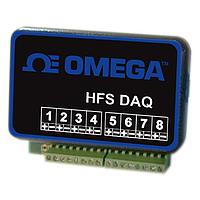
The OMEGA HFS-DAQ is a good example of this type of application-focused device. Based on the provided context, it supports multiple differential inputs, USB communication, and high-resolution conversion for thermocouple and heat flux measurement. That makes it relevant for users who need low-level signal acquisition with stable thermal measurement capability rather than a generic event recorder.
If the project is centered more broadly on environmental or process trends, related categories such as humidity and temperature dataloggers may also be worth reviewing. However, when the job specifically involves thermal transfer behavior, a dedicated logger in this category is typically the better fit.
Specialized modules for control and distributed I/O systems
Not every specialty logger is a standalone handheld or transport recorder. In industrial automation, some products in this category support data collection by extending the signal access of a controller platform. These devices are especially useful when a system needs more digital inputs, outputs, or relay channels without a full redesign of the control architecture.
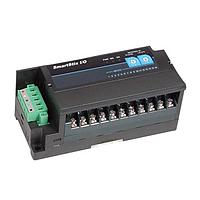
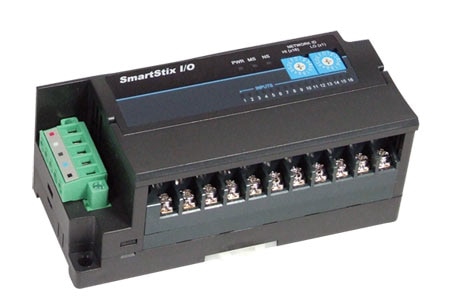
OMEGA appears in this category with several compact I/O expansion modules for the XE/XT/XL OCS Series Controller, including the HE559DQM706, HE559DQM606, HE559DQM602, HE559DIQ816, HE559DIM710, and HE559DIM610. The listed variants cover different combinations such as digital input, digital output, and relay output, along with CsCAN communication and removable screw terminal connectivity.
These products are best understood as part of a broader monitoring and control ecosystem. They help bring additional field signals into the system so operating states, events, and device responses can be observed and acted upon more effectively. For applications focused mainly on networked remote monitoring, Ethernet and wireless data loggers may be a more direct path, but for controller-centric architectures, I/O expansion can be the more practical solution.
How to choose the right specialty logger
The most important selection step is defining the signal or event you actually need to capture. A logger intended for shock events should be evaluated by acceleration range, axis configuration, sampling rate, filtering, and memory behavior. A thermal unit should be judged by input compatibility, resolution, conversion quality, and interface requirements. For controller add-ons, channel count, communication method, and electrical connection style often matter most.
It is also worth considering the measurement environment. Mobile field deployment may require compact size, long operating life, or resistance to environmental variation. In a fixed installation, integration with existing controllers or data workflows may be more important than portability. Looking at the application first usually leads to a better decision than starting with brand or form factor alone.
Another practical factor is whether the data of interest is continuous, periodic, or event-driven. If your process depends on recording specific threshold crossings or operational incidents, browsing an event data logger category can help compare alternatives. Specialty products are often selected precisely because they handle these more demanding trigger and event conditions better than general-purpose devices.
Why this category matters in industrial and engineering workflows
Application-specific measurement reduces guesswork. In packaging validation, it helps teams correlate product damage with actual transport events. In automation, it supports more complete visibility into field devices and controller states. In thermal analysis, it provides data that can be difficult to obtain using standard temperature logging hardware alone.
That is why specialty devices remain important even when general data acquisition systems are available. A focused logger often simplifies setup, improves relevance of recorded data, and shortens the path from measurement to decision-making. The result is not simply more data, but better data for the task at hand.
Finding the right fit for your application
This category brings together several distinct but complementary product types under the broader idea of specialized monitoring and recording. Whether the need is transport shock analysis, heat flux measurement, or controller-side signal expansion, the right product is usually the one that matches the physical variable, installation environment, and method of data use.
Reviewing the available models with those criteria in mind will make it easier to narrow the shortlist. For engineering teams, test labs, and industrial users, specialty data loggers can provide a more accurate and practical route to measurement than a one-size-fits-all device.
Get exclusive volume discounts, bulk pricing updates, and new product alerts delivered directly to your inbox.
By subscribing, you agree to our Terms of Service and Privacy Policy.
Direct access to our certified experts