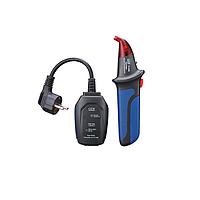
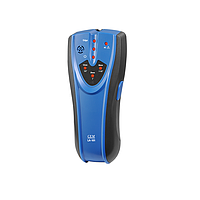
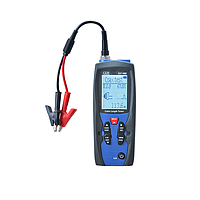
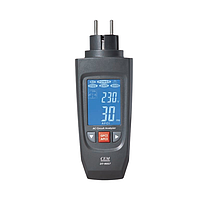
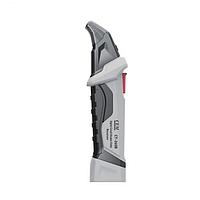
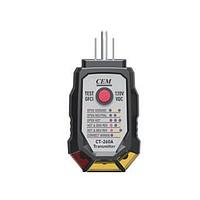
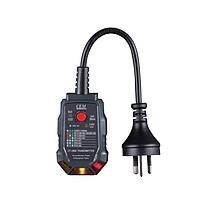
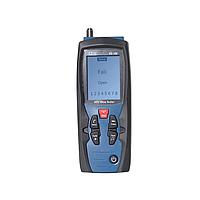
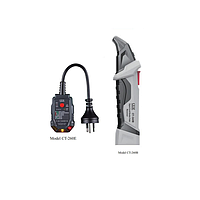
Cable and Socket tester/detector
Electrical troubleshooting often starts with a simple question: is the problem in the outlet, the cable run, or the wiring path between them? This category brings together practical tools for checking socket wiring, tracing cable faults, verifying continuity, and identifying circuit conditions before deeper diagnostic work begins. For maintenance teams, installers, and field technicians, Cable and Socket tester/detector products help reduce guesswork and speed up inspection workflows.
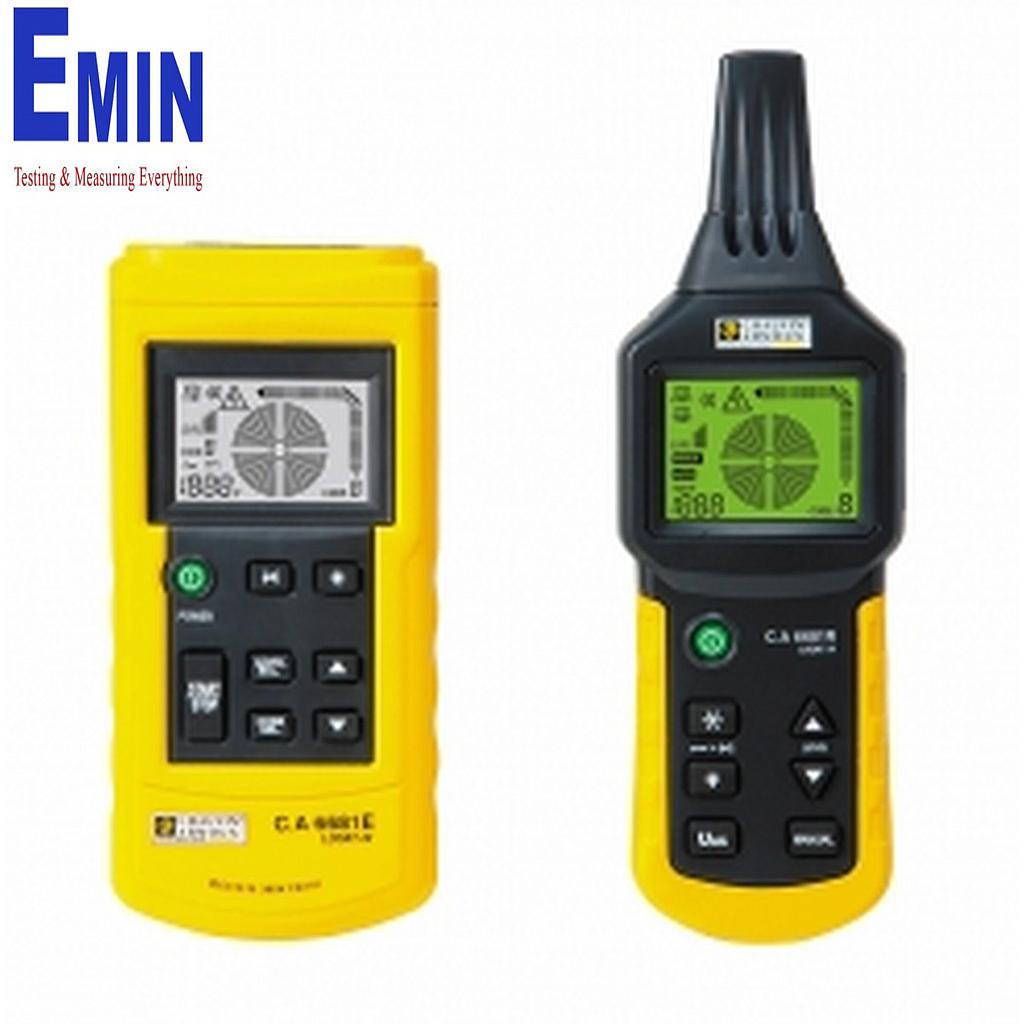
What these testers are used for in real work
In industrial facilities, commercial buildings, and service environments, cable and socket testers are used to confirm whether a receptacle is wired correctly, whether a line has continuity, or whether a hidden cable fault can be located without dismantling the entire installation. They are especially useful during commissioning, preventive maintenance, retrofit work, and first-level fault isolation.
The category covers several related needs: checking outlet polarity and grounding, testing GFCI or RCD-related behavior, tracing conductors, measuring cable length to a fault, and performing continuity verification on installed or disconnected lines. Depending on the task, a simple plug-in socket tester may be enough, while more advanced cable fault meters or circuit analyzers provide deeper diagnostic information.
Main product types in this category
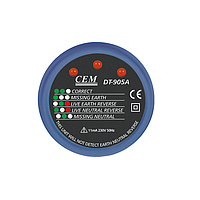
One common group is the receptacle tester, designed for fast checking of standard electrical outlets. Devices such as the EXTECH ET16 Receptacle Tester (120V) and EXTECH ET11 Receptacle Tester are intended for quick indication of wiring anomalies such as open ground, open neutral, open hot, or reversed conductors. These tools are typically chosen when the priority is speed and clear pass/fail feedback in the field.
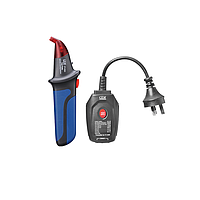
A second group includes intelligent socket and circuit analyzers. The KYORITSU 4506 Intelligent Socket Tester and the EXTECH CT70 GFCI and AC Circuit Analyzer go further by checking line voltage, loop-related conditions, or protective device response depending on the model. This type is better suited to maintenance personnel who need more than a basic wiring check.
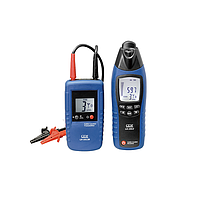
The category also includes cable fault meters and cable locators for tracing faults over longer distances. Products such as the PCE CLT 10 Cable Fault Meter and PCE PCE-CLT 20 Cable Locator are useful where hidden cable damage, unknown cable length, or break location must be investigated. For local signal injection and socket-related tracing, the KYORITSU 8343 Signal Source complements this workflow.
Typical problems these instruments help identify
For socket inspection, the most common issues are reversed hot/neutral, missing ground, open neutral, and open hot conditions. These faults can lead to unsafe operation, nuisance tripping, or unreliable equipment behavior. A plug-in tester provides a fast initial screening step before more detailed electrical measurement is carried out.
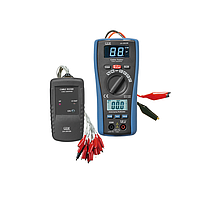
For cable work, the focus is usually on opens, short sections, continuity loss, or locating distance to a fault. In communication or general wiring environments, a tone generator and probe kit such as the EXTECH 40180 can help identify and follow cable runs. Where the objective is simply to confirm conductor continuity locally or remotely, the Extech CT20 Remote & Local Continuity Tester is a practical option.
Some applications overlap with other diagnostic categories. For example, if troubleshooting extends into grounding performance, engineers may also review an earth resistance tester. If the issue points to insulation breakdown or leakage paths in the installation, a ground fault locator may become relevant.
How to choose the right cable or socket tester
The first selection factor is the type of system you need to check. Outlet testers in this category include models intended for Type B outlets and nominal 120 V systems, so the electrical standard and operating environment should always be confirmed before purchase. A mismatch between tester design and local installation standard can limit the usefulness of the result.
The second factor is the level of diagnosis required. If you only need a quick wiring status check, a basic receptacle tester is often sufficient. If you need to evaluate protective device behavior, loaded versus unloaded voltage, impedance-related values, or voltage drop, a more advanced circuit analyzer such as the Mastech MS5908A or EXTECH CT70 will be more appropriate.
For cable infrastructure, consider whether you need line tracing, fault distance estimation, or simple continuity testing. A fault meter based on time domain reflectometer principles, such as the PCE CLT 10, is suitable when cable length and fault position matter. A continuity tester or tone generator is better for routine maintenance, cable identification, and verification after installation.
Representative manufacturers and solution styles
This category includes products from established test and measurement brands with different strengths. EXTECH is well represented with receptacle testers, continuity tools, and circuit analyzers for practical field use. KYORITSU appears in intelligent socket testing and signal source applications, while PCE contributes cable fault and locator tools suited to longer runs and distance-based diagnostics.
Mastech is also relevant for circuit analyzer applications where load testing and outlet condition checks are required. In broader cable qualification and network-oriented workflows, Fluke Network accessories such as the CIQ-WM wire diagram converter illustrate how some tools in this category support a larger testing ecosystem rather than acting as standalone instruments.
Using these tools alongside other measurement equipment
Socket and cable testers are often the first step in a wider troubleshooting process. A technician may begin with a receptacle tester to identify obvious wiring issues, then move to a multimeter for direct voltage or resistance checks where numerical confirmation is required. This staged approach improves efficiency and helps avoid unnecessary disassembly.
In maintenance programs, these devices also work well alongside earth and insulation-related test tools when diagnosing recurring trips, unstable loads, or suspected installation defects. The right tester does not replace all other instruments; instead, it narrows the problem quickly so that detailed testing can be focused where it matters.
Who typically buys from this category
Buyers usually include electrical contractors, facility maintenance teams, building services engineers, panel builders, commissioning personnel, and technical service providers. In B2B settings, the purchase decision often depends on the required test depth, outlet standard, portability, and whether the tool will be used for routine inspection or occasional troubleshooting.
For organizations managing multiple sites, it is also important to standardize around the types of faults most often encountered. A simple plug-in outlet checker may be ideal for general maintenance staff, while specialized teams may require cable locators, intelligent socket testers, or analyzers with expanded diagnostic capability.
Choosing with confidence
The right instrument depends on whether you need fast outlet verification, cable tracing, continuity testing, or deeper circuit analysis. This category is designed to support those different use cases without forcing a one-size-fits-all choice. Reviewing the application first, then matching it to the tester type, usually leads to a more useful and cost-effective selection.
If your work involves outlet safety checks, cable fault isolation, or field verification of installed wiring, this range offers practical starting points across basic and advanced tasks. From simple receptacle testers to cable fault meters and analyzer-based tools, the goal is the same: clearer diagnostics, faster decisions, and more reliable maintenance work.
Get exclusive volume discounts, bulk pricing updates, and new product alerts delivered directly to your inbox.
By subscribing, you agree to our Terms of Service and Privacy Policy.
Direct access to our certified experts