High Voltage Amplifier
When a test setup needs more voltage swing than a function generator or arbitrary waveform generator can deliver directly, the missing piece is often a High Voltage Amplifier. These amplifiers are used to boost low-level input signals into controlled high-voltage outputs for research, validation, component characterization, and advanced electronic measurement tasks.
On this page, you can explore high-voltage amplifier solutions used in laboratories, electronics development, and specialized production environments. The category covers models with different output amplitudes, current capabilities, bandwidth ranges, and channel configurations, making it easier to match the amplifier to the behavior of the DUT, actuator, sensor, or test fixture.
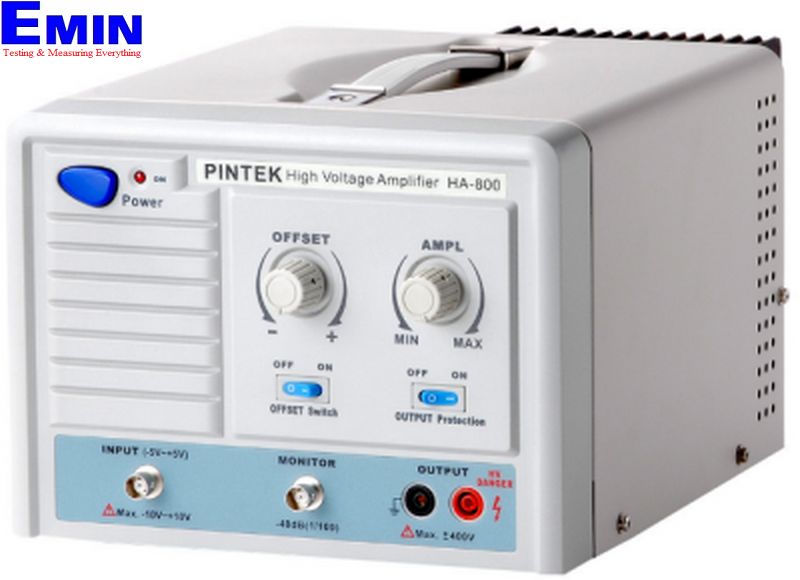
Why high-voltage amplifiers matter in electronic measurement
Many measurement and stimulation tasks require both signal fidelity and elevated voltage. Typical signal sources are excellent for waveform generation, but they usually cannot provide the output swing or drive strength needed for piezo devices, capacitive loads, high-voltage components, or certain semiconductor and materials test scenarios. A dedicated amplifier extends that source while preserving the intended waveform as closely as possible.
In practical setups, engineers evaluate more than peak voltage alone. Bandwidth, slew rate, output current, gain control, offset capability, and protection functions all affect real-world performance. That is why selecting a high-voltage amplifier is usually an application-driven decision rather than simply choosing the model with the largest voltage rating.
Typical applications for this category
High-voltage amplifiers are commonly used where a low-level electrical signal must be reproduced at higher amplitude with stable and repeatable behavior. This includes driving piezoelectric elements, powering electrostatic or capacitive loads in test environments, waveform amplification for research, and stimulus generation for device evaluation.
They can also support broader instrumentation workflows that involve precision electrical analysis. In some labs, these amplifiers are paired with tools used in semiconductor source and measurement workflows or verified alongside a digital multimeter for voltage, current, and signal confirmation during setup and troubleshooting.
Key selection factors before choosing a model
The first parameter most buyers check is output amplitude, but that should be considered together with output current. A high-voltage amplifier driving a light load behaves very differently from one driving a more demanding capacitive or dynamic load. If your application needs both high swing and stronger current delivery, the amplifier must be sized for both conditions at the same time.
Frequency response and slew rate are equally important when the output signal changes quickly. Fast edges, pulse-like waveforms, and higher-frequency operation can expose limitations that are not obvious from voltage rating alone. Gain range and DC offset adjustment may also matter when fine-tuning a setup, especially in R&D or component characterization environments.
For buyers comparing platforms, channel count can also shape the decision. Single-channel units may suit focused bench testing, while multi-channel amplifiers are useful when multiple devices, phases, or synchronized outputs must be driven from one system.
Examples from leading manufacturers
This category includes solutions from PINTEK, Tabor Electronics, and KEYSIGHT-related products listed within the measurement portfolio. Each brand appears in different contexts, from waveform amplification for high-voltage output stages to broader electronic test ecosystems.
Among the representative models, the PINTEK HA-805 is positioned for applications requiring up to 800Vp-p output with adjustable gain and high-voltage drive capability. The PINTEK HA-405 is a useful example for users balancing voltage and current needs, while the Pintek HA-400 fits scenarios where 400Vp-p class output is sufficient. For users evaluating channel-based configurations, Tabor Electronics offers options such as the 9100A, 9200A, and 9400 series, which provide one-, two-, or four-channel high-voltage amplification in the 400Vp-p class.
There are also models aimed at different speed and drive priorities. For example, the Pintek HA-205 is identified as a super high-speed model, which makes it relevant when waveform transition behavior is a major consideration. Rather than treating all amplifiers as interchangeable, it is better to compare them against the electrical characteristics of the intended load and the waveform source being used upstream.
How to compare voltage, current, speed, and channels
A useful way to narrow the shortlist is to start with the load. If the test object is primarily capacitive, the amplifier may need strong dynamic current and adequate slew rate to maintain waveform shape. If the requirement is more about wide output swing with moderate speed, a model optimized around higher amplitude may be more appropriate.
Channel count is another practical filter. Tabor Electronics models such as the 9100, 9200, 9100A, 9200A, and 9400 illustrate how similar amplifier families can scale from single-channel to multi-channel architectures. This can simplify synchronized testing or reduce the need to combine several separate amplifiers in one rack or bench setup.
Protection and controllability should not be overlooked either. Some of the listed PINTEK units include microprocessor-based protection and adjustable gain or offset functions, which can be valuable for protecting equipment and improving repeatability during development work.
Integration in a broader measurement setup
A high-voltage amplifier usually works as part of a chain rather than as a standalone instrument. The source may be a generator, pulse source, or another low-level signal device, while the output is monitored with meters, probes, or additional electronic measurement instruments depending on the application. This makes system compatibility an important buying consideration.
In advanced test benches, users often review connector compatibility, source amplitude requirements, and the expected measurement method at the output. Where broader brand ecosystems matter, it may also be useful to explore the KEYSIGHT measurement portfolio alongside this category, especially if your lab standardizes around a specific instrumentation environment.
What to check before ordering
Before selecting a model, confirm the required maximum output voltage, the expected load type, and whether the amplifier must reproduce fast waveforms without significant distortion. It is also worth checking whether you need a fixed gain approach or more adjustable control over amplification and offset.
For multi-device projects, think about future expansion as well. A single-channel amplifier may be enough today, but a two- or four-channel platform can reduce integration effort later if your test plan grows. Reviewing these factors early helps prevent under-specifying the amplifier or buying a unit that is oversized for the actual task.
Finding the right high-voltage amplifier for your application
The right choice depends on how voltage, current, speed, and channel count interact in your setup. Some users need maximum output swing, others need faster response, and some need coordinated multi-channel drive. By comparing those priorities against the available models in this category, it becomes much easier to identify a suitable amplifier for development, validation, or measurement work.
If you are building or upgrading a test system, this category provides a practical starting point for comparing high-voltage amplifier options from established manufacturers. Focus on the application first, then match the amplifier to the electrical demands of the load and the performance of the source instrument.
Get exclusive volume discounts, bulk pricing updates, and new product alerts delivered directly to your inbox.
By subscribing, you agree to our Terms of Service and Privacy Policy.
Direct access to our certified experts