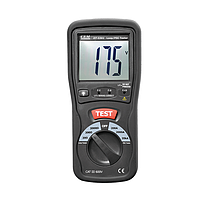
Loop meter
When verifying the safety of an electrical installation, it is not enough to confirm that voltage is present and circuits are energized. What matters just as much is how quickly a protective device can respond under fault conditions. A Loop meter helps evaluate that part of the system by measuring loop impedance and supporting assessment of prospective short-circuit current in low-voltage networks.
On this page, you can explore loop testing instruments used for inspection, maintenance, and commissioning work in commercial, industrial, and facility environments. These instruments are especially relevant where electricians, maintenance teams, and testing contractors need practical data for protection verification without relying only on design assumptions.
Why loop impedance measurement matters
In a fault condition, current returns through a defined path that includes the supply, protective conductor, and source impedance. The total resistance or impedance of that path affects whether a breaker or fuse will disconnect fast enough. Measuring loop impedance gives technicians a direct way to assess the behavior of that fault path in real operating conditions.
This is particularly important during installation checks, periodic inspections, and troubleshooting. A loop meter is commonly used to confirm that protective devices can achieve the required disconnection time, and to identify circuits where excessive impedance may reduce fault current and compromise protection performance.
Typical use cases for a loop meter
Loop testing is widely used across building services, switchboards, distribution circuits, and final subcircuits. In practice, it supports acceptance testing of new installations, verification after electrical modifications, and routine maintenance programs in factories, commercial facilities, and infrastructure projects.
It is also useful when investigating nuisance tripping, unclear grounding conditions, or suspected wiring issues. For a broader view of electrical troubleshooting, loop testing is often complemented by instruments such as an electrical multimeter for basic voltage and continuity checks, or an earth resistance tester when grounding system performance needs separate evaluation.
What to look for when selecting a loop tester
The right instrument depends on the installation environment, expected impedance range, and the level of documentation required. Buyers typically review measurement range, stated accuracy, test current, operating voltage compatibility, and compliance with applicable safety standards. In field work, mechanical durability and ingress protection can also matter, especially for site conditions that are dusty or exposed.
Another important consideration is how the meter fits into the inspection workflow. Some users prioritize straightforward go-to-point testing, while others need support for calculated values such as prospective short-circuit current. Accessories, probe options, display readability, and the practicality of test duration can all influence efficiency during repetitive testing tasks.
Representative product in this category
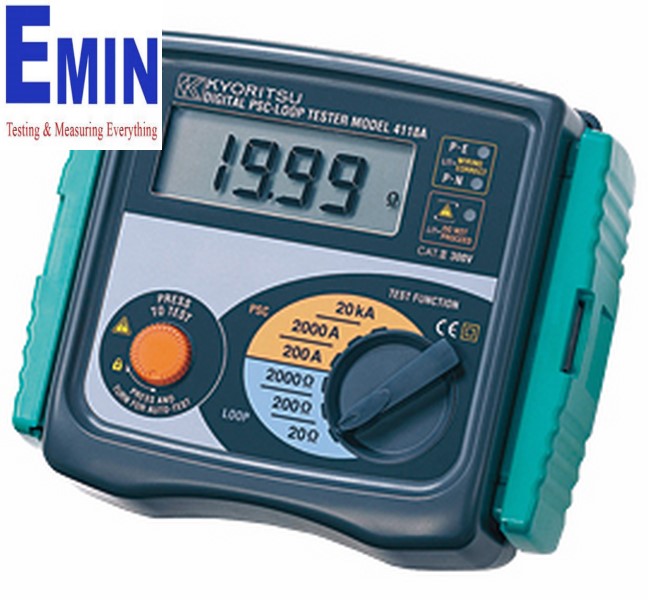
One example in this category is the KYORITSU 4118A LOOP / PSC Tester (20/200/2000Ω). This model is positioned for loop impedance and PSC testing across multiple ranges, making it relevant for technicians who need flexibility across different circuit conditions rather than a single narrow test point.
Based on the available product data, it supports loop impedance measurement over several ranges and provides PSC-related evaluation derived from the loop result. Safety and environmental references such as CAT III classification and IP-rated enclosure information are also important indicators for users working in practical low-voltage testing environments.
KYORITSU in electrical safety testing
KYORITSU is a familiar name in portable electrical test instrumentation, and its presence in this category is relevant for users who prioritize established tools for inspection and maintenance work. In loop testing, brand selection often comes down to confidence in measurement consistency, field usability, and suitability for compliance-oriented workflows.
For many B2B buyers, manufacturer preference is also linked to continuity of equipment across a maintenance team. Standardizing on a known platform can simplify training, accessory management, and routine service procedures, particularly when multiple electrical test instruments are used together on site.
How loop meters fit into a wider test workflow
A loop meter is rarely used in isolation. In real inspection sequences, technicians often combine several electrical tests to build a more complete picture of installation condition. Loop impedance results may be reviewed alongside continuity checks, voltage measurement, insulation-related procedures, and grounding assessment depending on the test objective and local practice.
Where fault tracing is part of the job, a loop meter can also sit alongside tools such as a ground fault locator. The two instruments serve different purposes, but together they can help maintenance teams move from confirmation of protection behavior to more targeted investigation of fault paths and system issues.
Choosing the right category for your application
This category is best suited to users specifically looking for instruments that assess loop impedance and related fault current behavior in electrical installations. If the primary need is general circuit diagnosis, a multimeter may be more appropriate. If the focus is earthing system verification, an earth resistance or resistivity instrument will usually be the better fit.
By narrowing the selection to loop testing applications, it becomes easier to compare products based on the criteria that actually affect electrical safety verification: range, accuracy, test method, protection-oriented measurements, and suitability for the intended installation environment.
Final considerations
Choosing a loop meter is ultimately about matching the instrument to the protection checks you need to perform and the environments where those checks take place. Clear measurement ranges, practical field design, and support for relevant electrical safety workflows matter far more than broad feature lists alone.
If you are evaluating tools for installation verification, maintenance inspection, or fault analysis, this category provides a focused starting point. Reviewing the available loop tester options alongside related measurement tools can help you build a more reliable and efficient electrical testing setup.
Get exclusive volume discounts, bulk pricing updates, and new product alerts delivered directly to your inbox.
By subscribing, you agree to our Terms of Service and Privacy Policy.
Direct access to our certified experts