Multifunction Electrical Installations Meter
Electrical inspection work rarely depends on a single reading. In commissioning, maintenance, and periodic safety checks, technicians often need to verify insulation, continuity, loop impedance, RCD performance, voltage, and fault current behavior within the same workflow. That is where a Multifunction Electrical Installations Meter becomes especially valuable, helping teams complete installation testing with fewer instruments and more consistent results.
This category brings together instruments designed for electrical installation verification across commercial buildings, industrial panels, distribution systems, and selected EV-related testing tasks. Instead of switching between separate testers for each measurement, users can work with platforms that support a broader test sequence and clearer reporting.
What these testers are used for in practice
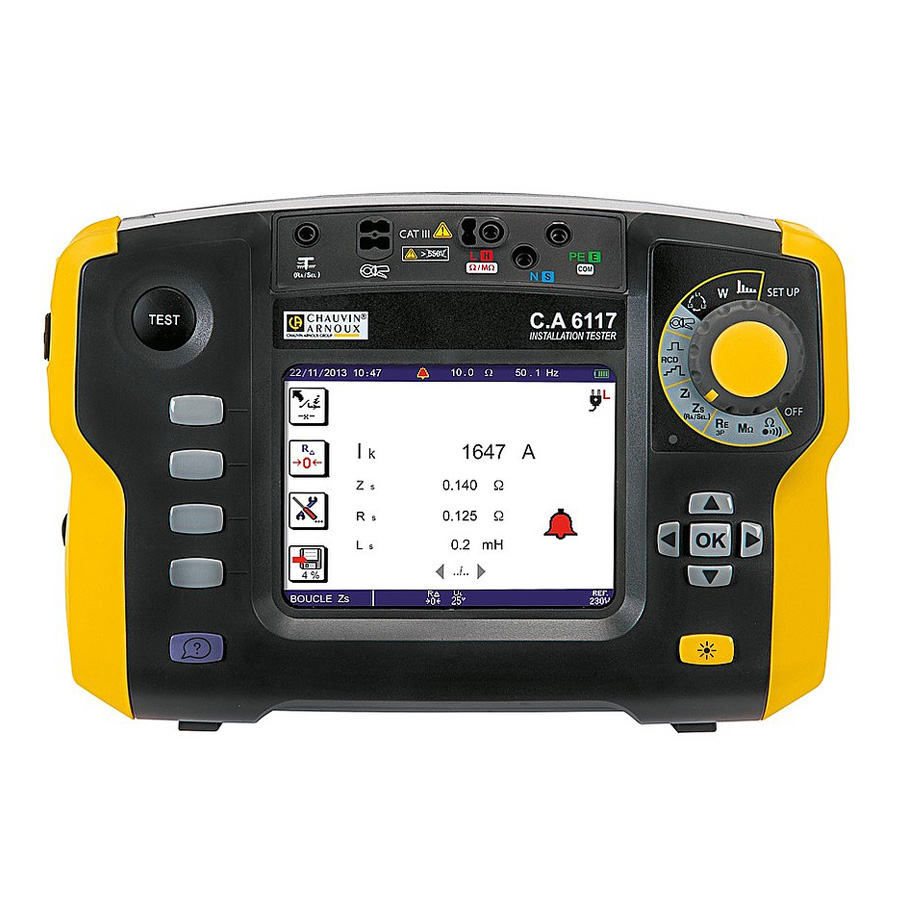
Multifunction installation testers are commonly selected for jobs where electrical safety verification must be documented, repeated, and performed efficiently. Typical tasks include checking protective conductor continuity, measuring insulation resistance, confirming loop or line impedance, and evaluating residual current device behavior before a system is handed over or returned to service.
They are also useful when troubleshooting recurring trip events, validating circuit protection, or assessing installation quality after upgrades. In many service environments, this makes them more practical than relying only on a standard multimeter, which remains essential for basic electrical checks but is not intended to replace dedicated installation test functions.
Core functions commonly found in this category
Most products in this category combine several measurement modes into one platform. The most common functions include AC voltage measurement, low-resistance continuity testing, insulation resistance measurement at multiple test voltages, loop impedance testing, and calculated fault current values such as PFC or PSC. Many models also support RCD testing, including trip time and ramp or tripping current evaluation.
Some instruments extend further into specialized tasks. Depending on the model, users may find phase rotation checks, earth measurement support, anti-trip loop testing, or EV charging system accessories. This broader capability is particularly useful for contractors and maintenance teams working across mixed installations rather than a single repetitive test type.
Examples of instruments available
Several well-known manufacturers are represented in this range, including FLUKE, KYORITSU, HT, and Chauvin Arnoux. Their instruments illustrate different priorities, from portable field testing to more advanced workshop or switchboard verification.
For example, the FLUKE FLK-1662 SCH and FLUKE FLK-1664FC SCH are designed around common installation test routines such as insulation, continuity, loop impedance, and RCD checks. KYORITSU offers options like the 6516 Multi Function Testers for broad installation testing, as well as the KYORITSU 4140 for loop, PFC, and PSC-focused work. In more specialized bench or machine verification environments, Chauvin Arnoux CA 6161 and CA 6163 models support higher-voltage testing workflows and larger data storage capacity.
HT models such as EASYTEST, COMBI519, COMBI521, and COMBI521EV are relevant where users need portable multifunction testing with True RMS voltage capability and, in some versions, support for EV-related inspection scenarios.
How to choose the right multifunction installation tester
The best choice depends less on brand alone and more on the actual test routine. If the work mainly involves building electrical verification, prioritize the functions used most often: insulation resistance ranges, continuity current, loop impedance modes, and the RCD types that need to be tested. If the site frequently includes selective, Type A, Type B, or EV-related protection devices, compatibility at that level matters far more than headline specs.
It is also worth checking the instrument’s operating category, portability, display style, accessory set, and data handling features. A compact battery-powered tester may be ideal for field service, while a larger platform with storage, USB, Wi-Fi, or external interfaces may suit production testing, switchboard validation, or repeatable reporting workflows.
For applications centered specifically on grounding system verification, a dedicated earth resistance and resistivity tester can also be relevant alongside a multifunction installation tester, especially when grounding analysis goes beyond standard continuity and loop checks.
RCD, loop, and insulation testing considerations
Three functions often drive purchasing decisions in this category: insulation resistance, loop impedance, and RCD testing. Insulation testing helps verify cable and equipment condition by applying a controlled test voltage and measuring leakage resistance. Loop impedance testing supports assessment of fault paths and protective device performance, while RCD tests help confirm whether protective devices trip within expected current and time limits.
In practical use, these functions are interconnected. A circuit may show acceptable voltage but still fail compliance because of poor insulation, excessive impedance, or improper RCD behavior. That is why many technicians prefer one tester that can follow the full installation verification sequence instead of piecing together results from separate instruments.
Specialized needs: EVSE and machine or panel testing
Not every installation job ends at conventional building circuits. Some environments now include EV charging points, machine assemblies, or electrical switchboards that require additional tools or dedicated workflows. The KYORITSU KEW 8602, for instance, acts as a dedicated adapter for EVSE-related testing, supporting inspection work around charging infrastructure rather than serving as a standalone all-purpose tester.
At the other end of the range, instruments such as the Chauvin Arnoux CA 6161 and CA 6163 are aimed at more advanced machine and switchboard test scenarios, where higher-voltage capability, continuity verification, and structured test storage may be important. If your task is closer to insulation fault tracing than installation verification, a ground fault locator may be a better complementary tool.
Who typically uses this category
These instruments are widely used by electrical contractors, commissioning teams, facility maintenance departments, panel builders, and service engineers. They are also relevant in environments where documented compliance testing is part of handover or preventive maintenance procedures.
For B2B buyers, the value is not only in measurement capability but in workflow efficiency. A well-matched multifunction tester can reduce the number of devices carried to site, simplify technician training, and improve consistency in routine inspection tasks across multiple facilities or project teams.
Final thoughts
Choosing a multifunction electrical installations meter is ultimately about matching the instrument to the way your team tests real installations. The right model should cover the protection checks, insulation measurements, impedance tests, and reporting needs that occur most often in your work, without adding unnecessary complexity.
Within this category, you can compare portable field testers, advanced installation test platforms, EV-related accessories, and machine-oriented test solutions from established manufacturers. If you already know the circuits, protection types, and test sequence you need to support, selecting the right instrument becomes much more straightforward.
Get exclusive volume discounts, bulk pricing updates, and new product alerts delivered directly to your inbox.
By subscribing, you agree to our Terms of Service and Privacy Policy.
Direct access to our certified experts