
PC Oscilloscope
When bench space is limited, measurements need to be documented, and engineers want waveform data directly inside software, a PC Oscilloscope becomes a practical choice. Instead of relying on a standalone screen and local storage, this type of oscilloscope uses a computer for display, analysis, capture management, and data sharing, which is especially useful in R&D labs, service work, education, and electronics troubleshooting.
For many users, the appeal is not only portability but also workflow efficiency. A USB-powered oscilloscope can be easy to carry, simple to connect, and well suited to applications where screenshots, reports, FFT analysis, serial decoding, or long waveform captures need to be reviewed on a larger display.
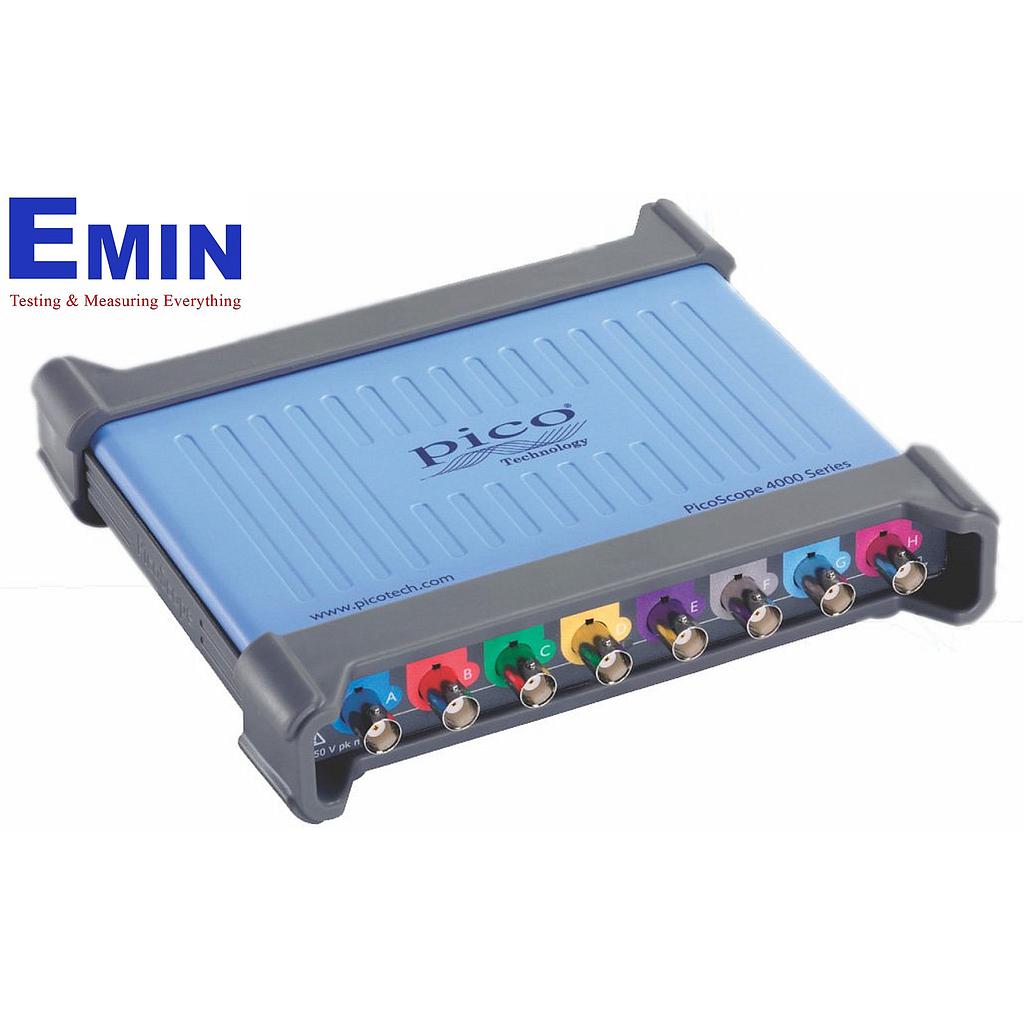
Why PC-based oscilloscopes are widely used
A PC-based scope combines front-end signal acquisition hardware with software-driven visualization and analysis. This approach gives users access to functions such as waveform storage, measurement automation, triggering setup, and in many cases spectrum analysis or serial bus decoding, without depending on a bulky standalone instrument.
Another advantage is flexibility across different working environments. In a fixed lab setup, a PC oscilloscope helps keep the bench organized. For mobile diagnostics or field service, compact USB models can reduce the amount of equipment that needs to be transported. Users comparing form factors may also want to look at a handheld oscilloscope when a fully self-contained device is more suitable.
What to check before choosing a PC Oscilloscope
The first specification to evaluate is bandwidth. It determines how accurately the oscilloscope can reproduce higher-frequency signal components. For general-purpose electronics, lower-bandwidth models may be enough, while high-speed digital work, pulse analysis, and faster embedded systems usually require substantially more headroom.
The second key factor is sampling rate. A higher sampling rate improves waveform fidelity and helps capture fast transitions, narrow pulses, and transient events. This matters when debugging switching circuits, clock lines, communication buses, or control signals where timing details are important.
Also consider channel count, memory depth, and software capabilities. Two channels can be sufficient for basic comparison work, but four channels are often preferred for power electronics, multi-node embedded systems, and mixed-signal troubleshooting. Deep memory, advanced triggering, FFT tools, and protocol decoding can make a major difference when investigating intermittent faults or long acquisition windows.
Typical product range in this category
This category includes compact entry-level instruments as well as more capable mixed-signal and higher-bandwidth models. At the accessible end, examples such as the PICO PicoScope 2204A PC Oscilloscope offer a practical option for lower-frequency tasks, while models like the PICO PicoScope 2207B and PICO PicoScope 2406B extend capability with higher bandwidth or additional channels.
For users working with more demanding signals, the range also includes 100 MHz and 200 MHz instruments, including the PICO 3415E MSO USB-powered PC oscilloscope and the PICO 3416E USB-powered PC oscilloscope. Mixed-signal variants such as the PICO 3416E MSO or the PicoScope 3406D MSO are relevant when analog and digital lines must be observed together during embedded development or protocol-level debugging.
There are also application-specific solutions in the lineup. The PICO 4425A Diagnostic Oscilloscopes series, for example, is positioned for diagnostic workflows where multiple channels, floating inputs, and software-based analysis are valuable in service environments.
Understanding channels, MSO capability, and analysis features
Channel count affects how efficiently a problem can be isolated. A 2-channel scope is often enough for input-versus-output checks, trigger correlation, or basic waveform verification. A 4-channel unit is more suitable when several rails, sensors, or control lines need to be compared at the same time.
Some models in this category also provide mixed-signal oscilloscope capability, combining analog channels with digital inputs. This is helpful when debugging microcontroller systems, logic timing, and serial buses where analog waveform shape and logic state transitions need to be viewed together.
Software features are equally important. Depending on the model, users may benefit from automatic measurements, FFT or spectrum analysis, arbitrary waveform generation, segmented capture, and serial decoding for protocols such as I²C, SPI, CAN, LIN, or UART. If you are comparing broader instrument formats, a digital oscilloscope page can also help clarify the difference between PC-connected and standalone digital platforms.
Brand and ecosystem considerations
The products highlighted in this category are strongly associated with PICO, a brand widely recognized for PC-based oscilloscope platforms and software-centric measurement workflows. Within one ecosystem, users can move from basic 2-channel models to 4-channel instruments, MSO versions, and specialized diagnostic kits while keeping a familiar software environment.
Other manufacturers listed for this category include KEYSIGHT, NI, and Acute. In practice, the right brand choice depends on the intended workflow, required software environment, measurement complexity, and whether the oscilloscope needs to fit into a larger test setup, development bench, or automated measurement process.
Where PC oscilloscopes fit best
These instruments are commonly used in electronics education, embedded development, power supply analysis, communications testing, maintenance, and service diagnostics. They are especially useful when the user needs to save waveform records, compare captures over time, or export data for reporting and collaboration.
They also make sense when a laptop-based setup is preferable to a permanent bench instrument. For highly portable work in tight spaces, some users may compare them with a pen-type PC oscilloscope, while traditional lab users may still prefer a larger standalone platform depending on screen, interface, and bench workflow preferences.
How to narrow down the right model
Start with the signal type you need to measure. For lower-frequency training, maintenance, or basic waveform observation, an entry-level model may be enough. For embedded design, bus analysis, or faster pulse work, prioritize more bandwidth, better sampling performance, and advanced trigger options. If several signals must be monitored simultaneously, 4 channels can save time and reduce repeated measurements.
Next, think about software-driven tasks. If waveform documentation, long captures, serial decoding, or frequency-domain viewing are part of the job, make sure the selected model supports those functions in a usable way. It is usually more practical to choose a model that matches both current measurement needs and likely future debugging requirements.
Final thoughts
A well-chosen PC Oscilloscope can deliver an efficient balance of measurement capability, portability, and software-based analysis. Whether the goal is basic waveform observation, mixed-signal debugging, or multi-channel diagnostics, the right choice depends on bandwidth, sampling rate, channel count, memory, and the software tools that support daily work.
Use this category to compare models across different performance levels and applications. If you already know the type of signals and workflow you need to support, it becomes much easier to shortlist a scope that fits your lab, service bench, or engineering project without overcomplicating the setup.
Get exclusive volume discounts, bulk pricing updates, and new product alerts delivered directly to your inbox.
By subscribing, you agree to our Terms of Service and Privacy Policy.
Direct access to our certified experts