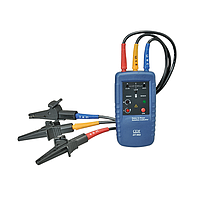
Phase Indicator/Detector
When commissioning a three-phase installation, replacing a motor, or troubleshooting abnormal rotation, verifying phase order is a small step that can prevent major downtime. A reliable Phase Indicator/Detector helps technicians confirm phase sequence, identify motor rotation direction, and reduce the risk of reverse running in pumps, fans, compressors, and other rotating equipment.
In industrial maintenance, panel work, and electrical installation, this type of instrument is commonly used before energizing a load. Depending on the application, users may choose a contact or non-contact design, a compact handheld tester for field service, or a model intended for broader voltage coverage and safer checking on insulated conductors.

Why phase sequence verification matters
In a three-phase system, the order of phases directly affects the direction of rotation of many motors. If the sequence is reversed, equipment may run backward, which can lead to process interruption, mechanical stress, or unsafe operating conditions. This is especially important after wiring work, maintenance, relocation, or replacement of motors and control components.
A phase indicator is also useful when confirming the connection of supply lines before startup. In practical service work, technicians often combine phase checking with broader electrical verification using tools such as a multimeter or insulation and grounding test equipment, depending on the job scope.
Common functions of phase indicators and detectors
Most instruments in this category are designed to show phase sequence clearly through LEDs, arrows, audible indication, or a simple display. Many models also help determine motor rotation, which is useful during installation and service of three-phase motors where correct shaft direction must be confirmed before full operation.
Some units work by direct connection to the three phases through test leads and clips, while others support non-contact detection on insulated conductors. Non-contact designs are often preferred when speed, convenience, or reduced direct exposure to live conductors is important. Typical operating ranges in this category cover common industrial voltages, from lower three-phase control and machine circuits up to higher AC installation voltages.
Contact and non-contact testers
Contact phase rotation testers are widely used because they provide a straightforward method for checking sequence on accessible terminals. Products such as the FLUKE FLUKE-9062 Motor & Phase Rotation Indicator and the KYORITSU 8031F Phase Rotation Tester with fused test leads illustrate this approach well. They are suitable when technicians can safely connect to the phases and want a direct reading of rotation order.
Non-contact models add convenience in many field situations. The HIOKI PD3129-10 PHASE DETECTOR and KYORITSU 8035 Non-Contact Safety Phase Indicator are examples of instruments intended for checking phase condition on insulated wiring without conventional metal probe contact. This style can be especially helpful during maintenance work on existing installations where quick confirmation is needed before deeper diagnostic steps.
Examples from leading manufacturers
Well-known instrument brands are strongly represented in this category. FLUKE offers widely recognized phase rotation tools such as the FLUKE-9040 ESPR and FLUKE-9062, both commonly considered for service and commissioning tasks involving motor connection checks and rotational field indication.
HIOKI focuses on practical detection for field electricians, and the PD3129-10 is a good example of a compact detector with visual and audible indication. KYORITSU also stands out with both conventional and non-contact options, including the 8031, 8031F, and 8035, allowing users to choose based on preferred test method and working voltage range.
Other recognized names in the category include EXTECH, SANWA, and PCE. Models such as the EXTECH 480400 Phase Sequence Tester, EXTECH PRT200 Non-Contact Phase Sequence Tester, SANWA KS3, SANWA KS1, and PCE PI1 show the variety available for different maintenance styles, whether the priority is broad frequency coverage, non-contact checking, or a simple portable tester for routine electrical work.
How to choose the right instrument
The first point to review is the working voltage range of the installation. The selected tester should comfortably cover the voltages encountered in your panels, machinery, or building systems. Frequency range also matters in some environments, especially when the instrument may be used outside standard utility frequency conditions.
Next, consider whether contact or non-contact operation is more appropriate. Contact models can be ideal for controlled access at terminals, while non-contact models may improve convenience on insulated conductors. Safety category, housing protection, lead configuration, and included accessories such as clips, carrying cases, and batteries can also influence day-to-day usability.
For maintenance teams that perform wider electrical troubleshooting, it may be helpful to pair phase sequence testing with complementary instruments such as an earth resistance tester when validating grounding conditions during installation or fault investigation.
Typical application areas
Phase indicators are used across manufacturing plants, HVAC systems, building services, utilities, workshops, and system integrator projects. Any environment with three-phase motors or rotating equipment can benefit from fast confirmation of phase order before startup. This includes pumps, conveyors, compressors, blowers, machine tools, and packaged industrial systems.
They are also relevant during preventive maintenance and retrofit projects. After rewiring a feeder, replacing a contactor, or reconnecting a motor, checking phase sequence is a quick verification step that helps avoid avoidable faults. In more advanced troubleshooting workflows, technicians may also use tools such as a ground fault locator if the issue extends beyond phase order into insulation or wiring faults.
Practical use and safety considerations
Before using any phase indicator or detector, technicians should confirm that the instrument is suitable for the voltage level and installation category involved. Test leads, clips, and insulation condition should be checked before measurement, and the device should be used according to the manufacturer’s instructions. On live systems, proper PPE and lockout or controlled work procedures remain essential.
For routine work, clear indication is often as important as raw specification. Instruments with LED arrows, buzzer feedback, or intuitive clockwise/counterclockwise display can speed up field decisions and reduce interpretation errors. For service teams working across different sites, portability and durability are equally valuable selection factors.
Finding a suitable phase rotation tester for your workflow
This category brings together instruments for verifying phase order, checking motor direction, and choosing between direct-contact and non-contact testing methods. Whether the priority is a compact field detector, a standard three-phase sequence tester, or a model designed for broader voltage coverage, the right choice depends on the installation conditions and the way your team works on site.
Review the available products by operating range, test method, and brand preference to match the instrument to your maintenance or commissioning process. A well-chosen phase indicator supports safer startup, more efficient troubleshooting, and greater confidence when working on three-phase electrical systems.
Get exclusive volume discounts, bulk pricing updates, and new product alerts delivered directly to your inbox.
By subscribing, you agree to our Terms of Service and Privacy Policy.
Direct access to our certified experts