Protocol Analyzer
When debugging embedded systems, high-speed interfaces, or power-management communication, visibility into bus traffic often makes the difference between guessing and identifying the real fault. A Protocol Analyzer helps engineers capture, decode, and review communication activity on interfaces such as USB, I2C, SPI, UART, CAN, JTAG, PMBus, SMBus, QSPI, SPMI, and I3C, making it easier to validate timing, isolate errors, and understand device behavior in real operating conditions.
On this category page, you can explore protocol analysis tools for both development and troubleshooting workflows. The range includes dedicated analyzers as well as exerciser-and-analyzer platforms for teams that need not only passive monitoring, but also traffic generation, scripting, and repeatable test automation.
Where protocol analyzers are used
Protocol analysis is common anywhere digital devices exchange data over a defined bus. In embedded design, it is used to verify sensor communication, memory access, board bring-up, and firmware behavior. In validation and production environments, it supports interoperability checks, regression testing, and failure analysis when systems behave differently under load or across firmware revisions.
These tools are especially useful when standard electrical measurements alone are not enough. A bus-level view shows packet structure, command sequences, acknowledgements, timing relationships, and protocol-specific errors that are difficult to interpret with a general-purpose instrument. For broader bench work, teams often combine protocol analysis with tools such as a multimeter or more application-specific test equipment depending on the system under investigation.
Common interface families covered in this category
This category includes analyzers for a wide range of serial and high-speed interfaces. For example, the Total Phase Beagle USB 5000 v2 Protocol Analyzer is designed for real-time USB monitoring, including SuperSpeed and legacy USB speeds, making it relevant for host-device troubleshooting, firmware verification, and USB stack analysis.
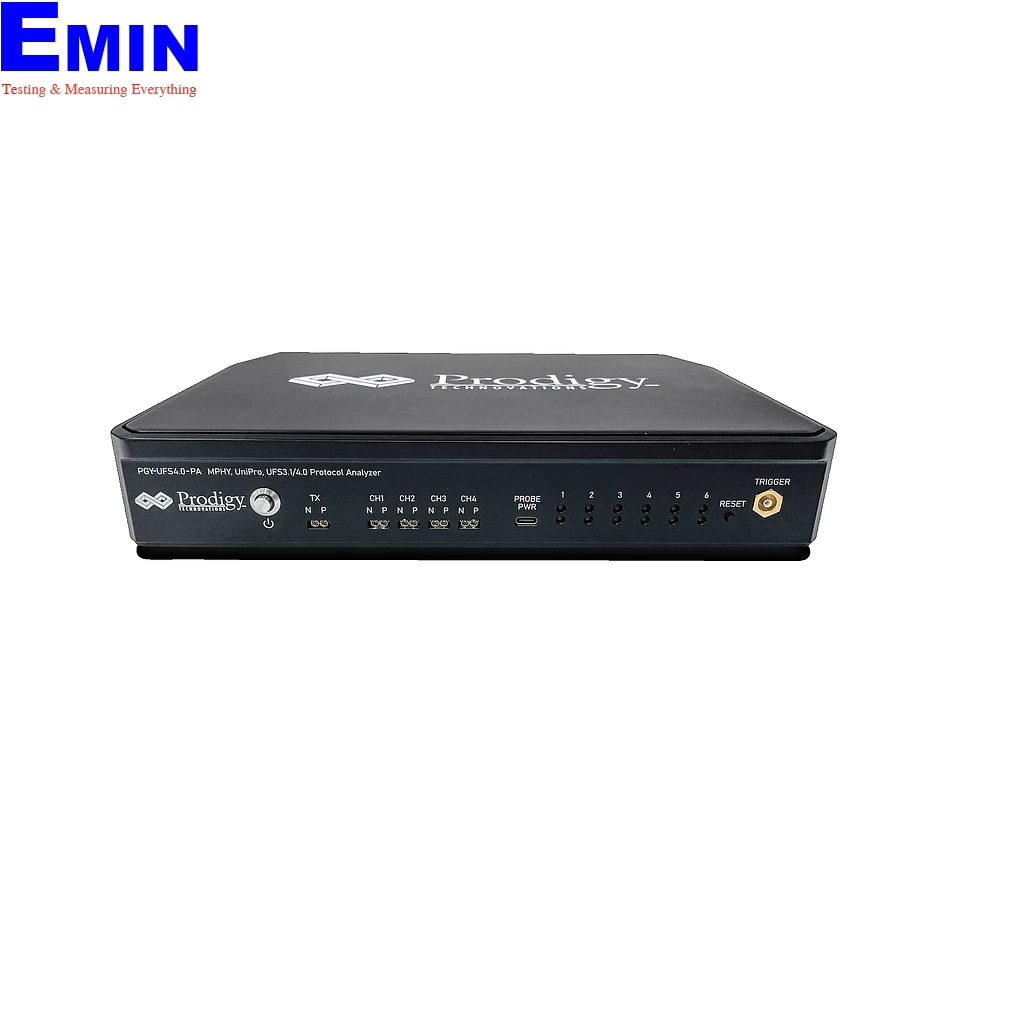
For embedded and board-level communication, there are solutions focused on interfaces such as I2C, SPI, UART, SMBus, PMBus, JTAG, QSPI, SPMI, RFFE, and I3C. Products from Prodigy Technovations illustrate this well, with platforms that combine protocol decode, timing views, trigger capability, and exerciser functions for development teams that need to emulate bus traffic as part of validation.
Where wider channel count or mixed timing/state analysis is important, a platform such as the Acute BF7264 BusFinder protocol analyzer can fit workflows that require deeper capture memory and multi-channel visibility. This is often relevant in complex digital systems where several related signals must be correlated during debug.
Analyzer only or analyzer with exerciser?
Not all protocol tools serve the same purpose. A passive analyzer is mainly intended to observe traffic without creating it, which is ideal for diagnosing issues in a live system and confirming what is actually happening on the bus. This approach is common in USB and protocol-compliance troubleshooting, where preserving native traffic conditions is important.
By contrast, an analyzer and exerciser adds the ability to generate custom traffic, emulate master or slave behavior, inject errors, and automate test scenarios. This is useful during pre-silicon validation, firmware development, or automated regression environments. Models such as the PGY-I2C/SPI-EX-PD, PGY-UART-EX-PD, PGY-PMBus-EX-PD, and PGY-I3C-EX-PD are examples of instruments suited to both observation and controlled stimulation of the interface.
What to consider when selecting a protocol analyzer
The first factor is the target interface and signaling environment. USB, CAN, I2C, SPI, and I3C all require different capture architectures, decoders, connectors, and trigger logic. Start by confirming that the analyzer supports the exact bus family you need, then check whether its capture method aligns with your task: field troubleshooting, firmware debug, qualification, or automated test.
Next, consider data rate, channel count, memory depth, and trigger sophistication. High-speed buses may need real-time display, large onboard buffering, and protocol-aware filtering, while board-level serial debugging may depend more on flexible voltage support, custom timing control, or multi-role emulation. If your workflow involves recurring test cases, API support and scripting compatibility can be just as important as the decode engine itself.
It is also worth looking at how results are presented. Timing diagrams, packet listings, search and filter tools, error reports, and export functions all affect how quickly engineers can move from raw traffic to a useful conclusion. In more advanced labs, protocol analyzers may sit alongside tools used for device characterization, including SMU semiconductor test equipment, especially when digital behavior must be correlated with electrical performance.
Representative products in this category
The selection in this category reflects several common use cases. The Total Phase Beagle USB 5000 v2 Protocol Analyzer is aimed at USB bus monitoring with real-time analysis and software-based viewing, which can be useful for developers working on host communication, peripherals, or transfer behavior at multiple USB speeds.
The Acute BF7264 BusFinder protocol analyzer is positioned toward applications that need a larger number of channels and deep capture resources. This type of instrument is often suitable when engineers need to inspect timing relationships across many lines rather than focus on a single low-pin-count serial bus.
For protocol-specific development and verification, Prodigy Technovations provides targeted tools such as PGY-SMBus-EX-PD, PGY-PMBus-EX-PD, PGY-QSPI-EX-PD, PGY-SPMI-EX-PD, PGY-JTAG-EX-PD, and PGY-UHS-II SD/SDIO UHS II Protocol Analyzer. These examples show how protocol analyzers can be optimized for a particular standard, with functions such as custom traffic generation, protocol triggers, continuous streaming, and error reporting built around the needs of that bus.
Typical benefits for engineering and test teams
A well-matched protocol analyzer shortens debug cycles by turning low-level bus activity into readable transactions. Instead of manually interpreting waveforms line by line, engineers can review decoded packets, identify failed handshakes, inspect timing anomalies, and compare expected versus actual command sequences more efficiently.
These tools also help improve collaboration across hardware, firmware, and validation teams. Captured sessions can be saved, shared, searched, and reused during issue replication or design reviews. For organizations moving toward repeatable bench automation, analyzers with software integration provide a practical bridge between manual debug and scripted test workflows.
Choosing by application rather than by brand alone
While manufacturer preference can matter for software workflow or existing lab standards, the more important question is how the instrument fits the bus and test objective. Total Phase is often associated with protocol visibility on communication buses such as USB and related interfaces, while Acute and Prodigy Technovations address other needs ranging from broad digital capture to protocol-specific exerciser platforms.
In practice, the right choice depends on whether you need live monitoring, protocol triggering, high channel density, error injection, traffic generation, or automation support. Reviewing the intended interface, test depth, and engineering workflow will usually narrow the selection faster than comparing features in isolation.
Conclusion
Protocol analyzers are essential tools for understanding how digital systems communicate at the transaction level. Whether the task is USB monitoring, embedded serial debug, storage-interface analysis, or automated protocol validation, choosing the right platform starts with the bus standard, the required depth of capture, and the balance between passive analysis and active exercising.
This category brings together tools from established suppliers for a range of protocol-debug scenarios. If you are comparing options, focus on interface support, trigger and decode capability, software workflow, and automation readiness to find a solution that matches your engineering environment.
Get exclusive volume discounts, bulk pricing updates, and new product alerts delivered directly to your inbox.
By subscribing, you agree to our Terms of Service and Privacy Policy.
Direct access to our certified experts