Safety Testers
Electrical safety verification is a critical part of product development, incoming inspection, and end-of-line quality control. When assemblies, power supplies, cables, appliances, medical-support equipment, or industrial electronics must be checked for insulation integrity and operator safety, Safety Testers provide the controlled high-voltage and current test functions needed to evaluate compliance and reduce risk before equipment goes into service.
This category brings together instruments used for hipot, insulation resistance, ground bond, continuity, and leakage current testing. It is relevant for manufacturers, service organizations, test labs, and maintenance teams that need repeatable electrical safety procedures, result traceability, and practical integration into production or bench workflows.
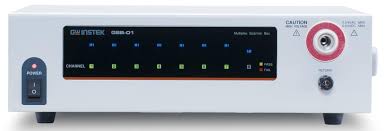
Where safety testers fit in an electrical test workflow
Unlike general-purpose measurement tools, safety testers are designed specifically to stress insulation systems and verify protective grounding under defined conditions. A typical workflow may include dielectric withstand testing to confirm insulation strength, insulation resistance measurement to assess leakage paths, and ground bond testing to validate low-resistance protective earth connections.
In many facilities, these tests sit alongside basic verification with a multimeter and other electrical measurement tools. The difference is that a safety tester applies controlled test energy and pass/fail limits intended for formal safety evaluation, which makes it more suitable for production testing and documented inspection routines.
Common test functions available in this category
A large share of the instruments in this range support AC/DC withstand testing, often referred to as hipot testing. This test applies a specified high voltage between conductors and accessible parts or between isolated circuits to check whether the insulation system can withstand stress without unacceptable leakage or breakdown.
Many models also include insulation resistance measurement, which is useful when a numerical resistance value is needed rather than a simple withstand result. For products that rely on protective earth continuity, ground bond and continuity modes help verify that low-resistance paths remain intact under test current. Some systems extend into leakage current testing or functional run checks, which can be important for powered products and final safety validation.
Representative instruments and solution styles
Several examples in this category illustrate how different safety test requirements map to different instrument types. The Associated Research (ARI) 7850 combines AC hipot, DC hipot, and insulation resistance functions, making it a practical fit for applications that need multiple test modes in one platform. The Associated Research (ARI) 7804 extends into ground bond capability, which is useful where both dielectric and protective earth verification are required.
For focused applications, single-purpose or narrower-function instruments can make more sense. The Associated Research (ARI) 3240 is centered on ground bond testing, while the Associated Research (ARI) 620L is positioned for leakage current testing. For higher-voltage applications, instruments such as the Associated Research (ARI) 7715 and 7720 represent dedicated high-voltage hipot options for demanding test environments.
The category also includes ecosystem components such as the GW INSTEK GHT-117 HV Adapter Box, the OPT. 01 GPIB Interface Card, and a control board for GPT-9804 platforms. These accessories and replacement parts support installed systems, interface expansion, or maintenance needs rather than acting as standalone primary testers.
How to choose the right safety tester
The first selection step is identifying the required test method. If your workflow only needs AC withstand testing, a simpler hipot instrument may be enough. If your process must verify several aspects of electrical safety in one sequence, a multifunction platform that combines AC, DC, insulation resistance, continuity, and ground bond can reduce operator steps and simplify fixture design.
Next, look at the required output range and measurement capability. In this category, some models cover up to 5 kV AC and 6 kV DC, while others are intended for higher-voltage hipot applications reaching 20 kV. Ground bond requirements also vary, especially when higher test current is needed to verify bonding integrity on metal chassis, power equipment, or heavy-duty assemblies.
Operational details matter as well. Memory capacity, programmable test steps, USB or RS-232 connectivity, optional GPIB or Ethernet, and rackmount suitability can all influence how easily the instrument fits into a production line or validation bench. If test data handling and repeatability are priorities, it is worth considering models that support stored sequences and result logging.
Manufacturer coverage and platform considerations
This category includes products and brand coverage from recognized suppliers used in industrial and laboratory environments. Depending on the application, buyers may compare platforms from Associated Research (ARI), GW INSTEK, EEC, CHROMA, HIOKI, KIKUSUI, Gossen Metrawatt, Seaward, Rigel medical, and Fluke (Biomedical).
Different manufacturers often align with different user priorities, such as compact bench instruments, automated production testing, portable service-oriented safety checks, or specialized biomedical verification. In practice, the best fit depends less on brand alone and more on the required test sequence, voltage and current range, interface options, and whether accessories or replacement modules are needed over the product lifecycle.
Typical applications across industries
Safety testers are widely used wherever electrical insulation and grounding must be verified before operation or shipment. Common use cases include power supplies, consumer and industrial appliances, control panels, cable assemblies, motors, transformers, chargers, lighting products, and electronic modules entering final inspection.
They are also valuable in repair, refurbishment, and preventive maintenance settings. After replacing wiring, power-entry components, or insulation barriers, a formal safety test can confirm that the equipment still meets the intended protection concept. In facilities that also troubleshoot grounding issues, related tools such as an earth resistance tester or a ground fault locator may complement the safety test process.
Why integrated test control matters
For many B2B users, the value of a safety tester is not only in voltage output but in how consistently it controls the whole test sequence. Features such as programmable memories, pass/fail limits, ramp timing, dwell timing, interlock inputs, and result storage help reduce variation between operators and make recurring tests easier to standardize.
This is especially important in production or regulated environments, where traceability and repeatability matter as much as raw test capability. A well-matched safety tester can shorten setup time, improve confidence in outgoing quality, and support a safer, more documented verification process from prototype stage through serial production.
Final thoughts
Choosing among safety testers starts with understanding the actual electrical risk points in the product and then matching those needs to the right combination of hipot, insulation resistance, ground bond, continuity, or leakage current functions. Some teams need a compact single-function instrument, while others benefit from a multifunction analyzer with memory, communications, and production-oriented control.
Within this category, you can compare dedicated and multifunction platforms, higher-voltage hipot models, and supporting accessories for established test systems. A careful review of test method, output range, connectivity, and workflow requirements will lead to a safer and more efficient electrical verification setup.
Get exclusive volume discounts, bulk pricing updates, and new product alerts delivered directly to your inbox.
By subscribing, you agree to our Terms of Service and Privacy Policy.
Direct access to our certified experts