
Amplifiers
In RF and microwave measurement chains, signal level is often the limiting factor between a clean, repeatable result and an unstable test setup. When insertion loss, long cable runs, weak DUT output, or high-frequency attenuation reduce signal strength, the right amplifiers help restore usable levels for analysis, validation, and system integration.
This category focuses on amplifier solutions used in telecommunication and high-frequency measurement environments, especially where broadband coverage, controlled gain, and predictable noise performance matter. It is relevant for engineers working with receiver test benches, spectrum analysis, microwave subsystems, and general-purpose RF signal conditioning.
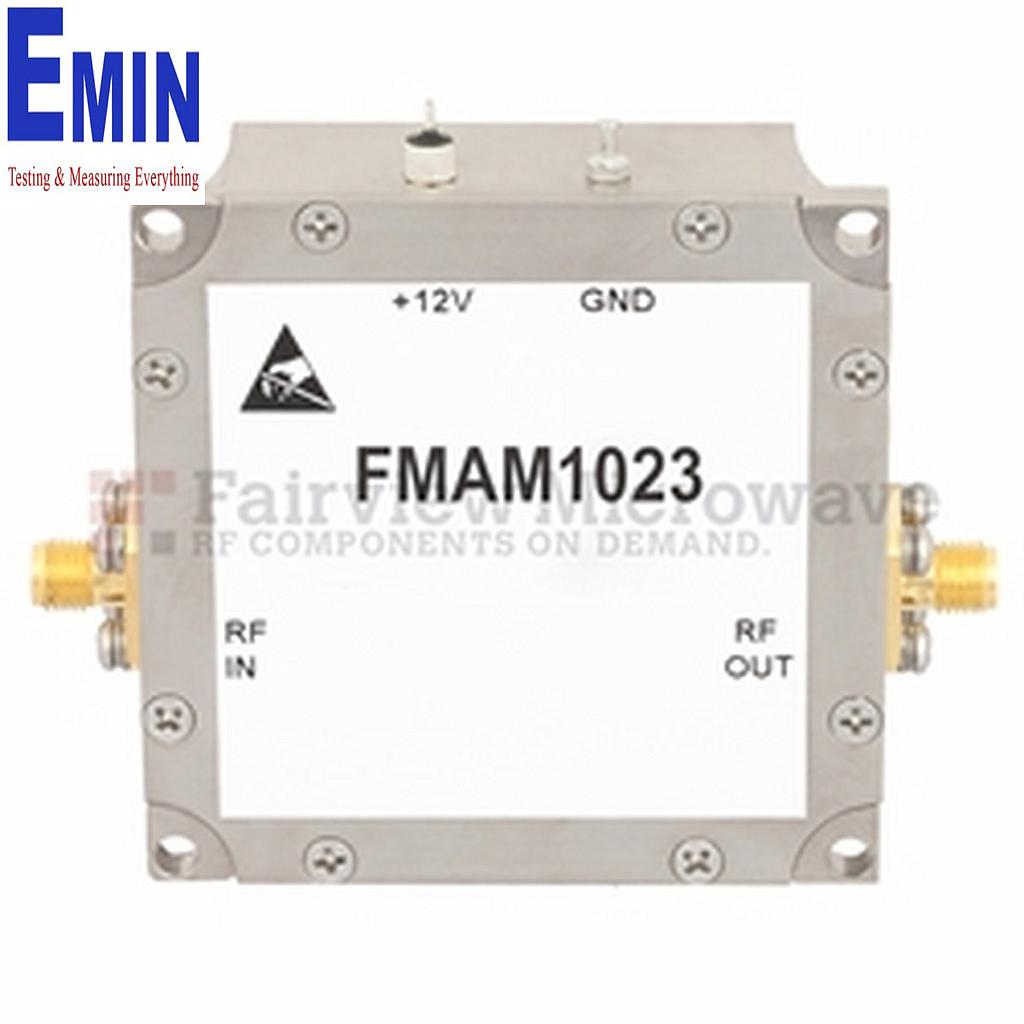
Where amplifiers fit in telecom and RF measurement systems
Amplifiers are commonly placed in a signal path to increase amplitude before measurement, compensate for losses in fixtures or cables, or improve the visibility of low-level signals. In laboratory and production environments, they are often used ahead of analyzers, receivers, or other downstream instruments that need stronger input signals within a controlled operating range.
Depending on the setup, an amplifier may be selected for wide frequency coverage, higher output power, or lower added noise. In practical terms, that means the selection process is not only about gain. Engineers also consider bandwidth, noise figure, flatness, impedance compatibility, and how the amplifier interacts with related components such as RF adapters and interconnect hardware.
Broadband frequency coverage for microwave applications
One of the defining requirements in this category is broadband operation. Many telecom and microwave test tasks span from low MHz ranges into tens of GHz, so broad coverage can reduce the need to swap devices across different benches or projects. This is particularly useful in R&D labs, verification workflows, and multi-band test environments.
Examples in this category illustrate that range clearly. The KEYSIGHT 83051A Microwave System Amplifier covers 45 MHz to 50 GHz, while the KEYSIGHT 83050A Microwave System Amplifier supports 2 to 50 GHz. For lower-frequency entry points with wide upper bandwidth, models such as the KEYSIGHT 83006A and KEYSIGHT 83017A extend from 10 MHz or 0.5 GHz up to 26.5 GHz, offering flexibility for broadband RF signal conditioning.
System amplifiers, RF amplifiers, and preamplifiers
Not every amplifier serves the same purpose, even when frequency ranges overlap. System amplifiers are typically chosen when a test bench needs stable gain and sufficient output drive across a wide band. They are useful in setups where signal routing losses or demanding downstream stages require more than basic preamplification.
For example, the KEYSIGHT 83020A Microwave System Amplifier is suited to applications that need strong gain and higher output power in the 2 to 26.5 GHz range. By contrast, preamplifiers are often selected when the priority is improving sensitivity at the front end of a measurement chain. The KEYSIGHT 87405C Preamplifier, covering 0.1 to 18 GHz, is a good example of a device positioned to boost low-level signals before they reach measurement equipment.
Compact RF amplifier modules are also represented here. The KEYSIGHT N4985A-S30 and N4985A-S50 extend broadband use cases up to 30 GHz and 50 GHz respectively, making them relevant for engineers who need wide coverage in a smaller form factor. For users building modular setups, supporting parts such as isolators may also be considered to help manage reflections and improve signal-path stability.
Why gain and noise figure matter together
When choosing an amplifier, gain is usually the first parameter engineers check, but it should always be evaluated alongside noise figure. High gain can help overcome downstream losses, yet if the amplifier adds too much noise, the practical improvement in measurement quality may be limited. This is especially important in low-level signal detection, receiver testing, and microwave front-end characterization.
Products in this category show different balances between these parameters. The KEYSIGHT U7227C USB Preamplifiers, for instance, combine broad bandwidth from 100 MHz to 26.5 GHz with relatively low noise figure across much of that range. The KEYSIGHT U7227A addresses lower-frequency work from 10 MHz to 4 GHz, while the KEYSIGHT U7227F extends USB preamplification up to 50 GHz for higher-frequency measurement tasks.
In practice, the right balance depends on whether the amplifier is being used to drive a signal path or to improve front-end sensitivity. A bench that needs stronger output into multiple downstream elements may prioritize power and gain, while a weak-signal test setup may focus more heavily on keeping added noise under control.
Selection points for real-world integration
A good amplifier choice starts with the operating frequency range, but integration details are just as important. Engineers should verify the required gain window, expected signal levels, impedance matching, and whether the application calls for continuous broadband use or narrower operation with more specific performance goals. Output power and thermal behavior can also become important in demanding or continuous-duty environments.
Mechanical and connection considerations matter too. Some setups benefit from compact USB-controlled units, while others require bench-style microwave system amplifiers with stronger drive capability. If the signal path includes splitting or distribution, related components such as a power divider may influence the gain budget and overall architecture.
Brand preference can also play a role when teams want consistency across existing instrumentation. This category includes solutions from KEYSIGHT as well as manufacturer coverage relevant to broader telecom and RF design ecosystems, including Analog Devices, Qorvo, NXP, Texas Instruments, and Microchip.
Typical use cases in telecom and high-frequency labs
Amplifiers in this category are relevant to a wide range of applications: boosting signals before spectrum or network analysis, compensating for fixture and cable loss, improving measurement sensitivity in receiver paths, and supporting broadband microwave validation. They are also useful in general telecom component evaluation where controlled signal levels are necessary across wide frequency spans.
In development environments, engineers may use a preamplifier to reveal weak emissions or low-level responses that would otherwise sit too close to the analyzer noise floor. In system-level validation, a higher-power microwave amplifier may be used to maintain sufficient drive through a more complex signal chain that includes switches, adapters, and passive distribution components.
Choosing the right amplifier for your setup
The most suitable amplifier is usually the one that matches the full measurement context rather than the one with the highest headline specification. Frequency coverage, gain profile, noise contribution, output capability, and physical integration all affect how well the device performs inside a real RF chain. Looking at those factors together helps avoid overdesign and reduces troubleshooting later.
For teams comparing broadband microwave amplifiers, RF amplifiers, and preamplifiers, this category provides a focused starting point. Whether the requirement is low-level signal boosting, wideband lab coverage, or stronger system drive across GHz ranges, reviewing the available models by operating band and intended role can make selection more efficient and technically sound.
Get exclusive volume discounts, bulk pricing updates, and new product alerts delivered directly to your inbox.
By subscribing, you agree to our Terms of Service and Privacy Policy.
Direct access to our certified experts