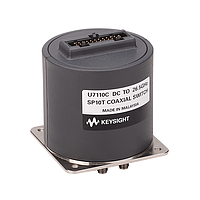
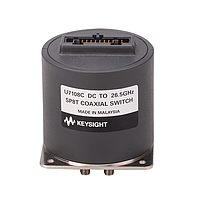
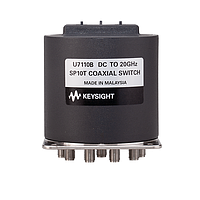
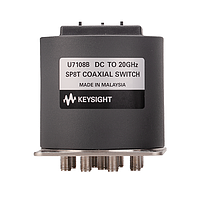
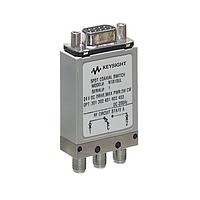
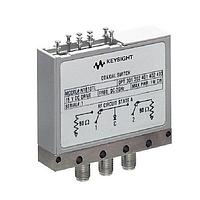
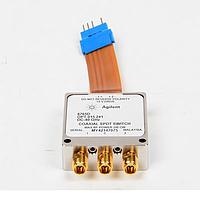
Telecomunication Switches
In RF and telecom test setups, signal routing has a direct impact on repeatability, switching speed, and how efficiently multiple instruments or channels can be managed. This category brings together Telecomunication Switches used for controlled path selection in measurement, verification, and communication component integration, especially where frequency range, isolation, and matrix configuration matter.
These products are typically selected for labs, production environments, and telecom measurement systems that need reliable switching between ports without constant manual reconnection. Depending on the application, the right solution may be a simple SPDT or SP4T path switch, or a larger crossbar matrix designed for automated multi-channel routing.
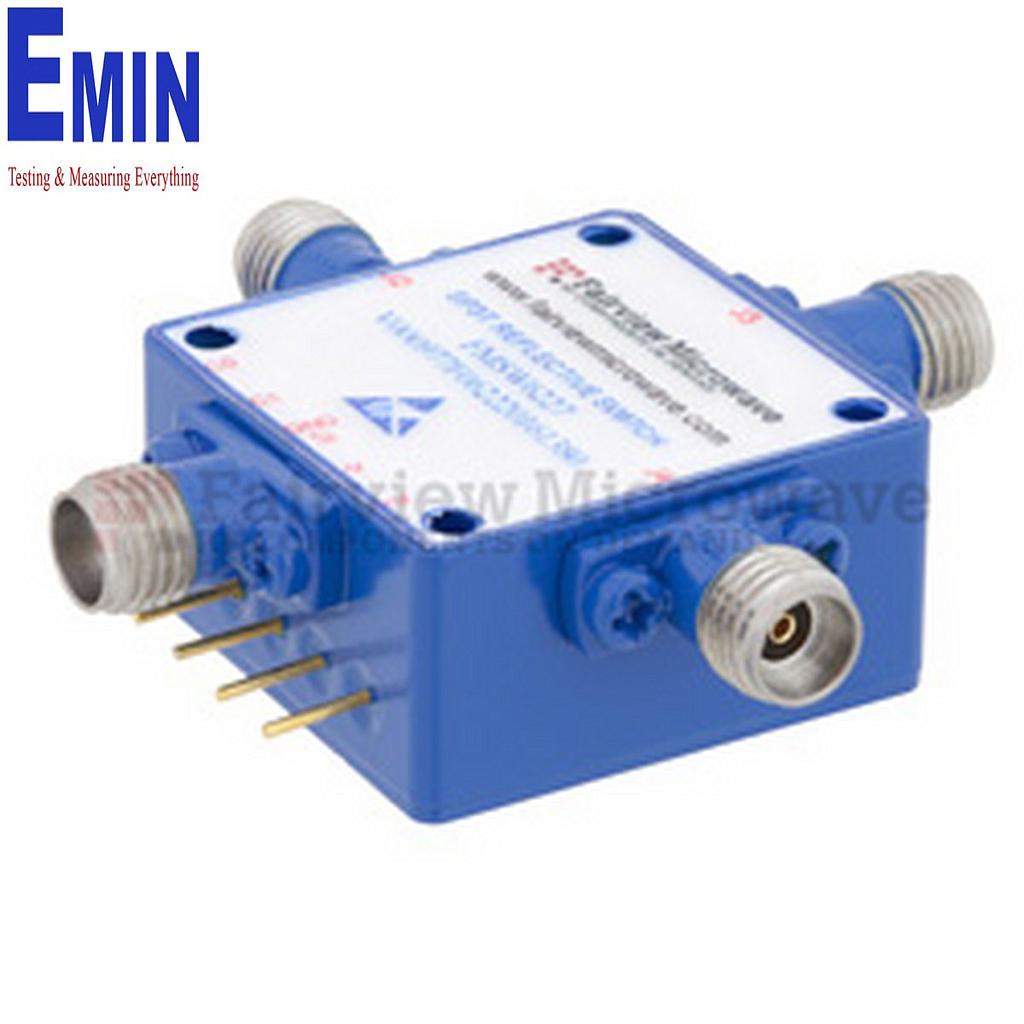
Where telecom switches are used in practice
Telecommunication switching components are commonly used in RF signal distribution, automated test systems, antenna path selection, and multi-device validation benches. In these environments, the switch is not just a convenience item; it becomes part of the measurement path, so electrical behavior such as insertion loss and isolation must be considered together with control method and port count.
They are also relevant when building modular telecom signal chains alongside related components such as adapters and power dividers. This is especially useful when a test architecture needs both signal branching and selective routing within the same system.
Common switch formats in this category
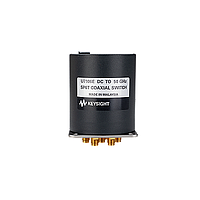
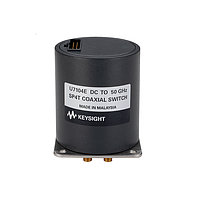
A practical way to compare devices in this category is by switch topology. SPDT models are used when one signal must alternate between two paths, while SP4T designs allow one input to be directed across several outputs. For more advanced routing, switch matrix products support many-to-many style connections, which helps reduce manual cable changes in dense test environments.
The listed examples show this range clearly. The KEYSIGHT P9402C is an SPDT solid-state PIN diode switch for applications up to 18 GHz, while the KEYSIGHT P9404A and P9404C extend that idea to SP4T switching. For broader automated routing, the KEYSIGHT P9165A, P9165B, and P9165C provide 2x8 full crossbar matrix options, and the P9164A, P9164B, and P9164C expand to 2x16 configurations for higher channel density.
Frequency range, isolation, and loss: what to check first
When evaluating a telecom switch, the first question is usually frequency coverage. A system operating in lower microwave ranges may work well with switching hardware up to 6.5 GHz or 9 GHz, while broader RF and microwave applications may require support to 18 GHz or even beyond. In this category, selected products include options from 100 MHz to 18 GHz, as well as a model reaching DC to 26.5 GHz in the case of the KEYSIGHT N1810UL-026.
After frequency range, two of the most important parameters are isolation and insertion loss. Good isolation helps prevent signal leakage between paths, which is essential in measurement accuracy and channel separation. Lower insertion loss supports stronger signal integrity through the switching path, reducing the need for compensation elsewhere in the setup.
Why solid-state and matrix switching matter for automation
In modern telecom and electronic measurement environments, switching is often integrated into software-controlled workflows. Solid-state designs are attractive because they support fast, repeatable switching behavior and fit well into automated test systems. USB-controlled matrix products are especially useful where engineers need centralized control of many signal paths from a workstation or test controller.
KEYSIGHT is one of the most relevant brands in this category, particularly for RF switching and matrix architectures used in instrument-driven environments. If you are building a broader measurement platform, it can also be helpful to explore the available KEYSIGHT product range for related RF and test equipment that may sit upstream or downstream of the switch path.
Choosing between SPDT, SP4T, and matrix configurations
The best choice depends on how many paths must be controlled and how often the routing changes. An SPDT switch is often sufficient for basic A/B path selection, redundancy checks, or alternating between a device under test and a reference line. SP4T designs make more sense when one source needs access to several destinations without external combinational hardware.
A switch matrix is usually the better option when channel count rises and test flexibility becomes more important than minimal hardware cost. A 2x8 matrix such as the KEYSIGHT P9165 series may suit compact automated benches, while a 2x16 platform like the P9164 series better fits denser routing requirements. Selection should also account for operating frequency ceiling, expected path isolation, and available control interface.
How these switches fit into a wider telecom component ecosystem
Telecom switches rarely operate alone. In real systems, they are part of a path that may also include attenuation, coupling, filtering, matching, and mechanical or electrical interface transitions. That is why buyers often evaluate them together with RF accessories and passive components, especially when building a complete lab or production fixture.
In some setups, an isolator may be added to protect sensitive instruments from reflected power or to improve stability in the signal chain. Looking at the surrounding components early in the selection process can prevent mismatch issues and reduce redesign later.
Representative products in this category
Several products in this category illustrate the typical selection logic. The KEYSIGHT P9402C and P9404C are suitable examples of solid-state PIN diode switching for RF path control up to 18 GHz, while the P9404A addresses lower frequency requirements up to 8 GHz. For matrix-based routing, the KEYSIGHT P9165C and P9164C support full crossbar switching up to 18 GHz, with lower-band alternatives available in the A and B variants.
Although most highlighted items here are RF-oriented switching products, the wider manufacturer landscape shown on this page may also support adjacent telecom, instrumentation, and lab requirements. Not every brand listed serves the same role, so the most effective approach is to match the device type to the actual routing problem rather than selecting by brand name alone.
Selection guidance for buyers and system integrators
For B2B procurement and engineering teams, a good starting checklist includes signal frequency, number of ports, switching architecture, connector compatibility, control method, and acceptable path loss. Environmental conditions may also matter, particularly if the switch will operate in validation racks, production lines, or shared lab spaces where temperature and uptime consistency are important.
If your application involves automated RF testing, it is often worth deciding early whether you need a compact discrete switch or a scalable matrix platform. That decision affects not only routing flexibility, but also cable management, control software structure, and future expansion. A well-matched switch can simplify the whole measurement chain and improve repeatability across repeated test cycles.
Whether the need is simple RF path selection or a higher-density crosspoint arrangement for automated measurement, this category is intended to support more informed sourcing of telecom switching hardware. Reviewing topology, frequency range, and system fit together will usually lead to a better long-term choice than focusing on one specification alone.
Get exclusive volume discounts, bulk pricing updates, and new product alerts delivered directly to your inbox.
By subscribing, you agree to our Terms of Service and Privacy Policy.
Direct access to our certified experts