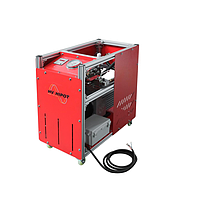
Gas Evacuation & Refill Unit
Safe handling of insulating gas is a routine but critical part of maintenance in high-voltage equipment. When switchgear, GIS, or related systems need servicing, a reliable Gas Evacuation & Refill Unit helps technicians remove gas, create the required vacuum, and refill the system in a controlled way while reducing losses and supporting cleaner maintenance procedures.
On this page, you can explore equipment designed for SF6 gas evacuation and refilling across different capacity levels, from compact portable units to higher-throughput mobile trolley systems. This category is especially relevant for utilities, transformer and switchgear service teams, electrical testing contractors, and industrial maintenance departments that need practical equipment matched to field conditions and service volume.
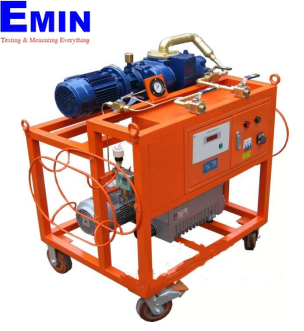
Where these units fit in electrical maintenance
In high-voltage service work, gas handling equipment supports more than a simple transfer task. It is part of a broader maintenance workflow that may also include insulation checks, condition assessment, and commissioning tests. A gas evacuation and refill unit is used when equipment must be emptied, vacuumed, and prepared for gas charging after inspection, repair, or installation.
For teams working on SF6-insulated systems, this process often sits alongside tools such as an SF6 gas analyzer for gas condition verification or withstand voltage test equipment during electrical testing stages. Used together, these instruments help create a more complete maintenance workflow rather than treating gas handling as an isolated step.
Typical configurations in this category
This category covers both portable units and mobile trolley systems. Portable units are generally easier to move into tighter service areas or use for lower-volume field work, while trolley-mounted systems are better suited to larger substations, heavier-duty maintenance schedules, or applications where higher pumping speed improves turnaround time.
The product range here illustrates that difference clearly. Compact models such as the Acore GER-10, GER-20, and GER-25 are suitable when mobility and smaller gas-handling demand are key considerations. Larger trolley-type units such as the Acore GER-100, GER-252, GER-540, and GER-1000 address higher flow requirements and are more aligned with intensive service operations.
Key selection criteria before you choose a unit
The first practical factor is pumping speed. In this category, available units range from 10 m³/h up to 1080 m³/h, which can make a major difference in service time depending on the size of the apparatus and the maintenance volume. For occasional or light-duty work, a smaller portable unit may be adequate; for larger switchgear assets or regular service programs, higher-capacity systems are usually more efficient.
Vacuum performance is also important. Several models in this category specify a limited vacuum of 10 Pa, which is relevant when preparing equipment before refilling. Buyers should also check the vacuum gauge type, available coupling format, power supply requirements, and overall unit size and weight, especially if the equipment will be used across multiple job sites.
Another point to consider is deployment style. If your team works mainly indoors in substations with accessible service paths, a mobile trolley can be practical. If access is restricted or transport flexibility matters more, a smaller portable machine may be the better fit.
Representative product options from HV HIPOT and Acore
Two manufacturers featured prominently in this category are HV HIPOT and Acore. Their products cover different capacity levels and operating formats, giving buyers a useful range of choices depending on service conditions, gas volume, and mobility needs.
The HV HIPOT GDQC-55A is an example of an air-cooled vacuum pump solution intended for continuous operation, with a pumping speed of 55 m³/h and a stated final pressure of 30 Pa. It also includes a pointer vacuum gauge and dedicated connection details suited to SF6 handling applications. For users looking for a compact but purpose-built system, this type of configuration may be relevant.
Acore’s GER series provides a broader capacity ladder. At the lower end, the GER-10, GER-20, and GER-25 portable units are aimed at smaller jobs and easier transport. Moving upward, the GER-40, GER-65, and GER-100 provide intermediate capacity, while the GER-252, GER-540, and GER-1000 are more appropriate for higher-throughput evacuation and refill tasks in larger maintenance environments.
How to match capacity to the job
Choosing the right unit is often less about buying the biggest machine and more about matching workflow to site reality. A maintenance contractor handling varied field jobs may prefer portable equipment that is easier to deploy and store. By contrast, utility teams maintaining larger fleets of gas-insulated assets may benefit from higher-capacity systems that shorten evacuation and refill cycles.
It is also worth considering the surrounding test ecosystem. In some maintenance programs, gas handling work is performed before or after dielectric checks with equipment such as a capacitance and tan δ meter or other high-voltage test instruments. Looking at the full service process can help buyers avoid selecting a gas unit that fits the specification sheet but not the actual workflow.
Operational details that matter in real use
Beyond core vacuum and refill capability, day-to-day usability often comes down to practical details. Gauge style, coupling arrangement, input power, noise level, and machine footprint all affect field operation. A digital vacuum gauge may be preferred for quick reading and repeatability, while connection compatibility can influence how easily the unit integrates with existing maintenance procedures.
Transport and storage should not be overlooked either. Some of the higher-capacity trolley units in this category are substantially heavier than the portable models, so handling method and available vehicle space may matter just as much as pumping rate. For service organizations, these practical differences can influence labor efficiency and job-site setup time.
Why this category matters for SF6 service workflows
SF6 maintenance requires controlled handling, not only to support equipment reliability but also to improve consistency during service operations. A dedicated evacuation and refill unit helps standardize that process by providing the vacuum, transfer, and refill functions needed during routine maintenance, repair, and commissioning work.
For buyers comparing options, the most useful approach is to focus on service frequency, gas volume, mobility requirements, and power availability. This category brings together models across a broad capacity range, making it easier to identify a solution that aligns with actual field conditions rather than relying on a one-size-fits-all choice.
Final considerations before purchasing
If your team regularly works on gas-insulated electrical equipment, selecting the right Gas Evacuation & Refill Unit can improve maintenance efficiency and help create a more repeatable service process. Smaller portable systems may suit occasional or distributed field work, while larger trolley-mounted units are better aligned with demanding maintenance schedules and larger gas-handling volume.
Review the available models based on pumping speed, vacuum level, gauge type, coupling format, and installation environment. With options from HV HIPOT and Acore, this category supports a wide range of operational needs for professional SF6 evacuation and refill tasks.
Get exclusive volume discounts, bulk pricing updates, and new product alerts delivered directly to your inbox.
By subscribing, you agree to our Terms of Service and Privacy Policy.
Direct access to our certified experts