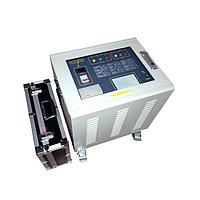
Power transmission line testing equipment
Utilities, EPC contractors, and maintenance teams working on overhead lines and transmission assets need more than a single test instrument. They usually need a combination of tools for locating faults, checking line parameters, and verifying system behavior under real operating conditions. This is where Power transmission line testing equipment becomes especially relevant, helping engineers diagnose issues faster and make better decisions during commissioning, troubleshooting, and periodic maintenance.
On this page, you can explore instruments used for transmission line analysis and fault-related testing, including travelling wave fault location kits, HVDC test sets, and dedicated line test systems. The category is intended for technical users who need practical equipment selection based on application, test method, and operating environment rather than generic product descriptions.
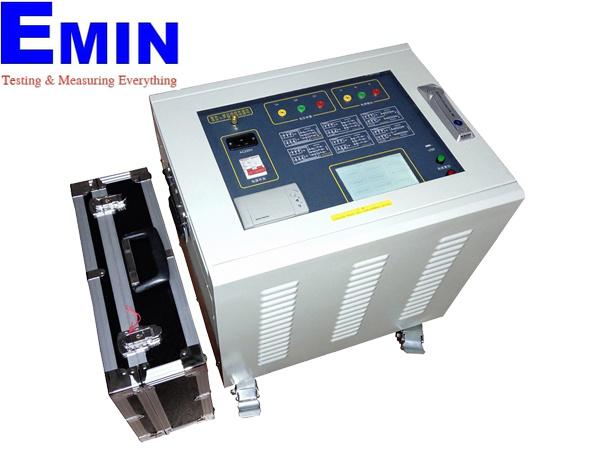
Where these instruments fit in transmission line work
Transmission line testing often involves different tasks across the asset lifecycle. During commissioning, teams may need to verify electrical parameters and confirm that the line and related equipment behave as expected. During operation and maintenance, the priority may shift toward fault location, line condition assessment, and fast restoration after abnormal events.
Because of that, this category covers more than one testing approach. Some instruments are designed for high-speed signal injection and analysis in travelling wave applications, while others focus on high-current DC output or parameter measurement such as capacitance and impedance. For users comparing options, the key is to match the instrument type to the actual field or laboratory workflow.
Typical equipment types in this category
A major part of this category is built around travelling wave fault location test kits. Models such as the Ponovo PH01, PH02, PH03, and PH04 are intended for scenarios where high-speed current and voltage outputs are required to simulate or analyze transient conditions related to line fault location. Depending on the model, users can choose AC or DC versions and different channel configurations to suit the test setup.
Another group includes HVDC current test sets such as the Ponovo TD2000A, TD4000A, and TD8000A. These units are relevant when applications require controlled high-current DC output, with different output ranges supporting different scales of testing. For broader transmission line parameter measurement, the HV HIPOT GDLP Transmission Line Test System is also representative of equipment used to evaluate capacitance, impedance, and related characteristics in line testing work.
Travelling wave fault location testing and why high-speed performance matters
When a fault occurs on a transmission line, travelling wave methods help identify the fault point by analyzing transient wave propagation along the line. In practice, this requires equipment capable of generating and handling very fast signals with stable synchronization between channels. That is why specifications such as bandwidth, rise time, channel count, and synchronization error are important in this product group.
For example, the Ponovo PH04 Travelling Wave Fault Location Test Kit combines high-speed current and voltage channels in an AC configuration, while the PH03 provides a DC-oriented option. The PH02 and PH01 offer additional channel choices for users who need flexibility in current output arrangements. If your work mainly centers on fast fault analysis and relay-related transient testing, equipment from Ponovo is a natural reference point within this category.
High-current DC test sets for demanding transmission applications
Some transmission line and substation-related tests call for substantial DC current output rather than high-speed transient simulation. In those cases, HVDC test sets become more relevant. Output range, supply requirements, measurement accuracy, and physical portability all matter, especially when equipment may be used in service workshops, factory testing, or specialized field support environments.
The Ponovo TD series illustrates this well. The TD2000A, TD4000A, and TD8000A cover progressively higher current ranges, which allows users to choose a more appropriate platform instead of oversizing the test setup. For buyers evaluating these systems, it is useful to consider not only the maximum output, but also installation constraints, available power supply, and how often the equipment needs to be moved between sites.
How to choose the right power transmission line testing equipment
Selection becomes easier when you start from the test objective rather than the product name. If the main task is locating faults through transient analysis, a travelling wave fault location kit is generally the more suitable direction. If the requirement involves high-current DC injection, then an HVDC test set will be more appropriate. For line parameter measurement, a dedicated transmission line test system may be the better fit.
It is also worth checking a few practical points before ordering:
- Signal type and output method: AC, DC, or mixed current/voltage requirements depending on the test procedure.
- Channel configuration: especially important when multi-phase or synchronized testing is needed.
- Output capacity: current, voltage, and power should align with the intended test burden.
- Accuracy and synchronization: critical for transient analysis and repeatable measurement results.
- Physical size and weight: relevant for teams that need portable equipment for field deployment.
Related test categories that may support a complete workflow
Transmission line work is rarely isolated from the rest of the power test ecosystem. Depending on the project, users may also need equipment for insulation verification, dielectric assessment, or auxiliary high-voltage generation. In many real-world maintenance programs, these categories are used together rather than as standalone tools.
For example, insulation verification may involve withstand voltage test equipment, while dielectric condition assessment can be supported by a capacitance/tan δ meter. If the test setup requires external high-voltage generation, a high-voltage/step-up transformer may also be relevant. These related categories can help users build a more complete transmission asset testing workflow.
Brand focus and application context
This category currently highlights solutions from HV HIPOT and Ponovo, each fitting different parts of transmission testing work. Ponovo is strongly represented in the fault location and HVDC testing side, with product families that cover multiple output formats and performance levels. HV HIPOT contributes dedicated transmission line test capability through systems aimed at measuring electrical parameters that support line analysis and maintenance planning.
Rather than choosing by brand alone, technical buyers should compare the intended method, expected test range, and operating conditions. A compact travelling wave kit may be ideal for one engineering team, while another may need a heavier high-current platform or a parameter-focused test system for planned diagnostic work.
Practical questions before purchase
Before selecting a unit, it helps to confirm whether the instrument will be used mainly in the field, in a workshop, or in a lab-style environment. You should also consider whether the work is focused on emergency fault response, scheduled diagnostic testing, or acceptance testing after installation. These usage patterns affect the value of portability, channel density, and output performance.
It is equally important to review the required power supply, protection features, and compatibility with your existing procedures. In transmission testing, the right instrument is not just the one with the highest figures on paper, but the one that supports the actual test sequence safely and efficiently.
Choosing suitable Power transmission line testing equipment means aligning the instrument with the job: fast transient fault location, high-current DC testing, or transmission line parameter measurement. By comparing application purpose, output capability, and deployment requirements, engineering teams can narrow down the most relevant options and build a more effective testing setup for transmission assets.
Get exclusive volume discounts, bulk pricing updates, and new product alerts delivered directly to your inbox.
By subscribing, you agree to our Terms of Service and Privacy Policy.
Direct access to our certified experts