Anemometer
Accurate airflow data matters in far more situations than outdoor weather checks. In HVAC balancing, laboratory ventilation, cleanroom verification, process air monitoring, and facility maintenance, an anemometer helps technicians understand how air is moving, whether flow is stable, and if a system is operating within expected conditions.
This category brings together instruments used to measure air velocity, airflow, and in many cases temperature or related environmental values. Depending on the application, you may need a compact handheld vane meter for quick spot checks, a multifunction instrument for commissioning work, or a dedicated probe for integration with a broader testing setup.
Where anemometers are commonly used
Air movement measurement is essential wherever ventilation performance affects safety, comfort, energy use, or process stability. Typical use cases include checking supply and return vents, measuring exhaust flow, validating hood performance, and confirming airflow in ducts or controlled work areas.
In building services and industrial environments, anemometers are often used alongside related devices such as air and gas transmitters for continuous monitoring or air quality sensors when airflow needs to be considered together with IAQ conditions. This makes airflow measurement part of a wider environmental monitoring workflow rather than a standalone task.
Different instrument types in this category
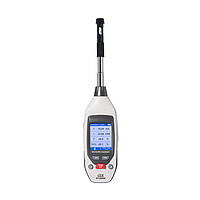
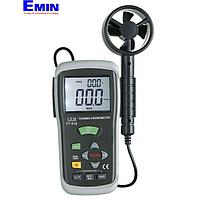
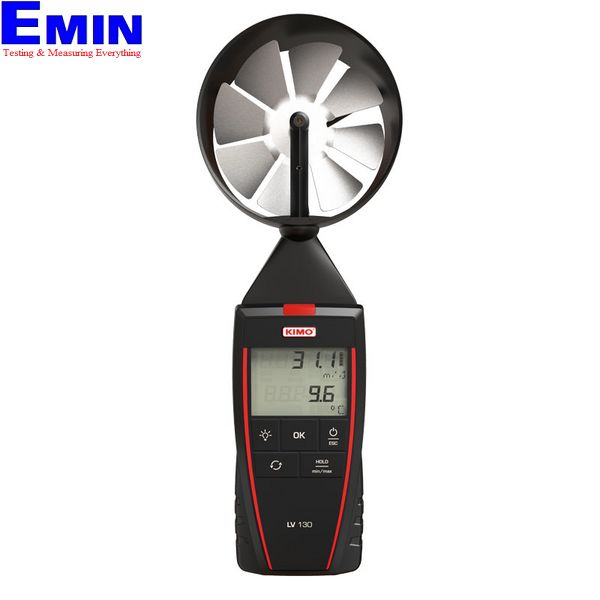
Not every airflow job requires the same sensor style. Vane anemometers are widely used for general ventilation work because they are intuitive, portable, and suitable for measuring face velocity or airflow at grilles and diffusers. Models such as the FLUKE FLUKE-925 ESP Vane Anemometer and TESTO 410-1 are good examples of handheld instruments designed for practical field measurement.
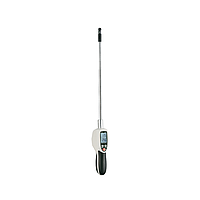
Some applications need more than a single portable meter. Products like the TESTO 440dP Air Velocity Meter extend capability by combining airflow work with differential pressure-based tasks, which can be useful in HVAC and indoor air investigations. There are also probe-based options, such as the Dwyer VP1 and Dwyer AP1-36, that fit into broader measuring systems where the sensor geometry and access length are important.
For ventilation balancing and hood verification, the category also includes specialized airflow solutions like the Dwyer SAH-22 and SAH-22HC SMART AIR HOOD® instruments. These are better suited to measuring flow at diffusers and terminals than a basic handheld vane meter when the job calls for higher coverage and faster balancing workflows.
How to choose the right anemometer
The first selection point is the measurement task. If you only need to check air speed at outlets or in front of fans, a compact vane meter may be enough. If you need airflow volume, temperature, humidity, or pressure-related checks in the same visit, a multifunction platform can reduce the number of instruments you carry.
Measurement range also matters. Some jobs involve low indoor air speeds, while others require wider velocity ranges for duct testing or industrial ventilation. It is also worth checking whether the instrument displays airflow units such as CFM or CMS directly, especially if you regularly work with balancing reports or service documentation.
Physical design should not be overlooked. Sensor diameter, probe length, portability, battery life, display readability, and data logging can all affect usability in the field. A handheld unit may be ideal for maintenance rounds, while a dedicated probe or hood-based system may be more practical for commissioning specialists.
Examples from leading manufacturers
This category includes solutions from established measurement brands such as FLUKE, TESTO, Dwyer, and Chauvin Arnoux. Each brand is associated with slightly different strengths, from compact general-purpose airflow meters to probe-based systems and HVAC-focused balancing tools.
The FLUKE FLUKE-925 ESP Vane Anemometer is oriented toward portable measurement of wind speed, airflow, and temperature in one device. The TESTO 410-1 offers a compact format for air velocity and temperature spot checks, while the TESTO 440dP supports broader airflow and indoor air assessment tasks with connectivity to compatible probes.
Dwyer products in this category cover several levels of use, from portable vane thermo-anemometers such as the Dwyer 8904 and Dwyer 9671 to application-specific instruments like the Dwyer 670 Fume Hood Monitor and SMART AIR HOOD® balancing devices. There is also accessory and probe coverage, including the Chauvin Arnoux P01654251 vane sensor for C.A 1227, which shows that airflow measurement often depends on the right sensor ecosystem as much as the base instrument itself.
Practical tips for better airflow measurement
Reliable readings depend not only on the instrument but also on how it is used. Position the vane or probe correctly relative to the airflow direction, allow the reading to stabilize, and avoid taking a single quick measurement when airflow is visibly turbulent. For grilles, diffusers, or large openings, averaging multiple points is often more meaningful than relying on one location.
It is also important to match the sensor type to the access conditions. A compact integrated vane meter works well in open areas, but tight ducts, elevated vents, or enclosed test points may require a remote or wired probe. For system verification, users often review air velocity together with temperature, humidity, or pressure to get a more complete picture of operating conditions.
Where contamination control is relevant, airflow is only one part of the assessment. In those environments, supporting tools such as an aerosol generator may be considered for broader testing procedures, depending on the application and protocol being followed.
Why airflow measurement matters in HVAC and controlled environments
Ventilation systems are expected to do more than simply move air. They must help maintain occupant comfort, support process consistency, and in some cases protect personnel through controlled exhaust or containment. An anemometer provides the field data needed to compare real operating conditions with design or maintenance targets.
In HVAC work, this can mean confirming diffuser output, checking return flow, and supporting balancing adjustments. In laboratories, fume hood and face velocity checks may be central to safety reviews. In industrial settings, air movement can affect drying, cooling, dust control, or process repeatability, making routine verification valuable even when the system appears to be functioning normally.
Choosing with confidence for your application
A good choice starts with understanding whether you need a simple spot-check tool, a multifunction airflow instrument, or a specialized system for balancing or hood monitoring. The products in this category cover a wide span of needs, from portable vane meters to dedicated probes and application-focused instruments.
If your work involves regular airflow verification, comparing sensor style, measuring range, portability, and the need for additional parameters will usually narrow the options quickly. With a well-matched anemometer, technicians can work faster, document results more clearly, and make better decisions about ventilation performance in the field.
Get exclusive volume discounts, bulk pricing updates, and new product alerts delivered directly to your inbox.
By subscribing, you agree to our Terms of Service and Privacy Policy.
Direct access to our certified experts