
Pressure Deadweight Testers Calibration Service
Reliable pressure measurement starts with a reference standard that can be trusted. In calibration labs, process plants, and quality systems, deadweight testers are often used as primary or high-accuracy pressure standards, so their performance has a direct impact on the accuracy of many other instruments across the facility.
Pressure Deadweight Testers Calibration Service is intended for organizations that need confidence in the pressure values generated by their reference equipment. Regular calibration helps verify that the tester is performing within expected limits, supports traceability requirements, and reduces the risk of error being passed on to gauges, transmitters, controllers, and other pressure-related devices.
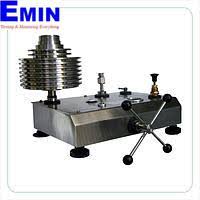
Why deadweight tester calibration matters
A deadweight tester works by generating pressure through a known mass applied over an effective piston area. Because it is commonly used as a reference instrument, even small deviations can influence the calibration results of multiple downstream devices. This is especially important in industries where pressure accuracy affects safety, product quality, compliance, or process stability.
Periodic service helps confirm the condition of the piston-cylinder assembly, the loading system, and the overall pressure generation behavior. It also supports internal quality programs by providing documented evidence that the equipment used as a standard remains suitable for ongoing calibration work.
What is typically covered in the service
The scope of a deadweight tester calibration service can vary depending on the instrument design, pressure range, and intended use. In practice, the goal is to evaluate whether the unit can generate and maintain pressure accurately enough for its application, while identifying issues that may affect repeatability or long-term reliability.
Typical work may include verification of generated pressure points, assessment of repeatability, inspection of mechanical condition, and review of factors that influence measurement quality. For users operating a broader calibration workflow, it can also be useful to align this service with related support such as pressure comparator calibration service when multiple reference standards are used in the same system.
Common reasons to schedule calibration
Many companies plan service at fixed intervals to meet internal procedures or customer audit requirements. Others send equipment for calibration after intensive use, relocation, repair, or whenever results begin to drift from expected values. Any event that may affect the mass set, piston movement, pressure medium condition, or overall mechanical stability is a valid reason to recheck the instrument.
Calibration is also advisable when the deadweight tester is used to support high-accuracy work or when it serves as a key reference for other devices. If that same laboratory also calibrates loop and instrument signals, coordinating with a process signal calibrator calibration service can help maintain consistency across electrical and pressure measurement activities.
Key factors that influence calibration quality
For a deadweight tester, accuracy is shaped by more than the nominal mass values alone. The condition of the piston and cylinder, cleanliness, vertical alignment, local gravity considerations, pressure medium characteristics, and environmental conditions can all affect the final result. This is why calibration should be approached as a full performance check rather than a simple visual inspection.
Users should also pay attention to how the instrument is stored and handled between calibration intervals. Protecting the tester from contamination, shock, corrosion, and improper assembly helps preserve measurement traceability and reduces the likelihood of avoidable performance changes over time.
How to choose the right service scope
The appropriate service approach depends on how the instrument is used in your operation. A deadweight tester that serves as a working standard in routine maintenance may have different requirements from one used in a formal calibration laboratory or for critical verification tasks. Service planning should reflect the required uncertainty level, frequency of use, and the importance of the measurements supported by the device.
It is also useful to consider the broader calibration chain in your facility. If deadweight testers are part of a mixed portfolio of standards, related services such as electrical calibrator calibration service or dry block and bath calibrator calibration service may be relevant for maintaining a complete and well-managed calibration system.
Typical applications across industry
Pressure deadweight testers are widely used wherever pressure instruments need a dependable reference. This includes manufacturing, utilities, oil and gas, pharmaceuticals, laboratories, and process industries where pressure loops, gauges, sensors, and transmitters are checked against a known standard.
In these environments, calibration service helps maintain confidence in both the reference equipment and the instruments calibrated from it. That makes the service valuable not only for individual device performance, but also for overall quality assurance, maintenance planning, and audit readiness.
Good practices between service intervals
Calibration intervals are important, but day-to-day care also has a major effect on performance. Operators should follow proper setup procedures, use suitable pressure media, keep components clean, and avoid unnecessary mechanical stress during transport or storage. Consistent handling supports better repeatability and reduces the chance of damage to critical elements.
Maintaining service records, usage history, and any observations of abnormal behavior can also improve planning for future calibration. A documented history makes it easier to spot drift patterns, adjust intervals when needed, and ensure that each reference pressure standard remains fit for purpose.
Supporting a dependable calibration program
Choosing a calibration service for deadweight testers is ultimately about protecting the integrity of the measurements that depend on them. Because these instruments often sit near the top of the pressure calibration hierarchy, their condition affects much more than a single device. A well-planned service schedule helps preserve accuracy, supports compliance requirements, and reduces uncertainty throughout the calibration chain.
For organizations that rely on pressure standards in routine maintenance or laboratory work, keeping deadweight testers properly calibrated is a practical step toward more stable processes and more dependable results.
Get exclusive volume discounts, bulk pricing updates, and new product alerts delivered directly to your inbox.
By subscribing, you agree to our Terms of Service and Privacy Policy.
Direct access to our certified experts