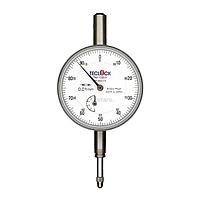
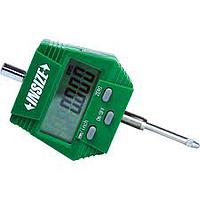
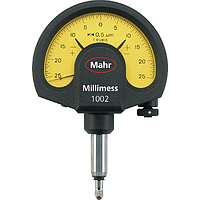
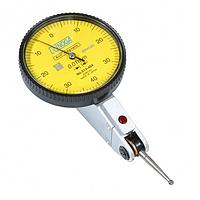
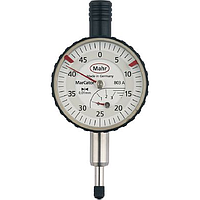
Dial Indicators Calibration Service
In precision machining, toolmaking, inspection, and maintenance work, even a small deviation on a dial indicator can lead to incorrect setup decisions and unreliable measurement results. A professional Dial Indicators Calibration Service helps verify that the instrument responds accurately across its measuring range, so it can continue to support alignment checks, comparative measurement, and dimensional inspection with confidence.
This category is intended for companies that rely on dial indicators as part of everyday quality control or workshop measurement routines. Whether the instrument is used on a stand, fixture, machine table, or inspection bench, regular calibration is an important step in maintaining traceability, reducing measurement uncertainty, and detecting wear before it affects production.
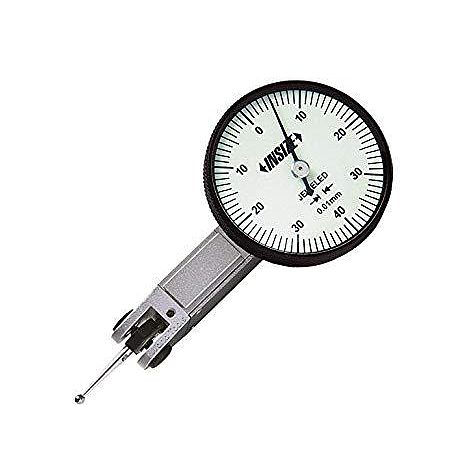
Why dial indicator calibration matters
Dial indicators are often used for comparative measurement rather than direct dimensional certification, but that does not make calibration any less important. In practical use, these instruments support concentricity checks, runout inspection, flatness comparison, setup alignment, and repeatability control. If the pointer movement, contact response, or indication error drifts over time, the impact can spread into machine setup, part inspection, and maintenance decisions.
A structured calibration service helps confirm that the indicator performs within acceptable limits for its intended use. It also supports quality systems where measurement equipment must be monitored at defined intervals. For many users, calibration is not only about finding out whether a tool still works, but also about maintaining a reliable measurement chain across the workshop or inspection department.
What is typically checked during the service
For dial indicators, calibration generally focuses on indication accuracy, repeatability, response over the measuring travel, and consistency of pointer movement. The objective is to verify how the instrument behaves under controlled conditions and to identify errors that may not be obvious during routine shop-floor use.
In addition to scale indication, the service can help reveal mechanical issues such as backlash, sticking movement, uneven travel, or wear at the contact system. These problems may appear gradually, especially in instruments exposed to frequent handling, vibration, dust, coolant mist, or repeated loading in production environments.
Suitable for common industrial brands
This category covers calibration services for widely used dial indicator brands in industrial measurement environments. Typical examples include instruments from Mahr, MITUTOYO, MOORE & WRIGHT, TECLOCK, and METROLOGY. These brands are commonly found in machine shops, calibration rooms, maintenance departments, and incoming inspection areas.
Representative services in this category include Mahr Dial Indicators Calibration Service, MITUTOYO Dial Indicators Calibration Service, MOORE & WRIGHT Dial Indicators Calibration Service, METROLOGY Dial Indicators Calibration Service, and TECLOCK Dial Indicators Calibration Service. These examples help illustrate the scope of supported applications without turning the category into a simple product list.
When to send a dial indicator for calibration
Calibration intervals depend on how often the indicator is used, how critical the measurement task is, and the conditions in which the instrument operates. Indicators used daily for machine setup or repetitive inspection usually require closer monitoring than tools kept as occasional references. If an instrument is part of an audited quality process, calibration may also be scheduled according to internal quality procedures.
There are also practical warning signs that suggest calibration should not be delayed. These include inconsistent readings, pointer hesitation, impact damage, visible wear, or results that no longer agree with other reference instruments. After repair, heavy use, or long-term storage, recalibration is often a sensible step before the tool returns to service.
How to choose the right calibration support
When selecting a service, it helps to consider more than brand compatibility alone. Users should think about the required documentation, the role of the instrument in the measurement process, and whether the indicator is used for routine workshop checks or for more controlled inspection work. The right service should match both the instrument type and the level of confidence required by the application.
For companies managing several mechanical measuring tools, it is often more efficient to review calibration needs across the full inspection set. In addition to dial indicators, related services such as callipers calibration and micrometers calibration may be relevant when building a consistent calibration schedule.
Benefits for quality control and maintenance teams
A calibrated dial indicator supports more dependable inspection results and better decision-making on the shop floor. For production teams, that can mean fewer setup errors and better process consistency. For maintenance teams, it helps ensure that alignment and runout checks are based on dependable instrument behavior rather than assumptions.
From a quality management perspective, regular calibration also improves equipment control and simplifies audit preparation. It creates a clearer record of instrument condition over time, making it easier to identify tools that are stable in use and those that may require replacement, servicing, or closer monitoring.
Related calibration needs in mechanical measurement
Dial indicators are rarely used in isolation. They are typically part of a wider measurement ecosystem that may include calipers, micrometers, depth gauges, thickness gauges, and hardness testers depending on the production or inspection task. Reviewing calibration needs across these instruments can improve consistency and reduce the risk of uneven control between different measurement points.
If your workflow also depends on vertical measurement tools or comparative thickness checks, related services such as depth gauge calibration can be useful to include in the same maintenance and quality planning cycle. This approach is especially helpful in facilities that manage multiple stations, operators, or inspection routines.
Choose a service that fits your measurement workflow
Dial indicator calibration is most valuable when it is treated as part of a practical measurement control strategy, not just as an administrative requirement. By checking performance at appropriate intervals and responding early to signs of drift or wear, businesses can keep commonly used indicators ready for dependable daily work.
This category brings together calibration services for established dial indicator brands used in industry, helping buyers identify suitable support for their existing equipment. If your team depends on these instruments for setup, comparison, or inspection tasks, a well-planned calibration program is a straightforward way to protect measurement reliability over time.
Get exclusive volume discounts, bulk pricing updates, and new product alerts delivered directly to your inbox.
By subscribing, you agree to our Terms of Service and Privacy Policy.
Direct access to our certified experts