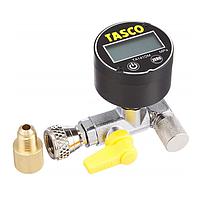
Fixed pressure gauge calibration service
Accurate pressure indication is essential wherever process stability, equipment safety, and compliance depend on trustworthy measurements. Over time, fixed-mounted gauges can drift because of vibration, pressure cycling, temperature changes, or normal mechanical wear, which is why fixed pressure gauge calibration service remains an important part of preventive maintenance in industrial systems.
This category is intended for buyers and maintenance teams looking for calibration support for permanently installed or panel-mounted pressure gauges used in production lines, utilities, laboratories, HVAC systems, and general industrial applications. Whether the goal is routine verification, troubleshooting measurement deviation, or maintaining documentation for quality systems, calibration helps confirm that the gauge is reading within an acceptable tolerance for its intended use.
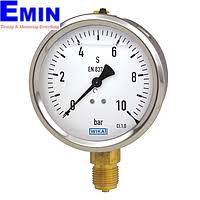
Why fixed pressure gauge calibration matters
A fixed gauge is often treated as a simple indicator, but in many systems it supports decisions about machine operation, line pressure, pump condition, or process stability. If the displayed value is inaccurate, operators may respond to the wrong condition, potentially affecting product quality, maintenance planning, or system safety.
Regular calibration helps verify the gauge against a reference and identify zero shift, span deviation, or other reading errors before they lead to larger operational issues. This is especially relevant in applications where pressure is tied to inspection records, maintenance audits, or recurring quality checks.
Typical applications for fixed-mounted pressure gauges
Fixed pressure gauges are widely used on compressors, pumps, air lines, hydraulic systems, water treatment skids, boiler-related equipment, refrigeration circuits, and factory utility networks. In these environments, gauges are exposed to conditions that can influence performance over time, including pulsation, sudden pressure spikes, contamination, and ambient temperature variation.
Calibration is commonly scheduled during shutdowns, periodic maintenance, or equipment validation activities. For systems using multiple pressure devices, users may also need related services such as pressure transmitter calibration service when electronic instruments are part of the same measurement chain.
What is typically checked during calibration
The main objective is to compare the installed gauge or removed gauge unit against a suitable reference across defined test points. This process helps confirm whether the instrument responds consistently through its measurement range and whether the indication returns properly after pressure is released.
In practical terms, calibration may focus on items such as accuracy verification, repeatability, zero condition, and response at increasing and decreasing pressure points. For vacuum-related instruments or compound gauges, similar evaluation logic may apply, which is also relevant in services such as the Tasco Vacuum Pressure Gauge Calibration Service when vacuum pressure indication needs to be checked in maintenance workflows.
How to choose the right calibration scope
The correct service scope depends on how the gauge is used in the field. Some gauges are employed for general monitoring, while others support more critical process control, equipment protection, or inspection records. Understanding the application helps determine how often calibration should be performed and how strict the acceptable error should be.
It is also useful to distinguish between permanently installed gauges and instruments designed for field portability. If the instrument is handheld or used as a mobile test device, a portable pressure meter calibration service may be a better fit than a service intended for fixed-mounted indicators.
Examples of services and supported brands
This category may include calibration support for well-known instrument brands used in industrial maintenance environments. Examples from this catalog include the PCE Digital Pressure Gauges Calibration Service, KDS Digital Pressure Gauge Calibration Service, and Tasco Vacuum Pressure Gauge Calibration Service.
These examples are useful as references for the types of instruments commonly handled, but service selection should still be based on the actual gauge type, installation method, and operating range in your application. Brand alone should not be the only criterion; the measurement function and service context are equally important.
Related pressure calibration services in the same workflow
In many facilities, fixed gauge calibration is only one part of a broader instrument maintenance program. Teams often manage several pressure device types at the same time, from mechanical indicators to sensors and transmitters used in automation or data logging systems.
When expanding calibration coverage, it may be helpful to review options such as pressure sensor calibration service or hydraulic meter calibration service for equipment operating in related measurement environments. This makes it easier to organize maintenance by device function rather than treating each instrument in isolation.
When to send a fixed pressure gauge for calibration
A calibration interval is usually determined by operating conditions, internal quality procedures, and the importance of the measurement point. Gauges used in high-cycle applications, exposed to shock or vibration, or installed in demanding industrial environments may require more frequent verification than those used only for general indication.
Common triggers include suspected reading deviation, unstable pointer behavior, replacement after maintenance, quality audit requirements, or routine periodic inspection. In all cases, the purpose is the same: maintain confidence in the reading and reduce uncertainty in day-to-day operation.
Supporting better maintenance decisions
Choosing a suitable calibration service for fixed pressure gauges helps maintenance and engineering teams keep measurement points reliable without overcomplicating the process. It also supports a more structured approach to equipment care, especially where pressure readings influence machine condition checks, troubleshooting, or process verification.
If you are comparing service options, focus on the instrument type, installation role, and measurement criticality first. A well-matched pressure gauge calibration workflow can improve traceability, reduce avoidable errors, and make pressure-related maintenance more consistent across the site.
Get exclusive volume discounts, bulk pricing updates, and new product alerts delivered directly to your inbox.
By subscribing, you agree to our Terms of Service and Privacy Policy.
Direct access to our certified experts