
Vibration meter - Accelerometer - Dynamic balance Calibration Service
Reliable vibration data depends on more than the instrument itself. In maintenance, condition monitoring, and machine diagnostics, even a small measurement drift can affect trend analysis, machine health assessment, and balancing decisions. That is why Vibration meter - Accelerometer - Dynamic balance Calibration Service plays an important role in keeping portable meters, analyzers, and sensors aligned with expected measurement performance.
This category is intended for users who need calibration support for vibration meters, accelerometers, and related dynamic balancing instruments used in industrial environments. It is especially relevant for service teams, predictive maintenance programs, laboratories, and plants that rely on repeatable vibration readings to evaluate rotating equipment, bearings, motors, pumps, and fans.
Why calibration matters in vibration measurement
Vibration measurement is often used to detect developing faults before they become costly failures. When a meter or sensor is out of calibration, the problem is not only accuracy in a single reading, but also the loss of confidence in long-term comparisons. A maintenance team may misjudge machine condition, delay corrective action, or perform unnecessary intervention based on unreliable data.
Calibration helps verify that the instrument responds correctly within its intended operating range and that its output remains consistent over time. For equipment used in route-based inspections, troubleshooting, or balancing work, this supports traceable measurement practices and improves the quality of maintenance decisions.
Typical instruments covered in this category
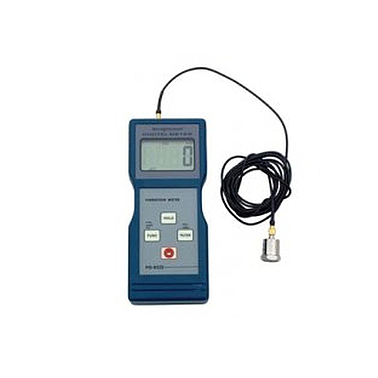
This service category is suitable for several types of equipment used in mechanical diagnostics. These may include handheld vibration meters, vibration analyzers, accelerometers, and instruments associated with dynamic balance tasks. Although each device type serves a different role, they all depend on dependable signal response and stable measurement behavior.
Examples in this category include the FLUKE Vibration Meter Calibration Service, EXTECH Vibration Meter Calibration Service, PCE Accelerometer Calibration Service, RION Vibration Meter Calibration Service, and Adash Vibration Analyzer Calibration Service. These examples show that calibration needs can span from portable field instruments to more specialized analyzer-based workflows.
Accelerometers deserve particular attention because they are the sensing element at the front end of many vibration measurements. If the sensor response changes, the entire measurement chain can be affected. In the same way, balancing instruments rely on dependable vibration and phase-related inputs to support meaningful correction decisions in rotating machinery applications.
Common application environments
Calibration demand in this category is typically driven by real operating conditions. Plants using vibration measurement for predictive maintenance often schedule periodic calibration to support internal quality systems, external audits, and consistent reporting across maintenance cycles. Service contractors may also require calibration records to demonstrate that field instruments remain suitable for professional diagnostic work.
These services are commonly relevant in manufacturing, utilities, process industries, HVAC maintenance, and machine repair operations. Any environment that depends on vibration trending, fault detection, or balancing of rotating assets can benefit from regular verification of instruments and sensors.
What to consider when selecting a calibration service
Not every user sends the same type of device for calibration, so it helps to choose a service that matches the actual instrument in use. A handheld meter, an accelerometer, and a vibration analyzer may require different handling, methods, or reporting expectations. Before placing an order, it is useful to confirm the device type, manufacturer, and intended measurement role.
For example, users working with PCE sensors or analyzers may be looking for support focused on the measurement chain, while teams using portable meters from EXTECH, LUTRON, or TENMARS may simply need regular periodic calibration to keep routine inspections dependable. Where balancing tasks are involved, the priority is often confidence in the vibration-related data used during machine correction work.
It is also practical to review service intervals based on equipment usage, internal quality procedures, and how critical the measurement is to the process. Instruments used frequently in harsh environments, transported often, or exposed to mechanical shock may need closer attention than equipment used occasionally in controlled conditions.
Examples of calibration services available
This category includes representative services for a range of brands used in industrial vibration work. Available examples include RION Vibration Meter Calibration Service, ACO Vibration Meter Calibration Service, TENMARS Vibration Meter Calibration Service, Adash Vibration Analyzer Calibration Service, MMF Vibration Meter Calibration Service, EXTECH Vibration Meter Calibration Service, PCE Accelerometer Calibration Service, PULSAR Vibration Meter Calibration Service, FLUKE Vibration Meter Calibration Service, and LUTRON Vibration Meter Calibration Service.
These listings can help buyers identify the right starting point when searching by brand or equipment family. Rather than treating all instruments as interchangeable, the category is structured to support more relevant selection based on actual device use and manufacturer association.
How this category fits within broader calibration needs
Many organizations manage multiple specialist instruments alongside vibration tools. In those cases, calibration planning is often done across several device groups to reduce downtime and keep documentation organized. If your team also works with optical, surface, or process-specific instruments, it may be useful to review related services such as coating thickness meter calibration or laser power meter calibration.
Looking at related calibration categories can help maintenance managers and purchasing teams consolidate service planning across departments. This is especially useful when different teams share responsibility for reliability, inspection, and quality assurance.
Who benefits most from this service category
This category is most relevant for maintenance engineers, reliability teams, condition monitoring specialists, calibration coordinators, and industrial service providers. It also supports procurement teams that need a clearer way to identify calibration services by device type and brand.
Whether the requirement is routine annual calibration or support after heavy field use, the goal remains the same: preserve measurement confidence and reduce uncertainty in machine assessment. For organizations that depend on vibration data to guide maintenance decisions, a properly selected calibration service is a practical part of asset reliability management.
Final considerations before ordering
Before choosing a service, it is worth confirming the exact instrument category involved: vibration meter, accelerometer, analyzer, or balancing-related equipment. Matching the service to the device helps avoid delays and makes the process more efficient for both technical users and purchasing teams.
With the right calibration path, vibration measurement tools can continue to support dependable diagnostics, trending, and maintenance planning. If your work depends on accurate machine condition data, this category provides a focused route to services for widely used brands and instrument types in the vibration monitoring workflow.
Get exclusive volume discounts, bulk pricing updates, and new product alerts delivered directly to your inbox.
By subscribing, you agree to our Terms of Service and Privacy Policy.
Direct access to our certified experts
