
Fertigation Control System Inspection Service
Stable nutrient dosing and reliable irrigation control are critical in modern greenhouse, hydroponic, and precision agriculture operations. When a fertigation line starts drifting, responding slowly, or showing inconsistent controller data, the result can be uneven crop development, wasted fertilizer, and avoidable downtime. A professional Fertigation Control System Inspection Service helps identify these issues early and supports more dependable system performance in day-to-day operation.
This type of inspection is especially relevant for facilities that rely on automated dosing, sensor feedback, pumps, and online controllers to maintain water and nutrient quality. Rather than focusing on only one component, the service looks at the broader control loop so maintenance teams can understand where faults, drift, signal problems, or communication issues may be affecting the process.
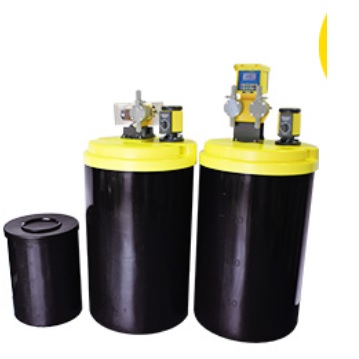
Why fertigation control system inspection matters
In a fertigation application, several elements must work together consistently: dosing equipment, measurement points, controller logic, and output response. If one part becomes unstable, the system may still appear to be running while actual nutrient delivery no longer matches the intended setpoint. Inspection helps reveal hidden issues before they affect crop quality or resource consumption.
A structured inspection is also useful when a site is experiencing unexplained alarms, slow controller response, irregular dosing cycles, or discrepancies between field conditions and displayed values. For B2B users, this service supports troubleshooting, maintenance planning, and better confidence in automated irrigation processes.
Typical scope of inspection
A practical inspection process usually reviews the condition and behavior of the control system as a whole rather than checking only visible hardware. This can include the controller interface, sensor input status, signal stability, pump or actuator response, wiring condition, and the general integrity of the measurement and dosing loop.
In many cases, inspection also helps verify whether the system is responding logically to process changes. That may involve checking whether control outputs track input values correctly, whether alarms are triggered as expected, and whether communication between sensors and controllers remains stable during operation. The goal is not to assume a fault in advance, but to create a clearer technical picture of overall system health.
Common issues found in fertigation systems
Fertigation environments can be demanding because they combine water treatment, chemical dosing, automation, and field operation. Over time, systems may be affected by sensor drift, unstable readings, controller setting errors, scaling, contamination, intermittent wiring problems, or response delays between measurement and dosing action. Even a small deviation in one area can influence the entire irrigation strategy.
Inspection is valuable because many of these problems do not present as complete failure. Instead, they often appear as gradual performance deviation: nutrient control becomes less precise, operators need more manual correction, or setpoints require repeated adjustment. Identifying that pattern early can reduce unnecessary part replacement and shorten troubleshooting time.
When to schedule an inspection
This service is relevant in both corrective and preventive maintenance scenarios. It is commonly considered when a facility notices unstable operation, after system relocation or modification, before a production season, or as part of a scheduled maintenance plan for automation assets. Sites that depend on continuous dosing and online feedback often benefit from routine inspection intervals rather than waiting for a complete breakdown.
Inspection can also be useful after component replacement, especially when new sensors, pumps, or controller settings have been introduced. In these cases, the objective is to confirm that the updated configuration is working as intended and that no mismatch has been introduced into the control loop.
How this service supports maintenance and process reliability
For maintenance engineers and technical buyers, inspection provides a more informed basis for service decisions. Instead of replacing parts based only on symptoms, teams can use inspection findings to determine whether the issue is related to sensing, control logic, electrical connection, response time, or process conditions. This often leads to more efficient maintenance planning and a lower risk of repeated failures.
In facilities where multiple online measurement points are used, it can also be helpful to review related inspection categories for neighboring instruments. For example, applications that combine fertigation with residual disinfectant monitoring may also require chlorine sensor and online controller inspection. Water quality loops that rely on dissolved solids control may benefit from checking conductivity and TDS sensor inspection services as part of a broader maintenance program.
Related measurement points in integrated systems
Not every fertigation installation is limited to nutrient dosing alone. Some systems are part of larger treatment or process-control setups where suspended solids, ionic concentration, or auxiliary sensor inputs influence operational decisions. In those environments, inspection planning should reflect the wider instrumentation ecosystem rather than isolating only one controller panel.
Where process stability depends on additional analytical measurements, related services such as free ion sensor inspection or SS and MLSS sensor inspection may also be relevant. Reviewing these adjacent points can help maintenance teams understand whether a control issue originates inside the fertigation loop itself or from supporting measurement inputs elsewhere in the process.
Choosing the right inspection approach
The most effective service approach depends on the operating environment, the level of automation, and how tightly nutrient dosing is tied to production quality. Some users need inspection mainly for fault finding, while others need it as part of preventive maintenance or commissioning support. In either case, the value comes from a systematic review of the equipment condition and the logic of real operating behavior.
For procurement and engineering teams, it is useful to prepare basic information before requesting service, such as observed symptoms, controller behavior, alarm history, maintenance records, and any recent process changes. This helps define the inspection scope more clearly and can reduce time spent tracing operational anomalies during service.
Supporting consistent operation over time
As fertigation systems become more automated, the importance of regular inspection increases. Reliable operation depends not only on individual components, but on the interaction between measurement, control, and dosing response. A well-planned inspection service helps detect weak points, supports more stable performance, and provides a practical foundation for maintenance decisions.
For businesses running precision irrigation or nutrient dosing processes, Fertigation Control System Inspection Service is a practical way to improve visibility into system condition and reduce uncertainty in daily operation. If your site depends on continuous online control, periodic inspection can be an important step toward safer, more predictable, and more efficient process management.
Get exclusive volume discounts, bulk pricing updates, and new product alerts delivered directly to your inbox.
By subscribing, you agree to our Terms of Service and Privacy Policy.
Direct access to our certified experts