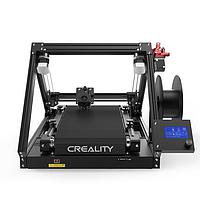
3D Printer Repair Service
When a 3D printer starts missing steps, showing unstable extrusion, or failing to complete long jobs, the impact is more than a simple machine fault. In prototyping, small-batch production, education, and workshop environments, downtime can delay design verification, reduce output consistency, and create unnecessary material waste. A reliable 3D Printer Repair Service helps restore equipment performance while supporting safer and more predictable operation.
This service category is intended for users who need practical support for diagnosing and repairing common mechanical, electrical, and control-related problems in desktop and professional 3D printing environments. It is especially relevant for teams using Creality equipment and similar systems where print quality, motion accuracy, and thermal stability need to be brought back under control.
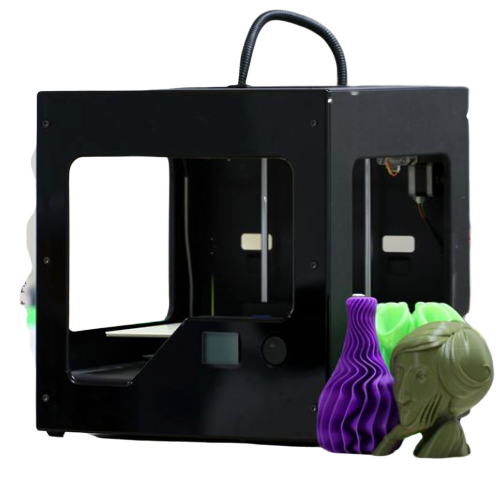
What this service is typically used for
3D printers combine motion components, heating elements, sensors, power electronics, and firmware-based control into one integrated platform. Because of that, a single visible symptom can have several possible causes. A nozzle that does not heat correctly, for example, may point to an issue with the heater, thermistor, wiring, control board, or power delivery rather than the print head alone.
A structured repair process is therefore important when dealing with inconsistent extrusion, bed adhesion issues linked to temperature instability, axis movement errors, communication faults, or repeated print interruption. The goal is not only to replace a faulty part, but to identify the source of failure and return the printer to stable working condition.
Common issues seen in 3D printer repair
Many service requests begin with symptoms that appear during daily operation: irregular layer lines, nozzle clogging, under-extrusion, overheating, shifting on the X, Y, or Z axis, or print jobs stopping without warning. In other cases, the printer may fail to power on, lose display response, or show unstable temperature readings that make printing unreliable.
Mechanical wear is another common factor. Belts, rollers, guide systems, and drive assemblies can gradually affect positioning accuracy over time. On the electrical side, connectors, fans, heating circuits, and controller-related issues may lead to unstable performance. In both cases, effective troubleshooting requires attention to the interaction between motion control, thermal behavior, and software settings rather than looking at one component in isolation.
Service support for Creality systems
For organizations and users operating Creality equipment, targeted support can be especially valuable because the repair workflow often benefits from familiarity with the platform’s common operating patterns and hardware layout. The featured service on this page, Creality 3D printer Repair Service, is relevant for situations where the machine requires diagnosis, fault isolation, and corrective repair instead of basic user-level maintenance.
Not every issue can be solved through cleaning or recalibration alone. If recurring faults return after standard adjustments, professional service becomes the more practical option. This is particularly true when the problem involves temperature control, board-level communication, intermittent wiring faults, or repeated print failure that interrupts production planning.
How to evaluate whether repair is the right choice
In many cases, repair is the preferred path when the printer still matches production needs and the problem is localized. A machine that has a stable frame, suitable build volume, and acceptable print capability may only need correction in a few key areas to become productive again. Repair can also help extend the useful life of equipment already integrated into an existing workflow.
It is useful to document the fault before requesting service. Details such as startup behavior, error messages, temperature fluctuation, unusual sounds, failed axis movement, or the point at which a print stops can help narrow down possible causes. This information improves the efficiency of diagnosis and helps determine whether the issue is related to electrical faults, mechanical misalignment, wear, or control instability.
What a practical repair workflow usually involves
A typical repair process starts with symptom confirmation and inspection of the printer’s operating condition. This may include checking heating response, sensor feedback, axis travel, fan operation, cable integrity, print head behavior, and power stability. Once the fault pattern is identified, the next step is to isolate whether the root cause lies in hardware, settings, or an interaction between the two.
After corrective work is completed, the machine should be verified through functional checks that reflect real use. For a 3D printer, this usually means confirming stable heating, smooth movement, consistent material feeding, and repeatable output behavior under test conditions. That verification stage is important because a printer may power on normally while still failing under actual print load.
Related repair services in the same equipment ecosystem
Many technical environments use 3D printers alongside labeling, scanning, and industrial data capture devices. If your facility manages multiple types of equipment, it may be useful to review related service categories such as barcode printer repair service or handheld terminal repair service.
These categories serve different device types, but they reflect a similar operational need: keeping business-critical equipment available, predictable, and easier to support over time. For organizations with mixed hardware fleets, coordinated repair planning can reduce disruption and improve maintenance visibility across departments.
Who can benefit from this category
This service category is relevant for engineering teams, makerspaces, schools, maintenance departments, prototyping labs, and small production environments that rely on 3D printing as part of their day-to-day workflow. It is also suitable for resellers or service coordinators who need a clear path for handling faulty printers without replacing equipment prematurely.
Where print consistency matters, a repair service should do more than restore basic power-up status. It should help return the printer to a condition where it can be used with confidence for repeated jobs, routine operation, and ongoing process control. That is the practical value of a dedicated service category built around real equipment faults rather than generic product information.
Choosing support with the right technical focus
The right repair approach depends on the actual failure mode, how the printer is used, and whether recurring faults have already been observed after routine maintenance. For users working with Creality systems or similar platforms, this category provides a focused starting point for professional intervention when print quality, thermal performance, or machine stability can no longer be resolved through simple adjustment.
If your 3D printer is showing repeatable errors, unstable operation, or declining print reliability, exploring a dedicated repair service is often the most efficient next step. A clear diagnosis and well-executed repair can help reduce unnecessary replacement decisions, restore usable performance, and keep the printer aligned with your working process.
Get exclusive volume discounts, bulk pricing updates, and new product alerts delivered directly to your inbox.
By subscribing, you agree to our Terms of Service and Privacy Policy.
Direct access to our certified experts