
Power Thyristor Controller Repair Service
Unstable heater output, poor temperature regulation, and unexplained power fluctuations often point back to the control stage rather than the load itself. In many industrial heating and power control systems, the thyristor controller is the critical element that determines how accurately energy is delivered, how smoothly equipment runs, and how reliably production stays within process limits. When faults appear, a focused Power Thyristor Controller Repair Service helps restore stable operation without replacing the entire system unnecessarily.
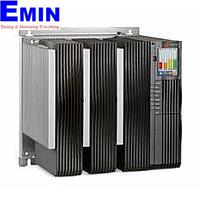
Where thyristor controller repair is typically needed
Power thyristor controllers are widely used in applications that require controlled AC power delivery, especially where electrical heating must be adjusted precisely. They are commonly found in ovens, furnaces, drying systems, molding equipment, and other automated lines where process quality depends on repeatable heat input and predictable power modulation.
Because these devices work at the intersection of power electronics and control systems, failures can affect more than one part of the machine. A faulty controller may cause inconsistent output, nuisance trips, irregular phase control, or communication issues with the surrounding automation platform. In these situations, repair work is not just about replacing a damaged part; it is about restoring the correct relationship between command input, firing control, and power delivery.
Common symptoms of a faulty power thyristor controller
In practice, thyristor controller problems do not always appear as a complete shutdown. Many failures begin with subtle process instability. Operators may notice that temperature overshoots, heaters do not respond evenly, or product quality starts drifting even though setpoints have not changed.
Other common signs include intermittent output, no output on one phase, overheating inside the electrical cabinet, blown protection devices, and visible damage around terminals or power modules. In more integrated systems, the root cause may only become clear after checking the interaction between the controller, the load, and neighboring equipment such as drives or data acquisition devices. If broader system diagnostics are needed, related support such as repair for automation data loggers may also be relevant.
What a professional repair process should address
An effective repair service starts with a structured assessment of the controller’s operating condition. This usually includes checking the power stage, trigger circuits, control inputs, protective components, and the condition of terminals and internal connections. The goal is to identify whether the issue comes from semiconductor failure, degraded supporting components, thermal stress, or a fault linked to the connected system.
For industrial users, accurate fault isolation matters as much as the repair itself. Replacing components without understanding the real cause can lead to repeated downtime. A proper repair approach should therefore consider both the internal electronics and the field conditions that may have contributed to failure, such as overload, poor ventilation, unstable supply conditions, or issues in associated equipment.
Why repair is often preferable to immediate replacement
In many facilities, replacing a power thyristor controller is not always the fastest or most practical option. Legacy installations may use control architectures that are difficult to match directly with newer hardware, and machine downtime can become more expensive than the repair itself. Repair can be especially valuable when the controller is part of a tuned process that operators already know well and do not want to reconfigure unless necessary.
Repair also supports continuity in plants where several electrical assets must be maintained together. For example, a production line experiencing broader power conversion issues may require attention not only to the thyristor controller but also to related assets such as an inverter repair service. Looking at these systems in context helps reduce repeat failures and improves long-term reliability.
Key technical considerations during service
Thyristor-based power control equipment must be evaluated with attention to both power electronics and process behavior. It is important to verify whether the control method is still functioning as intended under load, whether phase balance is maintained where applicable, and whether protective elements are responding correctly under normal and abnormal conditions.
Service planning should also take into account the operating environment. Heat, dust, vibration, poor cabinet airflow, and unstable incoming supply can all shorten the life of power control components. In some installations, recurring controller failure may actually indicate a wider issue in the panel, transformer section, or upstream automation system. Where site conditions suggest a broader electrical maintenance need, users may also review the wider electrical and automated equipment repair service scope.
Choosing the right repair support for industrial applications
Not every service requirement is the same. Some users need help with a controller that has failed completely, while others are dealing with unstable operation that only appears during production. In both cases, the right service should be able to support troubleshooting at the equipment level rather than treating the unit as an isolated component.
This is particularly important in factories where power controllers are connected to PLC-based or drive-based systems. A fault may appear to originate in the thyristor controller while the real trigger lies in signal quality, sequencing logic, or an upstream control issue. In environments built around specific automation platforms, additional category support such as SIEMENS equipment repair service can help when troubleshooting crosses into the wider control system.
How this service supports uptime and process stability
A repaired and properly evaluated controller does more than restore power output. It helps bring back consistent heating performance, improves process repeatability, and reduces the risk of secondary damage caused by unstable switching or prolonged electrical stress. For operations where temperature and energy delivery directly affect yield, controller reliability has a clear impact on quality and production efficiency.
From a maintenance perspective, this category is most relevant for plants that want to reduce unexpected stoppages and make better decisions about repair versus replacement. A structured service response gives maintenance teams clearer insight into equipment condition and helps them plan future action with less guesswork.
Final considerations
When a thyristor controller begins to behave unpredictably, the safest assumption is that the issue may extend beyond a simple component failure. Careful repair work should address the controller itself, the way it operates under load, and the electrical context around it. That approach is usually the most practical path to restoring dependable performance in industrial heating and automated power control systems.
If your operation depends on stable regulated power, choosing a repair service focused on diagnosis, restoration, and system context can help extend equipment life and reduce unnecessary replacement costs.
Get exclusive volume discounts, bulk pricing updates, and new product alerts delivered directly to your inbox.
By subscribing, you agree to our Terms of Service and Privacy Policy.
Direct access to our certified experts