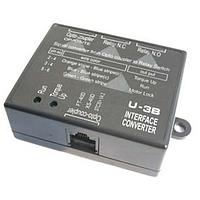
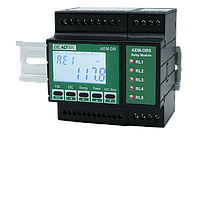
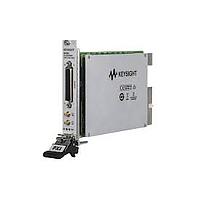
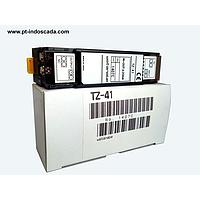
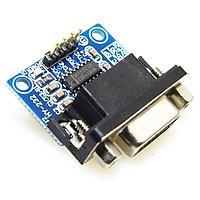
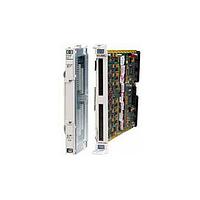
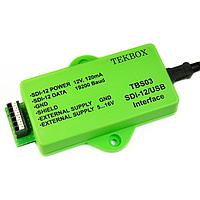
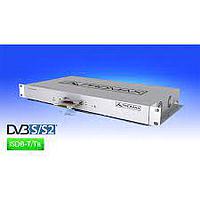
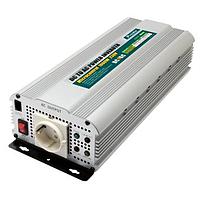
Signal Converter Repair Service
Stable signal conversion is essential wherever analog and digital data must move reliably between sensors, controllers, indicators, and supervisory systems. When a converter starts drifting, losing channels, introducing noise, or failing to communicate correctly, the result is often more than a single faulty device—it can affect measurement accuracy, control response, and the reliability of the entire automation chain.
This category focuses on Signal Converter Repair Service for industrial and laboratory environments where consistent signal handling matters. Whether the unit is used for isolation, scaling, conversion, or interfacing between different parts of a system, repair support helps extend equipment life and restore dependable operation without unnecessary replacement.
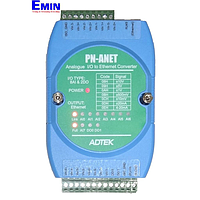
Why signal converter repair matters in real applications
Signal converters often sit quietly in the background, but they play a critical role in connecting devices that speak different electrical or communication formats. In process control, test benches, utility monitoring, and machine automation, these units help normalize signals so that downstream equipment receives data in a usable form.
When a converter becomes unstable, symptoms may appear as intermittent readings, scaling errors, dropped outputs, or unexplained behavior in connected devices. Repairing the converter can be a practical option when the surrounding system is still in service and the goal is to recover signal integrity while keeping existing infrastructure in place.
Typical issues seen in signal converter service work
Repair needs can vary depending on the installation environment, age of the equipment, and how heavily the device is used. Common problems may include power-related faults, damaged input or output stages, calibration drift, communication instability, or failures caused by electrical stress in the field.
In many cases, converters are exposed to heat, vibration, dust, grounding problems, or wiring mistakes during maintenance and installation. These conditions can gradually affect performance, especially in systems where stable conversion between process signals is required over long operating cycles.
- Unstable or missing output signals
- Offset, scaling, or conversion errors
- Input channel response problems
- Power-on failure or intermittent startup
- Noise sensitivity or isolation-related issues
- Communication or interface malfunction in connected systems
Supported brands and repair scope
This category includes repair service coverage for a range of manufacturers commonly used in technical and industrial settings. Examples include KEYSIGHT, KEITHLEY, Promax, Proskit, PCE, Tekbox, Adtek, Mountz, and Watanabe, depending on the equipment in use.
Representative service entries in this category include KEYSIGHT Signal converter Repair service, KEITHLEY Signal converter Repair service, Promax Signal converter Repair service, Proskit Signal converter Repair service, PCE Signal converter Repair service, Tekbox Signal converter Repair service, Adtek Signal converter Repair service, Mountz Signal converter Repair service, and Watanabe Signal converter Repair serveice. These examples help illustrate the breadth of supported equipment rather than limit service only to a single use case.
How to choose the right repair path
Selecting a repair service for a signal converter usually starts with understanding where the fault appears: at the input stage, during conversion, at the output stage, or in interaction with connected controllers and instruments. A clear fault description can shorten troubleshooting time, especially if the problem only appears under load or after warm-up.
It is also useful to identify the converter’s role in the system. Some units are installed to isolate sensitive circuits, others to adapt signals between field devices and control hardware, and others to support measurement workflows in test environments. The more accurately the application context is described, the easier it is to evaluate whether repair is the most effective path compared with replacement or broader system checks.
Signal converters within the wider automation repair ecosystem
Converter faults do not always exist in isolation. In some systems, abnormal behavior can originate from neighboring equipment such as drives, logging devices, controllers, or power electronics. That is why signal converter troubleshooting is often most effective when viewed as part of a broader automation maintenance strategy.
If the issue appears alongside drive instability, it may be useful to review related support options such as inverter repair service. For applications involving recorded process data or acquisition chains, data logger repair support may also be relevant when signal problems affect stored measurements as well as live readings.
What information helps speed up service assessment
A good repair evaluation usually begins with a few practical details: the manufacturer, product name, visible fault behavior, installation environment, and any error pattern already observed. Even when full technical documentation is not available, information about the connected sensor, controller, or display side can help narrow down likely causes.
It is often helpful to note whether the issue is constant or intermittent, whether it started after electrical maintenance, and whether the converter fails alone or together with other equipment. This type of background supports more efficient diagnosis and can reduce unnecessary delays in restoring reliable operation.
When repair is a practical alternative to replacement
In many B2B environments, replacement is not always the fastest or most economical route. Installed systems may depend on existing panel layouts, validated workflows, legacy interfaces, or device matching across multiple lines. In those cases, repairing a faulty converter can help preserve compatibility and reduce disruption.
Repair can also make sense when the equipment belongs to an established product family from brands already used across the facility, such as Promax or Proskit. For maintenance teams and procurement specialists, this can support continuity in spare-part planning, documentation, and day-to-day service decisions.
Finding the right service for your converter
If your system depends on accurate signal transfer between instruments and control equipment, choosing a suitable repair path is an important step toward restoring overall process stability. This category is intended for users looking for service support for malfunctioning converter units from recognized manufacturers used in electrical and automated equipment environments.
Review the listed service entries to match your brand and application context, then compare related repair categories if the fault may involve surrounding hardware as well. A well-targeted repair service can help bring a converter back into dependable use while supporting the performance of the wider system it serves.
Get exclusive volume discounts, bulk pricing updates, and new product alerts delivered directly to your inbox.
By subscribing, you agree to our Terms of Service and Privacy Policy.
Direct access to our certified experts