Fertigation Control System Repair Service
Accurate nutrient dosing and stable irrigation control are essential in modern agriculture, greenhouse operations, and water treatment applications that rely on automated feeding systems. When a fertigation controller starts showing unstable readings, delayed output, communication faults, or inconsistent dosing behavior, the impact can quickly spread to crop quality, operating costs, and process reliability. This page covers Fertigation Control System Repair Service for users who need practical support in restoring controller performance rather than replacing the entire system prematurely.
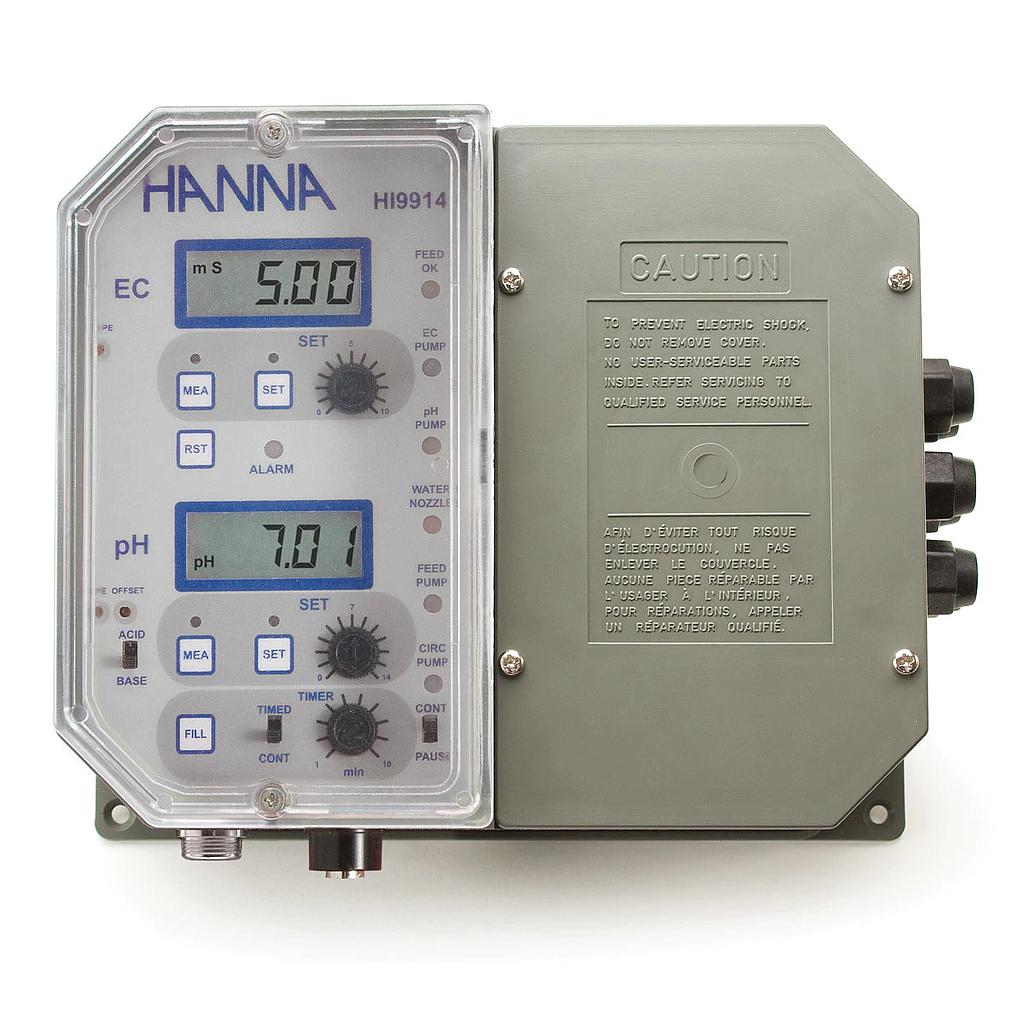
Repair support for automated fertigation control equipment
Fertigation systems are typically used to regulate the injection of nutrients, chemicals, or conditioning agents into irrigation and process water streams. In many installations, the controller acts as the decision-making core, receiving signals from sensors and coordinating pumps, valves, and dosing outputs. Because of this central role, even a single fault in the control unit can affect the entire application.
This repair service is intended for systems that require diagnosis, troubleshooting, and restoration of operational stability. A representative example in this category is the HANNA Fertigation Control System Repair Service, which is relevant for users working with HANNA equipment in agricultural and process monitoring environments.
Typical issues seen in fertigation control systems
Failures in these systems are not always total shutdown events. In many cases, the problem appears gradually through unstable control behavior, incorrect dosing cycles, intermittent alarms, or loss of response from connected devices. Operators may also notice abnormal display behavior, communication interruptions, drifting values, or outputs that no longer track process conditions correctly.
From a maintenance perspective, common concerns often involve the control electronics, signal handling, power-related instability, and interface issues between the controller and connected field devices. In applications where pH, conductivity, or nutrient concentration influence dosing logic, even small control errors can lead to underfeeding, overfeeding, or unnecessary manual intervention.
Why repair is often a practical option
Replacing a complete fertigation controller is not always the most efficient path, especially when the broader installation remains in serviceable condition. Repair can be a sensible option when the issue is isolated to the controller, input/output behavior, display functions, or internal boards rather than the full dosing infrastructure. This approach may help reduce downtime and preserve compatibility with the existing process setup.
For B2B users, repair service is also valuable when the control system is already integrated into a larger automation environment. Replacing the unit may require rewiring, parameter reconfiguration, process validation, and renewed operator familiarization. In contrast, a focused repair workflow can support system continuity while restoring the original operating logic of the installed equipment.
Applications where reliable controller performance matters
Fertigation control systems are used across operations where precise liquid dosing must be coordinated with water flow, timing, or measured process conditions. This includes greenhouse irrigation, hydroponic cultivation, agricultural nutrient dosing, and certain industrial water conditioning processes. In these settings, controller stability has a direct influence on repeatability and process control.
Where multiple analytical inputs are involved, adjacent service needs may also overlap with other repair categories. For example, facilities managing water quality loops may also need support for conductivity and TDS controller repair or service for a chlorine sensor online controller when multiple analyzers are installed in the same treatment or dosing process.
How to evaluate a repair request
Before sending a unit for service, it is helpful to identify how the fault appears in actual operation. Useful information includes whether the controller powers on normally, whether alarms are constant or intermittent, whether analog or relay outputs behave incorrectly, and whether the issue started after electrical disturbance, moisture exposure, maintenance work, or long-term drift. These observations can help narrow the diagnosis and reduce unnecessary turnaround time.
It is also important to separate controller faults from sensor or field wiring problems. In some installations, symptoms that look like controller failure may actually originate from damaged probes, unstable signal transmission, or process-side contamination. If your site uses several online analytical channels, related services such as free ion sensor controller repair may be relevant when troubleshooting broader instrument networks.
HANNA systems in this category
HANNA is the featured manufacturer in this category, and the service focus is aligned with installed HANNA fertigation control systems that require technical repair support. For users already operating HANNA instrumentation, manufacturer-specific service context can be useful when assessing compatibility, maintenance planning, and repair pathways within an existing installed base.
The main listed service in this category is the HANNA Fertigation Control System Repair Service. Rather than treating the system as a generic standalone device, the service context recognizes its role within a wider dosing and monitoring setup that may include pumps, online sensors, controllers, and field signal interfaces.
Choosing the right service path for your installation
The right repair route depends on the symptoms, the age and condition of the equipment, and how tightly the controller is integrated into your operation. For some users, the main priority is restoring output stability and process control as quickly as possible. For others, the goal is to determine whether the issue is confined to the controller itself or connected to the wider instrumentation chain.
If your application depends on consistent nutrient dosing, a structured repair assessment can be more valuable than trial-and-error replacement. This category is intended for organizations that need a practical way to recover reliable controller operation in fertigation systems while preserving compatibility with the existing installation and process workflow.
Conclusion
Fertigation controllers sit at the center of automated dosing performance, so faults in the control layer can affect both process efficiency and end results. A dedicated repair service helps address those problems with a more targeted approach, especially where the broader system is still operational and worth maintaining. If you are troubleshooting a HANNA unit or reviewing service options for an installed fertigation setup, this category provides a focused starting point for repair-oriented support.
Get exclusive volume discounts, bulk pricing updates, and new product alerts delivered directly to your inbox.
By subscribing, you agree to our Terms of Service and Privacy Policy.
Direct access to our certified experts