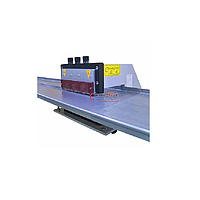
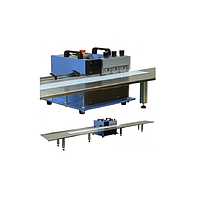
PCB Depaneling Equipment Repair Service
When PCB separation equipment starts producing rough board edges, misalignment, unusual vibration, or unstable cycle times, the issue quickly spreads beyond one machine. In SMT and electronics assembly environments, depaneling quality affects yield, downstream handling, operator safety, and the overall consistency of the production line. That is why a reliable PCB Depaneling Equipment Repair Service matters not only for restoring operation, but also for protecting process stability.
This service category is intended for businesses that need support with diagnosing, repairing, and returning depaneling systems to dependable working condition. Whether the equipment is used for routed boards, scored panels, or other board separation tasks, repair work should focus on the real source of failure rather than only treating visible symptoms.

Why depaneling equipment performance is critical in electronics production
Depaneling is one of the last mechanical steps before boards move into inspection, assembly completion, testing, or final packing. If the machine is not cutting or separating panels correctly, the result can include edge damage, stress on components, cosmetic defects, and inconsistent board handling. In high-mix or continuous production, even a small deviation can create repeated quality problems.
A proper repair approach should therefore consider more than a simple mechanical replacement. It often requires checking the interaction between motion accuracy, cutting condition, fixture stability, control response, and operator settings. This is especially important where board designs are sensitive to bending or where production tolerances are tight.
Common problems addressed by PCB depaneling repair services
Repair needs can arise from mechanical wear, electrical faults, control issues, or gradual performance drift over time. Typical service cases include unstable cutting movement, abnormal noise, reduced precision, feed or positioning errors, unexpected stoppages, and failures in the control interface. In some cases, the machine may still run, but output quality no longer meets process expectations.
For maintenance teams, the challenge is often distinguishing between a tooling issue, a drive issue, or a broader system problem. A good service process helps identify whether the root cause is related to alignment, sensing, actuator behavior, damaged assemblies, or general wear in critical moving parts. This is often more efficient than replacing parts without a clear diagnosis.
What to expect from a professional repair process
A structured repair workflow usually begins with fault assessment and symptom review. From there, technicians can evaluate the mechanical section, control hardware, wiring condition, safety-related behavior, and operating consistency under normal load. The goal is to restore repeatable performance, not just temporary operation.
Depending on the machine condition, repair work may involve disassembly, replacement of worn or failed components, recalibration, function verification, and test running. For users managing broader SMT support needs, related services such as soldering station repair or desoldering station repair may also be relevant when maintaining the full electronics rework and assembly environment.
Support for MANNCORP depaneling equipment
For operations using MANNCORP equipment, repair support may be especially useful when the machine must continue fitting into an established production process with minimal disruption. Brand familiarity can help speed up troubleshooting, especially when symptoms involve control logic, machine behavior under load, or recurring faults linked to application conditions.
One representative example in this category is the Manncorp PCB Depaneling Equipment Repair Service. It reflects the kind of support many electronics manufacturers look for when they need to recover equipment function without replacing an entire machine prematurely.
How to evaluate whether repair is the right choice
Not every equipment issue requires full replacement. In many cases, repair is the practical option when the machine frame remains sound, the system still matches current production needs, and the fault is isolated to a serviceable area. This is particularly true when the equipment already fits existing tooling, operator workflow, and line layout.
It is useful to review the history of stoppages, the consistency of board separation quality, and whether faults are becoming more frequent. If the machine still supports the required process but shows signs of reduced stability, timely service can extend usability and reduce the risk of secondary damage caused by continued operation in a degraded state.
Information that helps speed up service and troubleshooting
Before arranging repair, users can usually improve the service process by documenting the machine behavior clearly. Useful details include when the fault occurs, whether it is constant or intermittent, what kind of PCB or panel is being processed, and whether the issue started after maintenance, relocation, or a tooling change. Even simple observations about sound, vibration, cut quality, or alarms can help narrow the probable cause.
It is also helpful to note whether similar service needs exist elsewhere in the production area. For example, facilities handling multiple electronics assembly tools may also need support for related systems such as lead cutter repair services. Looking at equipment reliability across the workcell often gives a clearer picture of maintenance priorities.
Choosing a service approach that matches your production environment
The right repair solution depends on how the depaneling machine is used in daily operation. A unit running in continuous production may need faster turnaround and closer attention to process verification, while a machine used for smaller batch work may require a more focused diagnosis of intermittent faults. In both cases, the priority should be restoring safe, stable, and predictable operation.
For B2B buyers, the most important consideration is whether the service supports actual production requirements: board quality, uptime expectations, repeatability, and integration with the surrounding SMT workflow. A repair service that addresses these practical factors is more valuable than one that only restores basic power-on condition.
Conclusion
Reliable board separation is a small step in the process, but it has a direct effect on product quality and manufacturing efficiency. A well-targeted PCB Depaneling Equipment Repair Service helps manufacturers correct faults, reduce unnecessary downtime, and maintain more consistent handling of finished boards.
If your equipment is showing signs of wear, unstable cutting behavior, or declining output quality, professional assessment is often the best next step. Early repair can help preserve machine life, support better process control, and keep the broader electronics assembly operation running more smoothly.
Get exclusive volume discounts, bulk pricing updates, and new product alerts delivered directly to your inbox.
By subscribing, you agree to our Terms of Service and Privacy Policy.
Direct access to our certified experts