
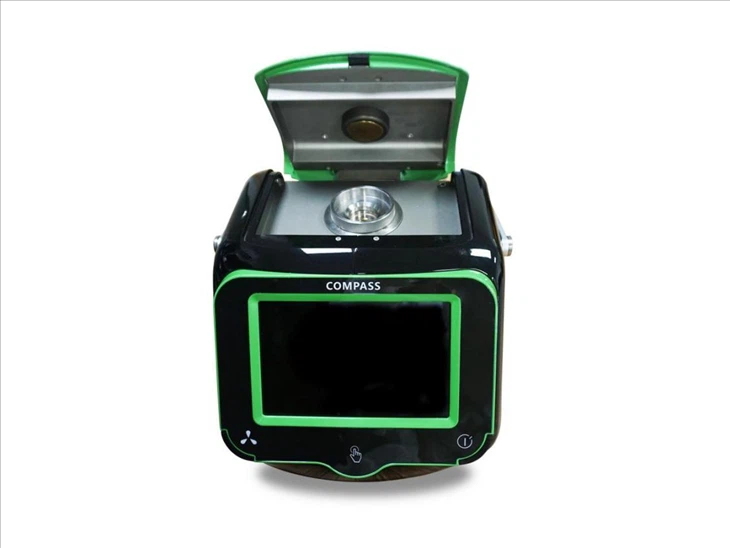
ESi Compass 4294 Plus Portable X-ray Fluorescence Sulfur/Chlorine-in-Oil-Analyzer (1 ppm)
Detector: High-resolution fast SDD
Excitation Source: 4W high-efficiency micro X-ray tube
Maximum voltage: 50 kV
Maximum current: 200 µA
Working Temperature: -20 to 50°C
Test Environment: Vacuum
Measuring Time per Sample: 130–300 seconds adjustable
Sample Type: Liquid, powders, and solids
Factory Calibration: Low sulfur 0ppm–100ppm; High sulfur 0.01%–5%
Detection Limit of Sulfur: 1 ppm
Sample cup: Inner diameter 23.6 mm, outer diameter 30 mm, height 30 mm, volume 9 ml
Instrument Dimension: 270 × 320 × 230 mm (L × W × H)
Sample Chamber Dimension: 170 × 110 × 17 mm (L × W × H)
Weight: 10.5 kg
Operation: 8-inch touch screen (1280 × 800), Windows 10 based OS
External Connection: USB port, Bluetooth, Wi-Fi, GPS
Test Report: Excel, PDF
Consumables: Sample test Mylar, oil analysis sample cup, sampling pipette, vacuum test window film
Instrument Applications
(1) Sulfur in petroleum products
With good LOD performance, the Compass 4294 Plus is useful for all standard fuel samples. Since the instrument has been shown to be compliant with ASTM D4294, it can also be used for high sulfur samples such as crude oil and residual oil.
(2) Sulfur in Biofuels
Due to the addition of an oxygen correction factor ethanol, biodiesel, reformulated gasoline, and biodiesel blends can be analyzed. These oxygen correction factors are derived from the measurement of the scattered X-ray from oxygen. This all happens automatically with no intervention by the operator.
(3) Chlorine in petroleum products
The fluorescence for the Cl-Kα peak is closer to the excitation energy of the Ag-Lα than is S-Kα. Thus the chlorine produces a stronger peak and so provides good sensitivity. The biggest challenge is that in many cases chlorine appears in a sample that has very high sulfur concentrations. The marvelous FSDD detector resolution helps peak separation of the sulfur and chlorine, the chlorine can be accurately measured.
Get exclusive volume discounts, bulk pricing updates, and new product alerts delivered directly to your inbox.
By subscribing, you agree to our Terms of Service and Privacy Policy.
Direct access to our certified experts