There are many instances where ordinary cabinets are used to store flammable chemicals, leading to safety hazards in high-temperature environments or when a fire or explosion is detected. Fireproof cabinets are designed to directly address this issue, rather than simply being a place to store bottles and containers.
It's important to note that fireproof cabinets are not explosion-proof. Their primary role is to slow the spread of fire, providing more time for response and minimizing damage.
Characteristic structure of fireproof cabinets
The biggest difference between fireproof cabinets lies in their construction. The cabinet body typically consists of two layers of steel with an insulating layer in between to limit heat transfer from the outside. This design plays a crucial role in the event of a fire, helping to protect the chemicals inside for a certain period of time.
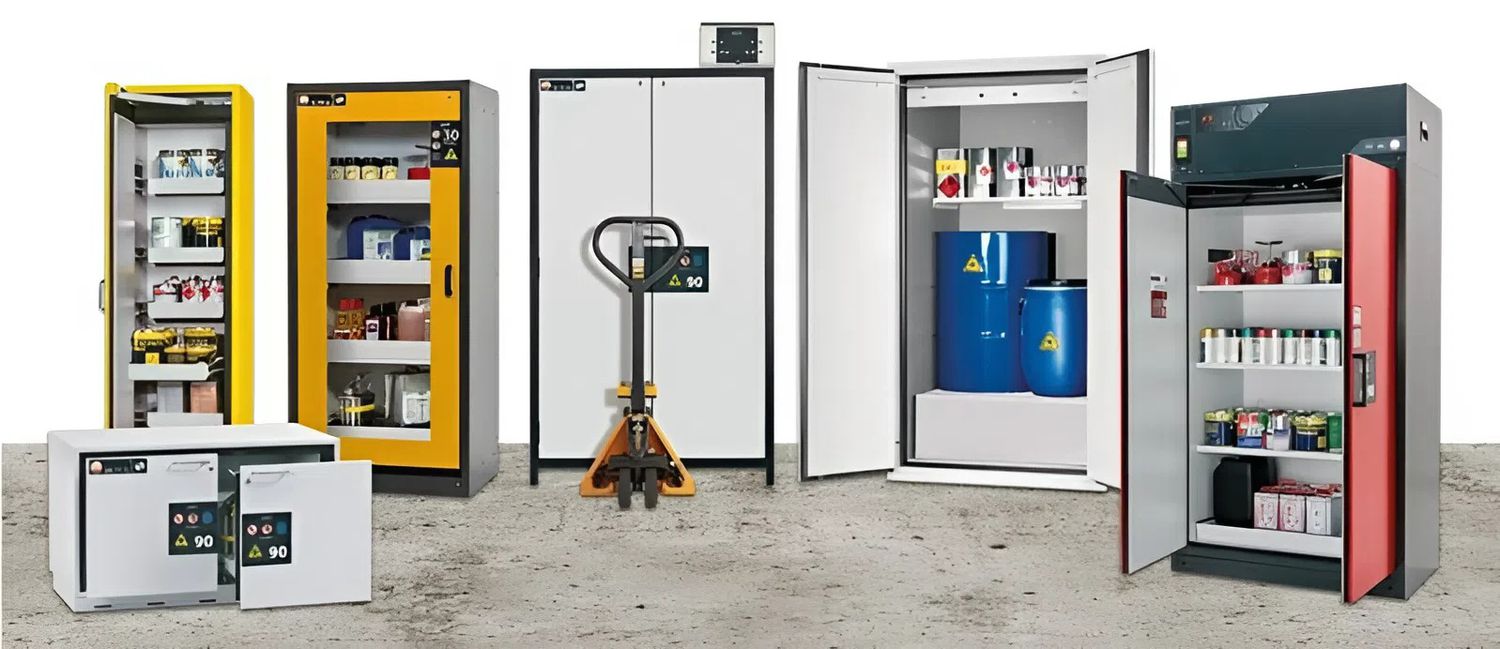
The cabinet door is equipped with a self-closing mechanism when the temperature rises, helping to prevent fire from entering. The bottom has a spill tray to retain leaked solvents, preventing them from spreading to the floor or surrounding area.
Ventilation systems on fire-resistant chemical storage cabinets are typically port-type, allowing for the addition of exhaust ducts if needed. Most standard models are non-electric, without fans or control panels, resulting in high operational stability.
Some types of chemical storage cabinets at EMIN and how to distinguish them
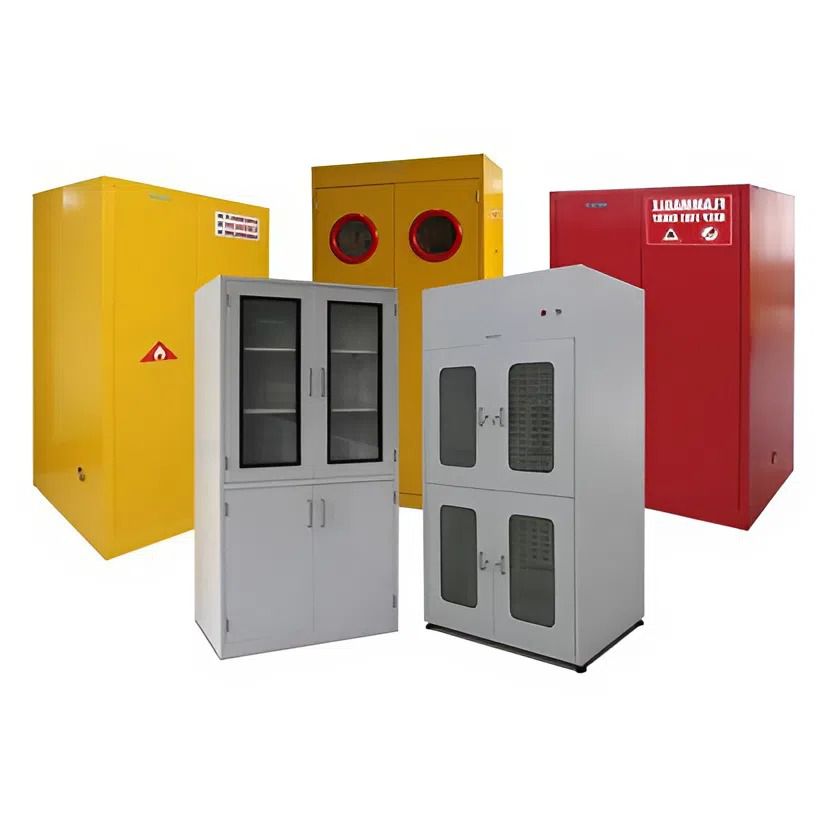
EMIN's product catalog is organized by chemical group, with fire-resistant chemical storage cabinets being one of the most popular lines. Models from Sysbel and JEIOtech focus on heat resistance and meeting international safety standards.
Alongside these are corrosive chemical cabinets, using PP plastic or specialized coatings to resist the effects of acids and bases. These two lines are not interchangeable due to completely different technical requirements.
Another approach is cabinets with integrated air filtration, commonly found in products from Esco or Air Science. These cabinets handle chemical vapors on-site, suitable for spaces without a central ventilation system.
Additionally, EMIN also offers cabinets for compressed air cylinders, with a specific design to secure the cylinders and assist in leak control. This line belongs to the category of other safety equipment, not the fire-resistant cabinet segment for liquid chemicals.
When should you use a fireproof chemical storage cabinet?
Fireproof chemical storage cabinets are used when working with flammable solvents such as ethanol, methanol, acetone, or petroleum derivatives. These chemicals evaporate quickly and create flammable mixtures in the air if not properly controlled.
A common mistake is using the same type of cabinet for different groups of chemicals. Fireproof cabinets are not suitable for storing strong acids, and conversely, PP plastic cabinets are not designed to withstand high temperatures in a fire. Proper classification from the outset ensures a more stable and safer storage system.
Yellow is often used for quick identification of fire-resistant cabinets; however, this is just a common convention from the manufacturer. Technical specifications and applicable standards should still be the primary factors to check.
Understand the standards applicable to fireproof cabinets
EMIN's fire-resistant chemical storage cabinets are typically designed to meet OSHA 29 CFR 1910.106 and NFPA 30 standards, such as those from Sysbel. These standards directly relate to the storage of flammable liquids, including requirements for construction, heat resistance, and safety.
Some products also bear the CE mark, but this is only a general conformity certification and does not replace specialized fire safety standards.
Additionally, precautions should be taken when using fireproof cabinets
The effectiveness of a fire-resistant cabinet depends heavily on how it is used. The cabinet door must be closed tightly after each use to ensure isolation. Gaskets and hinges should be inspected regularly to maintain a tight seal.
Chemicals inside should be properly arranged, avoiding placing potentially reactive substances close together. The cabinet should not be placed near heat sources or areas with a risk of sparks.
For models with ventilation connections, the actual room conditions should be considered to decide whether or not to use the exhaust system.
EMIN currently offers a wide range of fire-resistant chemical storage cabinets from brands such as Sysbel and JKIOTECH, alongside air filtration solutions from Esco, Air Science, Daihan, etc. The catalog is clearly divided by chemical group, helping you identify the correct equipment without trial and error. Contact EMIN today for the earliest consultation.