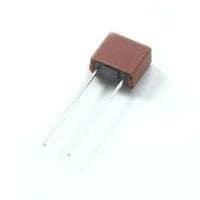
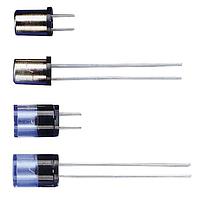
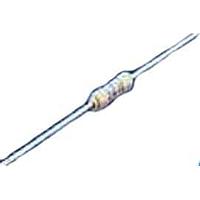
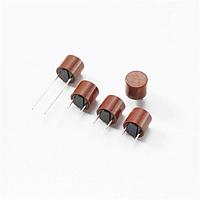
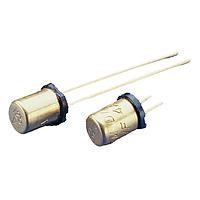
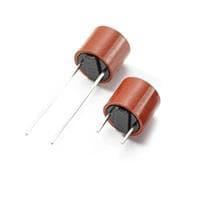
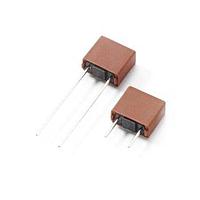
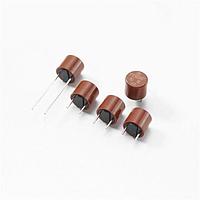
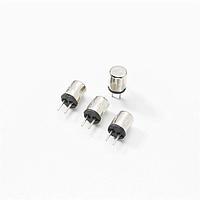
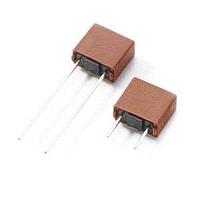
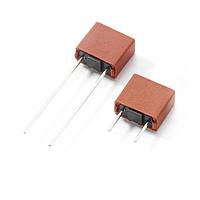
Axial Radial Through Holde Fuses
Board-level protection often comes down to small components that do a critical job well. In power supplies, control boards, instrumentation, and embedded electronics, Axial Radial Through Holde Fuses help protect circuits against overloads and short-circuit conditions while remaining easy to integrate into through-hole PCB designs.
This category is focused on fuse formats commonly used where designers need dependable overcurrent protection with PC pin, axial leaded, or radial leaded construction. These parts are widely selected for industrial electronics, automation assemblies, serviceable equipment, and other applications where mounting style, blow characteristic, voltage rating, and breaking capacity all matter in real operating conditions.
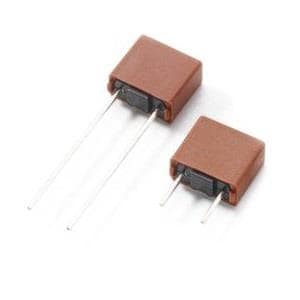
Where axial and radial through-hole fuses fit in electronic design
Through-hole fuses are commonly used when mechanical stability, straightforward assembly, or legacy PCB compatibility is important. Compared with other package styles, axial and radial leaded designs are often chosen for control boards, power entry sections, battery-related circuits, and low-to-medium volume industrial electronics where service access and robust solder joints are valued.
Radial leaded versions typically suit compact board layouts with vertical or low-profile placement, while axial leaded versions can work well where linear placement or spacing requirements influence the PCB design. In both cases, the fuse acts as a sacrificial protection element that opens the circuit when current exceeds the intended limit for long enough to create a risk.
Key selection points for this fuse category
The first step is matching the rated current to the normal operating load and expected inrush behavior of the circuit. A fuse that is too sensitive may nuisance-trip during startup, while an overrated fuse may not provide the intended level of protection for components, wiring, or PCB traces.
Voltage rating is equally important. Within this category, examples include 250 VAC parts as well as higher-rated options such as 600 VAC and 600 VDC variants. Breaking capacity should also be checked carefully, especially in circuits with higher fault energy, because it indicates the fuse’s ability to interrupt a fault safely.
Another major consideration is the blow characteristic. Fast-acting fuses are often used where sensitive semiconductors or tightly protected electronics require quick interruption. Time-delay or slow-blow types are more suitable where short inrush events are normal, such as transformer inputs, capacitive charging circuits, or motor-related electronics.
Common configurations available in this range
This category includes both radial leaded and axial leaded fuse constructions for PCB mounting. Many products use PC pin or through-hole terminations, making them suitable for traditional board assembly methods and applications where hand soldering, wave soldering, or mixed-technology builds may be involved.
Typical examples from the range show how broad the selection can be. The Bel MRT 6.3AMMO is a radial leaded time-delay option for higher current protection at 250 VAC, while the Bel 0697-0100-01 provides a much lower 100 mA time-delay rating for more sensitive circuits. For applications requiring faster interruption and higher voltage capability, the Bel 0ADAP1000-RE illustrates an axial leaded fast-acting option rated for both AC and DC use.
There are also products aimed at balancing compact PCB integration with startup tolerance, such as the Bel RST 630-AMMO and Bel 0697A3150-02. For designers comparing brands, Bel and Eaton are both represented in this type of board-mount fuse offering, including parts like the Eaton BK/PCC-1/2-R for fast-acting protection in PCB applications.
Fast-acting vs time-delay in practical applications
Choosing between fast-acting and time-delay performance should be based on the actual electrical behavior of the circuit, not just the nominal current. A fast-acting fuse is often preferred for protecting semiconductor devices, measurement electronics, and low-inrush loads where rapid fault isolation is more important than short-term surge tolerance.
Time-delay and slow-blow variants are often better suited to circuits that experience predictable current surges during normal operation. Examples include transformer energization, relay coils, switched-mode power supply input stages, or loads with capacitor charging peaks. In this category, products such as the Bel RJS 200-R STD, Bel 5HTP 2-R, and Bel MJS 6-R TR reflect that slower response profile for designs that need to ride through temporary inrush without unnecessary fuse opening.
How to compare lead style, mounting, and electrical ratings
When comparing fuse options, it helps to review the mechanical and electrical requirements together rather than in isolation. A radial part may fit the board outline better, but an axial option may provide easier routing or replacement access depending on enclosure geometry and assembly method.
Electrical ratings should be assessed as a complete set: current rating, AC or DC voltage rating, interrupt rating, and response curve all work together. For example, a 1 A fuse rated for 250 VAC is not automatically interchangeable with a 1 A fuse rated for 600 VAC or 600 VDC, and a fast-acting part should not be substituted for a time-delay design unless the application has been reviewed carefully.
For applications that need alternative protection formats, it may also be useful to compare this range with SMD fuses for surface-mount layouts or resettable fuses where recoverable protection is preferred.
Typical use cases in industrial and electronic equipment
Axial and radial through-hole fuses are regularly used in power conversion boards, industrial controllers, HVAC electronics, telecom hardware, appliance control modules, and instrumentation. They are also relevant in retrofit and maintenance environments where existing PCB footprints favor through-hole components over newer surface-mount alternatives.
Because this category includes both low-current and higher-current options, it can support a range of protection points within the same equipment family. That may include protecting a control circuit, isolating a low-power signal section, or safeguarding a power input stage where fault currents and startup behavior differ significantly.
Choosing the right fuse for your build
A practical shortlist usually starts with four checks: normal operating current, surge or inrush profile, required voltage rating, and available PCB space. After that, lead format and interrupt rating help narrow the selection further. This approach reduces the risk of selecting a part that fits mechanically but does not match the electrical protection goal.
If you are specifying parts for new equipment or replacing an existing board-mounted fuse, it is worth comparing the original fuse characteristic closely before making a substitution. Small differences in response time or voltage rating can change how the circuit behaves under fault and startup conditions.
Final considerations
This range brings together PCB-mount fuse options for designers and buyers who need dependable overcurrent protection in through-hole formats. With combinations of axial and radial lead styles, fast-acting and time-delay responses, and ratings suited to different board-level applications, the category supports both new designs and replacement needs in industrial and electronic systems.
When narrowing your selection, focus on the real operating profile of the circuit rather than current rating alone. That usually leads to a better fit between fuse behavior, board layout, and long-term equipment reliability.
Get exclusive volume discounts, bulk pricing updates, and new product alerts delivered directly to your inbox.
By subscribing, you agree to our Terms of Service and Privacy Policy.
Direct access to our certified experts