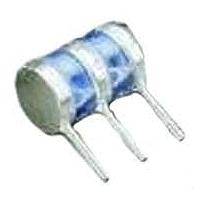
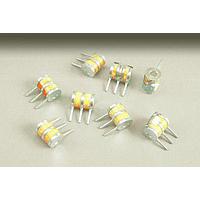
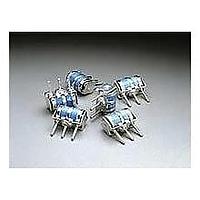
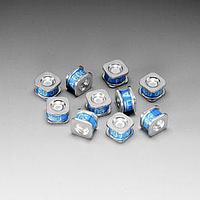
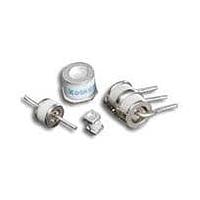
Gas Discharge Tubes & Plasma Arrestors
When surge energy from lightning, switching events, or line disturbances reaches a circuit, the first priority is to divert that energy away from sensitive electronics before permanent damage occurs. In many industrial, telecom, and control applications, that job is handled by Gas Discharge Tubes & Plasma Arrestors, components designed to conduct only when voltage rises above a defined threshold and then shunt the transient safely away from protected circuitry.
These devices are widely used where robust surge handling matters more than ultra-fast clamping alone. For engineers and buyers sourcing protection components for field wiring, communication interfaces, power entry points, or exposed signal lines, this category helps narrow down suitable options for high-energy transient protection within a broader circuit protection strategy.
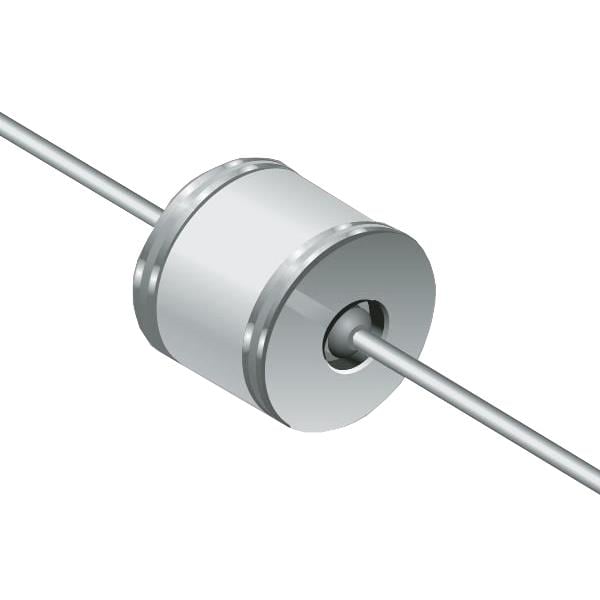
Where gas discharge tubes fit in a protection design
A gas discharge tube, often abbreviated as GDT, is a surge protection component that remains in a high-impedance state during normal operation. When an overvoltage event exceeds its breakover level, the gas inside ionizes and creates a conductive path, allowing large surge currents to be diverted away from downstream electronics.
This behavior makes GDTs especially useful in applications exposed to external cabling or harsh electrical environments. Compared with other protection methods, they are commonly selected when the design must tolerate high surge energy, repeated transient events, or line exposure associated with outdoor and distributed installations.
Typical applications in industrial and electronic systems
Gas discharge tubes and plasma arrestors are commonly used in equipment connected to long cable runs, external power feeds, communication lines, and interfaces that may be vulnerable to induced surges. Typical examples include industrial controllers, telecom infrastructure, building systems, instrumentation interfaces, and monitoring equipment installed in electrically noisy environments.
In practice, these components are often part of a layered protection scheme. A designer may combine them with devices such as ESD protection diodes to address both high-energy surge events and faster, lower-energy transients. This kind of staged approach can improve protection performance across different threat profiles rather than relying on a single component type.
Common package styles and product examples
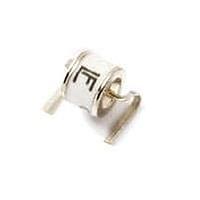
This category includes different mechanical formats to suit board-level and panel-oriented designs. For example, the Bourns GDT35-09-S1-BK and Bourns SA2-6000-DLTSTD illustrate how GDT devices can be used where dedicated surge diversion is required, while the Bourns 2097-140-DLF shows a more specifically identified gas discharge tube option for applications that need clear selection around mounting style and surge capability.
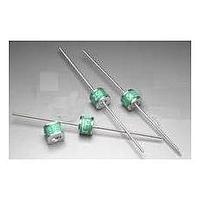
Stud-mount and axial-leaded styles can support different assembly and installation preferences. In a practical sourcing workflow, the package format is often just as important as the electrical behavior, because installation method, mechanical stability, service access, and enclosure layout all affect the final design choice.
How to choose the right device
Selecting the right surge arrestor usually starts with the protected line itself. Engineers typically consider normal operating voltage, expected surge exposure, insulation requirements, allowable capacitance in the circuit, and how the device will coordinate with upstream and downstream protection components.
It is also important to look at mounting style, discharge current capability, and the intended environment. For example, a design protecting communication or signal lines may prioritize low line loading during normal operation, while a more rugged interface may place greater emphasis on surge handling and service life. If the design also needs serviceable overcurrent protection around the same area, related hardware such as a fuse holder may be part of the broader protection architecture.
Manufacturers and sourcing context
Within this category, Bourns is one of the most relevant names for surge protection components of this type, with representative products such as the GDT35-09-S1-BK, SA2-6000-DLTSTD, and 2097-140-DLF helping illustrate the range available for different installation and protection requirements.
Depending on the overall protection design, buyers may also source complementary parts from manufacturers active elsewhere in the circuit protection ecosystem, including Eaton. Eaton products listed across adjacent categories, such as CDY5TRY-SMOUNT, AFC-225, NO.95BK, DIA-2, DIA-1, NO.220, and ATM-ID-SK, are examples of how surge and overcurrent protection components are often selected together rather than in isolation.
Gas discharge tubes compared with other protection approaches
The main strength of a gas discharge tube is its ability to handle substantial surge energy with very low leakage during normal operation. That makes it attractive for exposed lines and installations where large transients are a realistic risk. However, because different protection technologies respond differently in terms of speed, clamping behavior, and energy handling, the best solution often depends on the threat environment and the sensitivity of the electronics being protected.
For that reason, GDTs are frequently considered alongside items such as circuit protection kits during prototyping, maintenance, or field-service preparation. Reviewing multiple protection options together can help purchasing teams and engineers build a more complete bill of materials for both new equipment and repair stock.
What matters for B2B purchasing
For OEM, panel builder, MRO, and system integration workflows, component selection is rarely based on one parameter alone. Buyers often need a match between electrical protection behavior, approved form factor, availability, and compatibility with the assembly process already used in production or field service.
This is why category-level sourcing is useful: it supports comparison across suitable products without forcing a one-size-fits-all decision too early. Whether the requirement is for a compact board-level GDT, a stud-mount surge device, or a protection part that complements fuses and holders already specified in the design, a structured view of the category makes technical filtering and procurement more efficient.
Final considerations
Effective surge protection starts with understanding the exposure level of the line and the tolerance of the equipment behind it. Gas discharge tubes and plasma arrestors remain a practical choice where high-energy transient diversion is essential, especially in industrial and field-connected systems that face real-world surge conditions.
By comparing device style, application fit, and coordination with other protection components, engineers and purchasing teams can select parts that support both reliability and maintainability. If you are building or servicing a broader protection scheme, this category is a strong starting point for identifying suitable surge-handling components within the larger circuit protection portfolio.
Get exclusive volume discounts, bulk pricing updates, and new product alerts delivered directly to your inbox.
By subscribing, you agree to our Terms of Service and Privacy Policy.
Direct access to our certified experts