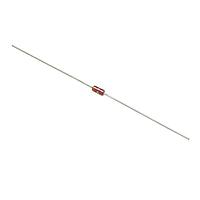
PTC Thermistors
When a design needs to react safely to overcurrent or temperature rise without adding complex control circuitry, PTC thermistors are often one of the most practical components to evaluate. They are widely used in electronic protection and sensing tasks where a device must limit current, respond to heat, or recover automatically after a fault condition is removed.
On this page, you can explore PTC thermistor options for circuit protection and temperature-related applications across compact SMD formats, radial parts, and device-specific configurations. The range includes components suited to consumer electronics, board-level protection, and equipment designs that need reliable behavior under changing thermal and electrical conditions.
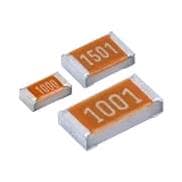
Where PTC thermistors fit in protection design
A positive temperature coefficient thermistor increases in resistance as temperature rises. In practical terms, this behavior can be used either to detect temperature changes or to help protect a circuit by limiting current when excessive current flow causes the device to heat up.
That makes this category relevant for engineers selecting resettable protection elements, inrush current control solutions, or thermal sensing parts for compact electronic assemblies. In many systems, PTC thermistors are considered alongside other protective components such as ESD protection diodes, depending on whether the primary concern is surge, static discharge, or sustained overcurrent behavior.
Common application directions
PTC thermistors are used in more than one way, so selection usually starts with the application goal rather than the package alone. Some parts in this category are intended for overcurrent protection, where the resistance rises sharply under fault conditions and helps reduce current until the issue is cleared. Others are intended for temperature sensing, where a known resistance change can be used to monitor thermal conditions in a circuit or assembly.
Examples in this range reflect both use cases. The Murata PTGL04AR130H2B51A0 is positioned as a PTC thermistor for overcurrent protection, while the Murata PTFM04BE471Q2N34B0 is identified for temperature sensing. This distinction matters because electrical behavior, mounting style, and the role of the component in the circuit can differ significantly even though both are classified as PTC devices.
How to compare PTC thermistors effectively
For protection-oriented parts, designers typically review hold current, trip current, maximum voltage, and package style. These values help determine whether the component can remain stable during normal operation and respond appropriately when the current rises above the intended threshold. For example, the Littelfuse VTP170 resettable device is specified with hold and trip current values that make it relevant for compact board-level protection in low-voltage designs.
For temperature-sensing parts, resistance at a reference condition and mechanical format are often more useful starting points. A part such as the Murata PTFM04BE471Q2N34B0, listed as a 100 Ohm 2-pin screw mount radial device, may suit applications where mounting method and thermal coupling are just as important as the nominal resistance value.
It is also worth checking whether the design needs a leaded part for easier integration into traditional assemblies or an SMD part for high-density PCB layouts. Very small devices, such as the TE Connectivity FEMTOSMDC035F-02 in 0603 format, are especially relevant where board space is limited and resettable protection is needed close to sensitive circuitry.
Representative manufacturers and product examples
This category includes well-known suppliers such as Murata, TDK, Littelfuse, and TE Connectivity. Each brings slightly different strengths to the category, from compact thermal sensing components to resettable protection parts designed for integration into modern electronic assemblies.
Representative products include the TDK B59990C 120A 51 PTC thermistor, the TDK B59148U1120B70Z5, the Littelfuse TR600-150Q-2, and multiple Murata series such as PTH624G01AR3R9M1H361, PTGL09BD2R2N2B51B3, and PTGL14AR0R5M1N04B0. Rather than comparing by part number alone, it is better to match the device family to the required protection behavior, mounting method, and operating constraints of the end equipment.
PTC thermistors and resettable fuse selection
In many product searches, PTC thermistors and resettable fuses appear close together because they share a similar functional objective: limiting fault current and supporting recovery after the fault is removed. Several listed products explicitly describe resettable fuse behavior, which is useful for engineers looking for polymer or thermistor-based current limiting options within one selection workflow.
The best choice depends on how the protected circuit behaves during overload, how quickly the device should respond, and whether resistance in normal operation must be kept especially low. If your design work involves broader protection planning, it may also help to review circuit protection kits for evaluation and cross-comparison during early-stage development.
Packaging, mounting, and integration considerations
Mechanical integration is often overlooked at the first selection stage, but it has a direct effect on assembly method and long-term performance. This category includes radial leaded parts, screw-mount styles, and surface-mount options, so the preferred choice may depend on whether the product is hand-assembled, wave-soldered, or built in automated SMT production.
Package size can also influence thermal behavior and fault response. A compact SMD part may be ideal for portable or space-constrained products, while a larger leaded component may offer easier handling or better suitability for through-hole designs. When a design also uses traditional fuse architecture, related hardware such as fuse holders can be reviewed separately for applications where removable fuse solutions are still preferred.
Choosing the right part for your application
A good shortlist usually starts with the actual protection objective: temperature detection, current limiting, or resettable fault recovery. From there, narrow the options by electrical rating, mounting style, and environmental fit. This approach is usually more efficient than filtering only by resistance or package, especially when multiple PTC technologies appear similar at first glance.
If you already know your preferred supplier, manufacturer pages can also help you compare series consistency and portfolio depth. For example, TE Connectivity offers compact board-level protection options that may suit dense electronic layouts, while Murata and TDK are often evaluated for broader thermistor selection across sensing and protection use cases.
Final notes
PTC thermistors remain a flexible choice for engineers who need simple, passive protection or thermal response inside electronic systems. Whether you are sourcing a compact resettable device for PCB protection or a PTC element for temperature-related monitoring, the most effective selection comes from aligning the component’s behavior with the real fault and operating conditions of the application.
Use this category to compare available formats, review suitable manufacturers, and identify parts that match your electrical and mechanical requirements more closely. A well-chosen PTC device can simplify protection design while supporting reliable operation in everyday and fault conditions alike.
Get exclusive volume discounts, bulk pricing updates, and new product alerts delivered directly to your inbox.
By subscribing, you agree to our Terms of Service and Privacy Policy.
Direct access to our certified experts