Tachometer
Accurate speed feedback is essential in maintenance, machine setup, process monitoring, and control panel design. Whether you need to verify motor rpm during troubleshooting or integrate a panel instrument into industrial equipment, the right Tachometer helps you monitor rotational speed clearly and make faster decisions on the shop floor.
This category brings together handheld and panel-mount options used to measure or display shaft speed, pulse-based rotational data, and related operating values. The range is relevant for OEMs, maintenance teams, system integrators, and technical buyers looking for dependable instruments for both standalone checking and permanent installation.
Where tachometers are used in industrial environments
In practical applications, tachometers are used anywhere rotating equipment must be monitored or verified. Typical examples include motors, conveyors, fans, pumps, machine spindles, rollers, and packaging lines. Speed measurement is often a basic but critical parameter for confirming process stability, identifying slippage, and checking whether equipment is operating within its intended range.
For maintenance work, handheld instruments are often preferred because they allow technicians to spot-check rpm directly at the machine. In automation panels, digital tachometers are commonly installed to display incoming pulse signals from sensors and convert them into a readable speed value for operators or control systems.
Common tachometer types in this category
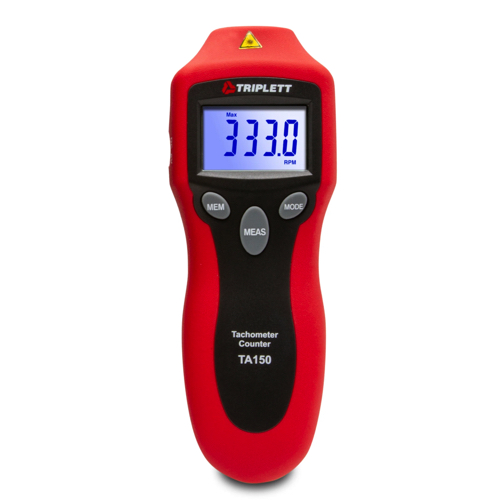
This selection covers more than one usage style. A handheld digital model such as the BETA 1760/TC2 Digital tachometer is suited to portable measurement, including non-contact rpm checking and contact-based speed measurement. This makes it useful when you need flexibility across different machine surfaces or rotating parts.
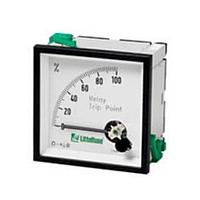
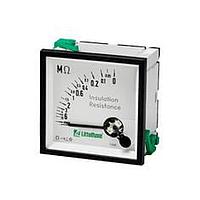
Panel instruments are represented by series such as Omron Automation and Safety H7CC and H7ER models, which are designed for mounting in control environments where continuous indication matters. Crouzet CTR48 devices in this category also support pulse-based counting and display functions, making them relevant in systems where speed indication and counting logic are closely related.
If your application also involves cumulative counting of movement or shaft turns, it may be useful to compare related devices in the rotary revolution counter range. For buyers evaluating broader speed-monitoring options, the full tachometer selection can help narrow down display format, mounting style, and power requirements.
How speed measurement methods differ
A key point when choosing a tachometer is the measurement method. Non-contact measurement is typically used when direct contact with the rotating part is difficult, unsafe, or undesirable. These instruments often rely on reflected signals from a marked target and are well suited to quick diagnostics on exposed rotating shafts or couplings.
Contact measurement is used when the instrument can be physically coupled to the rotating part or pressed against a moving surface. In some cases, this also allows linear surface speed measurement, which is valuable for belts, rollers, and web handling applications. Pulse-input panel tachometers work differently again: they receive electrical signals from sensors and convert frequency into displayed speed.
What to consider when selecting a tachometer
The first selection factor is the expected speed range. A low-speed conveyor roller and a high-speed motor spindle create very different requirements, so the instrument needs a suitable measurement or display span. You should also consider whether the signal is measured directly on the machine or received from an external sensor in the panel.
Power supply and installation conditions are also important. In this category, some units are designed for AC supply, some for DC, and some for wider voltage compatibility. Temperature range, display digit count, and available inputs or outputs can also affect suitability, especially in industrial cabinets where integration with relays, PLC interfaces, or operator panels may be required.
Another practical consideration is whether you need a portable troubleshooting tool or a fixed instrument for ongoing operation. A handheld unit is better for field verification and commissioning, while a panel tachometer is generally the better fit for continuous visual monitoring in production equipment.
Representative products in this range
The BETA 1760/TC2 is a good example of a multi-purpose handheld device for technicians who need to measure rpm without contact and also perform contact or surface-speed checks when required. Its accessory-oriented design reflects a typical maintenance use case, where one instrument may need to support several measurement situations during inspection work.
For installed applications, the Omron Automation and Safety H7CC-R11, H7CC-R11D, H7CC-R11W, and H7CC-R11WD models illustrate the panel tachometer approach with 6-digit LCD indication and different input/output configurations. The H7ER-NV-BH highlights another use case where a compact self-powered tachometer format may be advantageous in selected machine designs.
Crouzet models such as 87621121, 87621221, 87621212, and 87621112 show how some devices in this area sit close to the boundary between counting and speed display. That matters in real industrial systems, because many applications do not treat rpm indication as an isolated task but as part of a wider pulse-monitoring and control architecture.
Leading manufacturers and ecosystem context
This category includes recognized names used across industrial measurement and automation. Brands such as Crouzet, Omron Automation and Safety, BETA, Littelfuse, FLUKE, HIOKI, OMEGA, TESTO, SKF, and Chauvin Arnoux are relevant depending on whether the requirement is portable testing, panel instrumentation, or broader maintenance support.
Not every brand serves the exact same role in the ecosystem. Some are better known for handheld diagnostic tools, while others are closely associated with control-panel instrumentation or industrial automation components. For procurement teams, this makes application fit more important than simply comparing product names side by side.
Choosing for maintenance, OEM, or retrofit projects
For maintenance teams, the priority is often fast verification: easy setup, clear display, and the ability to check speed at different machines during inspection rounds. In that scenario, a portable tachometer is usually the practical choice, especially when non-contact measurement improves safety and accessibility.
For OEMs and panel builders, the focus usually shifts toward electrical compatibility, mounting format, display readability, and signal handling. Tachometers used in new machine builds or retrofits need to work reliably with the selected sensor architecture and available panel space. If the application combines runtime indication with pulse tracking or count-based monitoring, reviewing the wider counters and tachometers ecosystem can help avoid selecting a device that is too narrow for the actual task.
Final considerations
A tachometer is a straightforward instrument in principle, but selecting the right one depends on how the speed data will be captured, displayed, and used in the real process. Handheld and panel-mount devices solve different problems, and factors such as rpm range, signal type, power supply, and installation environment will usually determine the best fit.
By comparing the intended application with the available product styles in this category, buyers can narrow the choice more efficiently and identify a solution that supports reliable speed measurement in maintenance, automation, or machine-building work.
Get exclusive volume discounts, bulk pricing updates, and new product alerts delivered directly to your inbox.
By subscribing, you agree to our Terms of Service and Privacy Policy.
Direct access to our certified experts