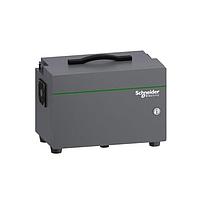
Cobot Controllers
Modern collaborative robot cells rely on more than the robot arm itself. Stable motion, safe communication, predictable I/O behavior, and straightforward integration with plant networks all depend on the controller behind the system. For buyers, maintenance teams, and machine builders, choosing the right Cobot Controllers category is often about matching payload requirements, communication protocols, and installation conditions to a real production task.
In this category, the focus is on controllers designed for collaborative robot applications, including Lexium Cobot controller options from SCHNEIDER. These products support practical industrial deployment where communication with PLCs, HMIs, and higher-level automation systems matters just as much as robot motion itself.
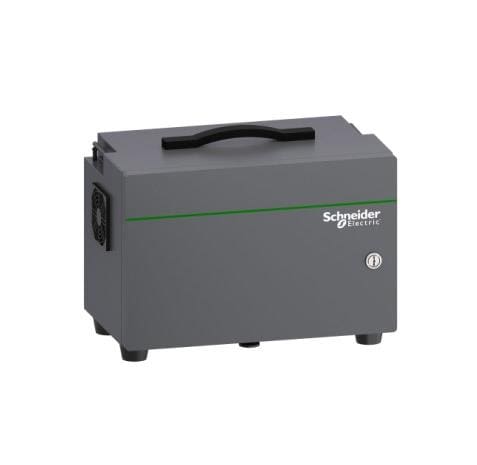
Where cobot controllers fit in an automation system
A cobot controller acts as the operational core of a collaborative robot setup. It manages robot motion, handles command execution, processes I/O signals, and enables communication with surrounding equipment such as conveyors, sensors, safety devices, and supervisory systems. In many projects, this controller becomes the link between the robot and the wider automation architecture.
That role is especially important in flexible production environments where collaborative robots are used for tending, pick-and-place, inspection, packaging, or light assembly. A controller with industrial communication support can simplify commissioning and make it easier to connect the cobot to broader control platforms, including programmable controllers already used on the line.
Typical selection criteria for cobot controller applications
When comparing controller options, one of the first checkpoints is compatibility with the intended robot payload. In this category, available examples are aligned with different robot sizes, from compact 3 kg systems up to models intended for 12 kg and 18 kg payload robots. That matters because controller selection is tied directly to the robot’s motion profile, supported load range, and expected application duty.
Another major factor is communication flexibility. Interfaces such as TCP/IP, Modbus TCP, Modbus RTU, Profinet, and Ethernet/IP are relevant in mixed-vendor industrial environments where robots need to exchange status, commands, and diagnostics with other control layers. For engineering teams, this can reduce custom integration effort and support more standardized deployment across multiple cells.
Physical installation conditions also play a role. A controller enclosure with a stainless steel body and IP44 protection may be suitable where robustness and routine industrial exposure are part of normal operation, provided the installation environment is assessed correctly.
Representative products in this category
Several highlighted products in this range illustrate how controller selection can follow robot payload requirements. The SCHNEIDER LXMRL03C1000 is intended for use with a 3 kg payload robot, making it relevant for lighter collaborative tasks where compact handling and lower payload capacity are appropriate.
For mid-range collaborative applications, the SCHNEIDER LXMRL07C1000 is designed for 5 kg and 7 kg payload robots. This kind of option can be suitable for machine tending, part transfer, or assembly processes that require more reach or handling capability than entry-level cobot setups.
For heavier collaborative applications, the SCHNEIDER LXMRL12C1000 supports 12 kg and 18 kg payload robot configurations. In practical terms, that can be useful where larger end effectors, more substantial workpieces, or broader task flexibility are needed within the robot cell.
Why network and protocol support matters
In industrial automation, controller value is not defined only by robot compatibility. It also depends on how easily the unit can be integrated into existing control networks. Support for common industrial Ethernet and field communication standards helps reduce friction when a cobot cell must exchange data with upstream and downstream equipment.
This is relevant for operations that already rely on coordinated control strategies. For example, a robot cell may need to interact with process regulation devices, operator interfaces, or peripheral control hardware. In those scenarios, adjacent product groups such as PID Controllers or other industrial control platforms may be part of the same wider architecture, even though their roles are different from dedicated robot control.
Installation and application considerations
Controller selection should always be aligned with the broader mechanical and electrical design of the robot cell. Input/output voltage requirements, supply voltage range, enclosure dimensions, and mounting space all affect practical implementation. Even when core controller functions are compatible, installation details can influence cabinet design, cable routing, thermal planning, and maintenance access.
It is also worth reviewing the intended duty cycle and communication needs early in the project. A collaborative robot used as a standalone workstation may have simpler integration needs than a cobot embedded in a synchronized production line. Where multiple control layers are present, teams may also evaluate related categories such as power controller products for supporting equipment, depending on the overall system design.
Choosing the right controller for current and future needs
A useful approach is to start from the application rather than the part number. Define the robot payload, process sequence, required communication protocol, available supply conditions, and expected plant interface points. From there, it becomes easier to narrow the controller choice to a model that supports both current deployment and future scalability.
Within this category, SCHNEIDER Lexium Cobot controller models provide a clear example of structured selection by payload class while maintaining industrial communication options that are relevant in connected manufacturing environments. For system integrators and OEM buyers, that makes the category especially useful when planning collaborative robot cells with predictable control and networking requirements.
Final thoughts
Choosing among cobot controllers is ultimately about system fit. The right controller should support the robot’s payload class, communicate cleanly with surrounding automation equipment, and integrate into the installation without unnecessary complexity. A well-matched controller helps create a collaborative robot cell that is easier to commission, easier to maintain, and better aligned with real production demands.
If you are comparing options for a new build or a retrofit, this category provides a practical starting point for reviewing robot controller solutions intended for collaborative applications, with examples built around industrial connectivity and structured payload support.
Get exclusive volume discounts, bulk pricing updates, and new product alerts delivered directly to your inbox.
By subscribing, you agree to our Terms of Service and Privacy Policy.
Direct access to our certified experts