In-line Controllers
When compact machine control, distributed I/O handling, and reliable field communication need to work together, choosing the right controller architecture becomes an important design decision. In-line controllers are often selected for automation tasks that require modular expansion, DIN rail installation, and straightforward integration into industrial control cabinets.
In this category, buyers can explore controller options suited to industrial automation environments where space, communication capability, and dependable operation matter. These products are typically considered for control tasks in machinery, process sections, and decentralized automation systems where a practical balance of performance and installation efficiency is needed.
Where in-line controllers fit in automation systems
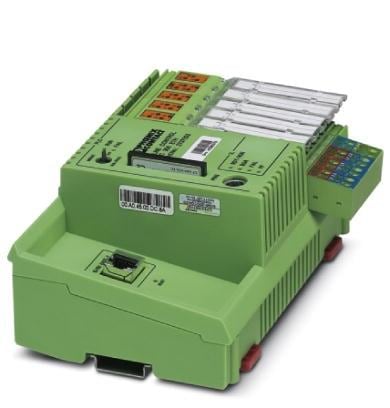
An in-line controller is generally used as the central control element within a modular automation setup. It can coordinate signals from connected devices, execute control logic, and exchange data with higher-level systems or neighboring components over industrial communication interfaces.
This type of controller is especially relevant in distributed control concepts, where I/O modules and control functions are arranged in a compact line on the rail. For applications that require more specialized control functions, users may also compare options such as programmable controllers or dedicated PID controllers, depending on the process and level of control complexity.
Why buyers choose this controller format
One of the main advantages of this category is its suitability for modular automation. In-line designs are commonly used when engineers want to keep wiring organized, simplify panel assembly, and retain flexibility for future system changes. DIN rail mounting also supports practical installation and maintenance in industrial cabinets.
Another important consideration is communication. In many real projects, an in-line controller needs to exchange data with supervisory systems, HMIs, or other controllers. Models in this category may therefore be considered when Ethernet connectivity, compact dimensions, and dependable 24 V operation are part of the selection criteria.
Representative products in this range
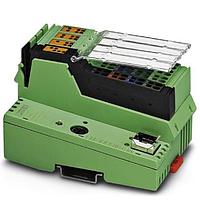
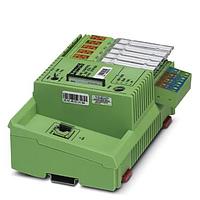
Examples from this category include the PHOENIX CONTACT 2737193 Inline Controllers ILC 330 ETH and the PHOENIX CONTACT 2985783 Inline Controllers ILC 150 VLC. These examples illustrate the type of equipment typically used in industrial environments where compact control hardware must fit into structured cabinet layouts and operate within standard low-voltage automation systems.
The ILC 330 ETH is relevant in applications where Ethernet-based coupling to other controllers or systems is part of the control architecture. The ILC 150 VLC, with DIN rail mounting and an industrial operating temperature range, reflects the practical requirements of many machine-building and panel-building projects. For buyers who already standardize on PHOENIX CONTACT, this category can also support consistency across automation components and engineering workflows.
Key selection points before ordering
Choosing the right unit usually starts with the control task itself. Some projects require straightforward logic handling and compact footprint, while others need broader communication support, room for expansion, or easier integration into an existing automation network. Looking at installation constraints, environmental conditions, and the surrounding I/O structure helps narrow the shortlist.
It is also useful to review practical hardware factors such as operating temperature range, enclosure rating, supply voltage, and available interfaces. In this category, 24 V operation and cabinet-oriented installation are relevant considerations, especially for users designing stable systems in industrial production or utility environments.
Application areas and adjacent controller types
In-line controllers are commonly evaluated for machine modules, conveyor sections, packaging lines, handling systems, and decentralized control stations. They are often used where multiple field signals must be processed locally while still maintaining communication with the broader automation system.
Depending on the application, users may also need complementary controller categories. For example, process-specific tasks can call for a level controller in tank and liquid handling systems, while environmental regulation applications may benefit from a humidity-focused control device rather than a general-purpose inline architecture.
What matters for B2B sourcing
For procurement teams, maintenance departments, and system integrators, the value of this category goes beyond a single part number. The more important question is whether the controller aligns with the intended system design, cabinet standard, power infrastructure, and communication strategy. That is why product comparison should focus on fit-for-purpose selection rather than only on physical size or basic electrical data.
It is also helpful to assess how the controller will sit within the wider automation ecosystem, including expansion modules, upstream networks, and serviceability over time. This is especially important in B2B purchasing, where long-term maintainability and integration effort can influence total project cost as much as the controller itself.
Choosing the right in-line controller for your project
A well-matched industrial controller supports stable operation, clean cabinet design, and smoother integration into the rest of the automation system. In-line controllers are particularly relevant when the project calls for a compact control platform with modular thinking behind the design.
By comparing communication needs, installation method, operating environment, and expansion expectations, buyers can identify the most suitable option for their application. This category is a practical starting point for teams looking for DIN rail control solutions that fit modern industrial automation requirements without unnecessary complexity.
Get exclusive volume discounts, bulk pricing updates, and new product alerts delivered directly to your inbox.
By subscribing, you agree to our Terms of Service and Privacy Policy.
Direct access to our certified experts