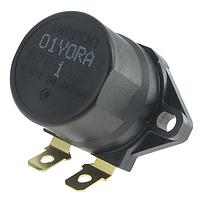
Tilt Switches
Detecting orientation, inclination, or movement can be critical in compact electronics, safety circuits, portable equipment, and industrial assemblies. When a design needs a simple way to sense whether a device has been tipped, tilted, or moved beyond a defined angle, Tilt Switches offer a practical switching solution that is easy to integrate into many control and monitoring applications.
In this category, you can explore tilt sensing components used for position detection, motion-triggered switching, and equipment status feedback. Depending on the design approach, engineers may choose between contact-based and optical sensing styles, with different mounting options, switching angles, and electrical ratings to suit board-level or embedded system requirements.
Where tilt switches are commonly used
Tilt switches are often selected for applications where the system only needs a clear change-of-state signal once a device moves past a certain angle. Typical use cases include anti-tamper functions, position monitoring, portable instruments, machine covers, panel orientation sensing, handheld devices, and equipment that must react when tilted away from its normal operating position.
They can also support basic motion or inclination detection without the complexity of a full sensor module. In broader machine safety or equipment control architectures, they may work alongside products such as emergency stop switches or other switching devices when multiple layers of status and operator protection are needed.
Key operating styles in this category
A useful way to compare this range is by looking at the switching principle. Some devices use a contact-based mechanism, including rolling ball or contact ball designs, while others use optical tilt sensing. Each approach supports angle-based detection, but the right choice depends on the electrical interface, durability expectations, board layout, and the type of movement being monitored.
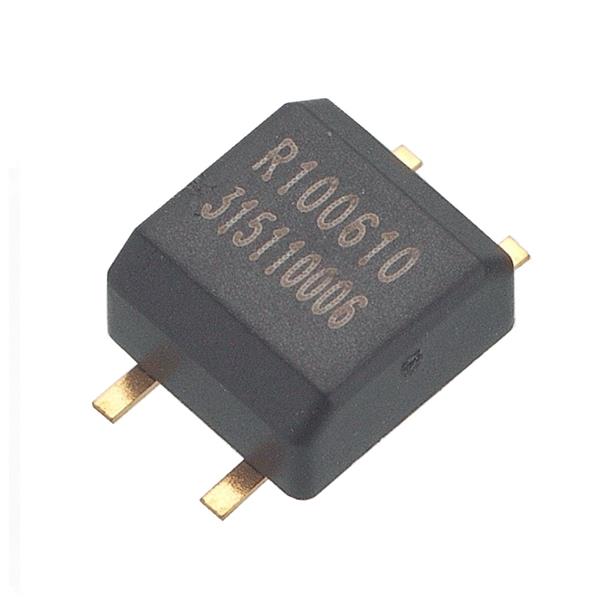
For example, the OncQue RBS100610T is a rolling ball contact type, while the OncQue RBS311110 and OncQue RBS310911T represent optical tilt sensing options. Contact designs can be attractive for straightforward switching tasks, whereas optical variants may be preferred in circuits where a different sensing method fits the application better. Product selection should always consider the expected switching angle, signal level, and environmental conditions.
Important selection criteria for engineers and buyers
When comparing tilt switches, the first practical filter is usually the operating angle. In this category, representative products show a broad range, from narrow-angle response such as 10 degrees in the OncQue RBS040110 to wider switching behavior like 45 degrees in the OncQue RBS311110 or C&K RB435X220. This matters because the required trigger angle directly affects system sensitivity and mechanical placement.
The next consideration is mounting and termination. Some parts are available for PCB mounting, through-hole installation, or SMD/SMT assembly. For compact automated production, surface-mount models such as the OncQue RBS170200T or RBS330212T may fit best, while through-hole or PC pin styles can be useful in designs that prioritize mechanical retention or easier prototyping.
Electrical limits also deserve close attention. Current rating, voltage rating, and contact form should match the circuit design rather than being treated as secondary details. A simple orientation signal path may only need low-current switching, but the designer still needs to verify compatibility with logic-level inputs, debounce behavior, insulation needs, and the surrounding interface electronics.
Examples of products in this range
This category includes a mix of compact components suited to different design goals. The OncQue RBS020602 is a contact ball sensor with a 20 degree operating angle, making it relevant for low-power tilt detection in small assemblies. The OncQue RBS330212T is an optical tilt sensor in an SMD/SMT format, suitable for space-conscious PCB layouts where surface-mount assembly is preferred.
For designs that need a traditional electromechanical switching style, the E-Switch TM1000Q and C&K RB435X220 provide additional options with different contact arrangements and angle characteristics. The TE CONNECTIVITY SENSORS 84704-000 is another example in the range for buyers evaluating tilt sensing components from established industrial brands. If you are comparing brand ecosystems, the OncQue product range is especially notable here because it includes both contact and optical versions across multiple operating angles.
How tilt switches fit into a broader switching system
Tilt switches are usually not selected in isolation. In real equipment, they are part of a wider architecture that may include operator controls, safety isolation, and status signaling. A machine builder might combine tilt detection with control switches for manual operation, or use separate switching layers for shutdown, position interlock, and service access.
That broader context helps clarify specification priorities. If the tilt switch is only providing a low-level signal to a controller, compact size and angle precision may matter most. If it is part of a more rugged or field-installed assembly, buyers may place greater emphasis on mounting style, life expectancy, and mechanical stability under repeated motion.
Choosing between contact and optical tilt sensing
For many projects, the most meaningful decision is whether to use a contact-based or optical tilt design. Contact types are often chosen for straightforward switched output behavior and can be effective where the circuit is designed around discrete state changes. Products such as the OncQue RBS040110 and RBS100610T reflect this style well.
Optical versions, including the OncQue RBS311111 and RBS380102, may be considered when the application calls for an alternative sensing approach with characteristics that better align with the target electronics. In both cases, the selection should be based on the actual motion profile of the device, the desired trigger and return behavior, and the electrical interface expected by the end system.
Brand considerations in this category
Several recognized manufacturers appear in this range, including C&K, TE CONNECTIVITY SENSORS, E-Switch, and OncQue. Each may appeal to different sourcing strategies, whether the priority is compact board-level integration, familiarity with a preferred supplier, or alignment with an existing approved vendor list.
Not every project needs the same brand profile. In some cases, procurement teams focus on continuity of supply and approved manufacturer status, while design teams focus more on angle response, package style, and switching method. Reviewing the available products by both technical fit and manufacturer can help shorten the evaluation cycle.
Finding the right tilt switch for your application
A good shortlist usually starts with four questions: what angle should trigger the switch, what mounting style fits the assembly, what electrical level must be handled, and what type of sensing principle is preferred. Once those basics are clear, it becomes much easier to compare parts such as the OncQue RBS170200T, TE CONNECTIVITY SENSORS 84704-000, E-Switch TM1000Q, or C&K RB435X220 without getting distracted by less important differences.
This Tilt Switches category is intended to help engineers, buyers, and OEM sourcing teams identify suitable components for orientation and movement detection across industrial and electronic applications. By comparing operating angle, contact style, package format, and manufacturer options, you can narrow the range to the devices that best match your design and purchasing requirements.
Get exclusive volume discounts, bulk pricing updates, and new product alerts delivered directly to your inbox.
By subscribing, you agree to our Terms of Service and Privacy Policy.
Direct access to our certified experts