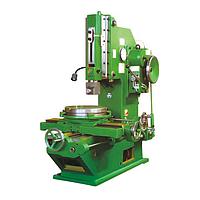
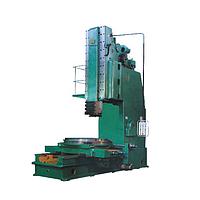
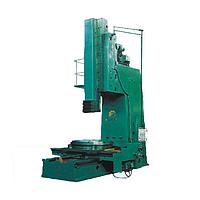
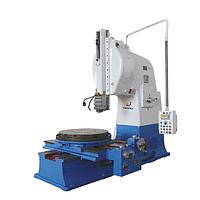
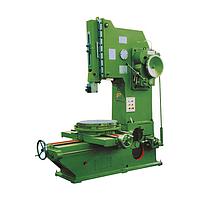
Slotting Machine
For internal keyways, splines, blind grooves, and other hard-to-reach profiles, conventional milling is not always the most practical option. In those cases, a Slotting Machine remains a highly relevant workshop solution, especially for jobs that require controlled vertical cutting motion and reliable access to internal surfaces.
Although modern machining centers handle a wide range of operations, slotting equipment still has a clear role in repair shops, general machining, toolrooms, and heavy industrial production. It is particularly useful when the cutting path, clamping setup, or workpiece geometry makes other machine types less efficient.
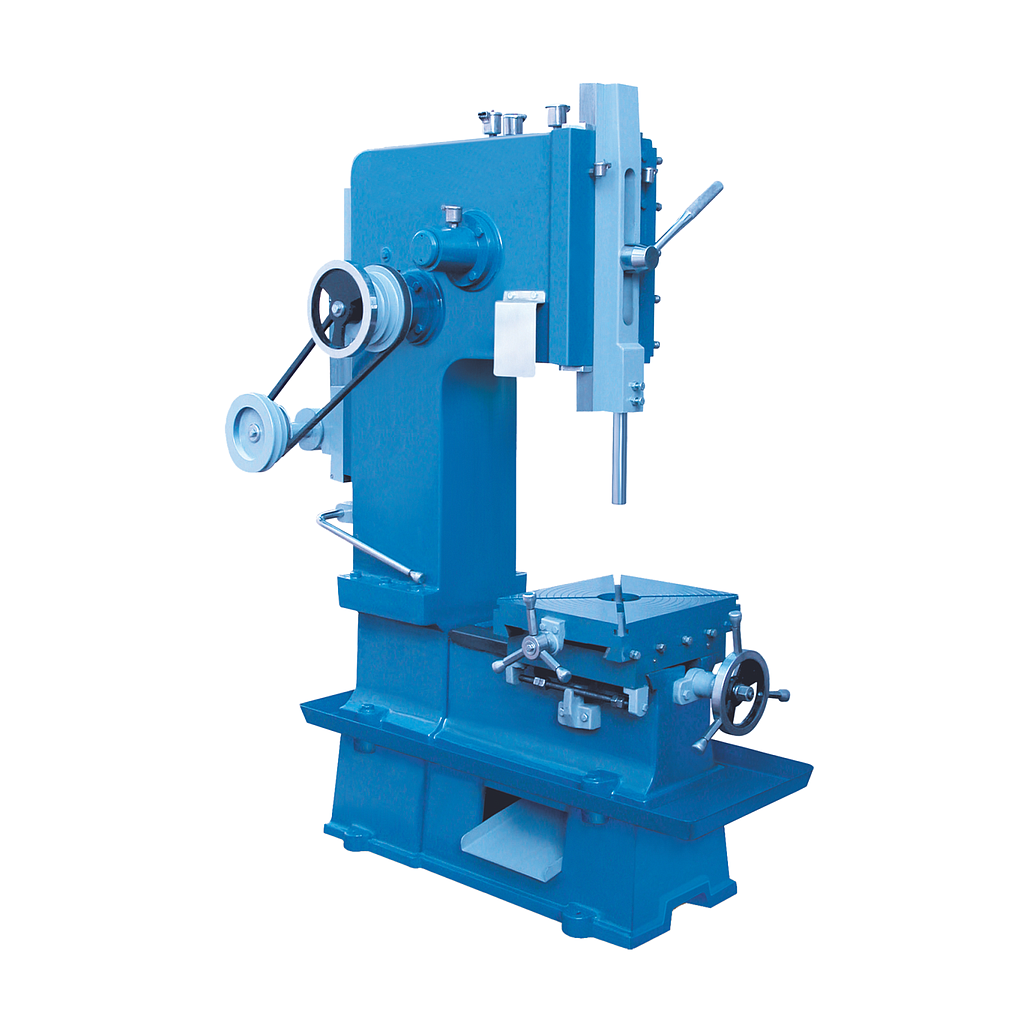
Where slotting machines are most useful
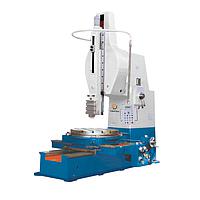
A slotting machine works with a reciprocating ram that drives the tool in a vertical cutting stroke. This simple but effective principle makes it suitable for machining internal slots, keyseats, splines, recesses, and shaped surfaces that may be difficult to produce with standard rotary tools alone.
In practical production, these machines are often selected for parts with internal features, interrupted cuts, or awkward clamping conditions. They are also useful when a workshop needs a dedicated machine for repetitive groove-making tasks rather than occupying larger multi-purpose equipment for relatively narrow operations.
Typical machine range in this category
This category includes equipment from WMT CNC, covering compact models for lighter-duty machining through to larger machines designed for heavy workpieces and longer cutting strokes. That makes the range relevant for both smaller fabrication environments and more demanding industrial applications.
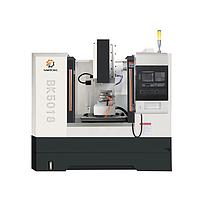
For example, the WMT CNC BK5018 Slotting Machine (3.7kW) and WMT CNC B5020 Slotting Machine (3kW) are suited to smaller work envelopes and general-purpose slotting tasks. At the other end of the range, models such as the WMT CNC BC5063 Slotting Machine (11kW), WMT CNC BC50100 Slotting Machine (37kW), and WMT CNC BC50125 Slotting Machine (37kW) are positioned for larger components, longer strokes, and higher cutting force requirements.
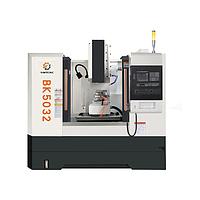
Between those ends of the range, machines such as the WMT CNC BK5030 Slotting Machine (3.7kW), BK5032 Slotting Machine (4kW), B5032 Slotting Machine (4kW), and BQ5040 Slotting Machine (4kW) offer a practical middle ground for workshops that need a balance of table capacity, ram travel, and manageable machine footprint.
How to choose the right slotting machine
The first points to review are stroke length, table size, and workpiece capacity. These directly affect whether the machine can handle the depth of slot, the overall component dimensions, and the weight of the part without compromising setup stability.
It is also important to consider feed capability, ram speed range, and table movement. A machine with appropriate travel and feed control can make setup easier and improve consistency when machining internal profiles or repetitive grooves. If your applications involve larger diameter workpieces or more complex positioning, table rotation and available working clearance become especially important.
Power level should be matched to material type, depth of cut, and expected production load. Smaller machines can be entirely suitable for toolroom work and moderate-duty production, while larger units become more relevant when parts are heavier, cuts are deeper, or throughput expectations are higher.
Manual, servo-assisted, and CNC-oriented considerations
Not every slotting application needs the same level of control. Some workshops prioritize straightforward operation and proven mechanical construction, while others need finer axis handling, faster positioning, or better repeatability for recurring jobs. That is why machine configuration matters just as much as headline size or motor power.
Several models in this category reflect that difference in positioning. Machines in the BK series, for instance, are often attractive where users want a more modernized setup with controlled axis movement for workshop productivity. Larger BC-series models are more aligned with demanding industrial slotting tasks where machine rigidity, cutting force, and worktable capacity play a bigger role in the selection process.
Common applications across machining environments
Slotting machines are widely used in the manufacture and repair of gears, hubs, pulleys, couplings, dies, and special machine components. They are especially valuable when an internal form must be cut accurately and repeatedly, or when access inside a bore makes other machining methods less convenient.
In maintenance and overhaul environments, they can support refurbishment work where replacement parts need internal keyways or special grooves added after turning or drilling. In production settings, they are often part of a broader machine lineup alongside equipment for thermal processing, cooling, or utility preparation, such as industrial water chillers when process temperature control is needed elsewhere in the plant.
Good operating practice for better machining results
Machine performance depends not only on specifications but also on how the process is set up. Proper tool selection, stable clamping, and sensible cutting parameters all have a strong influence on surface finish, dimensional accuracy, and tool life. For tougher materials, the cutting tool and feed strategy should be chosen carefully to avoid chatter and unnecessary wear.
A practical approach is to separate roughing from finishing where the part and geometry allow it. Removing most of the material first and then making a lighter finishing pass can improve groove quality and reduce the chance of damaging the cutting edge. Coolant and lubrication also help with heat control, chip evacuation, and smoother cutting behavior.
In a broader production line, reliable utilities matter as well. Where pneumatic systems support clamping or machine support functions, related infrastructure such as compressed air treatment equipment can help maintain stable operation and protect downstream components.
Maintenance points that should not be overlooked
Routine inspection is essential for keeping a slotting machine accurate and dependable over time. Operators should pay attention to unusual vibration, abnormal noise, inconsistent ram motion, or reduced surface quality, as these may indicate wear, alignment issues, or problems in the feed mechanism.
Secure clamping is one of the most important checks before every job. If the workpiece is not held firmly, vibration can affect finish, reduce dimensional control, and increase the risk of tool damage. Regular lubrication, cleaning of chips from moving areas, and periodic inspection of guides and drive components also contribute to longer machine life and steadier machining performance.
Finding a suitable machine for your workload
The best choice depends on the type of parts you machine most often, not simply on selecting the largest model available. A smaller unit may be more efficient for repeatable keyway and groove work on moderate-sized components, while heavy-duty applications will benefit from a machine with greater stroke, stronger drive power, and higher table load capacity.
This Slotting Machine category is built around practical workshop and industrial needs, with models ranging from compact 3kW to 4kW class equipment up to large 37kW machines for demanding tasks. If you are comparing options, focus on workpiece size, slot depth, required rigidity, and production frequency to narrow the range to the machines that fit your actual process.
With the right setup, slotting remains a precise and efficient method for machining internal forms that other equipment may handle less effectively. Reviewing the available models in this category can help you identify a solution that matches both your part geometry and your day-to-day production requirements.
Get exclusive volume discounts, bulk pricing updates, and new product alerts delivered directly to your inbox.
By subscribing, you agree to our Terms of Service and Privacy Policy.
Direct access to our certified experts