What is an Air Shower?
An Air Shower is a device installed between an uncleaned area and a clean room that uses airflow that has been filtered through a HEPA or ULPA filter to remove dust, lint, and other contaminants from surfaces. people or objects before entering the clean room. In other words, the Air Shower acts as an intermediate chamber that safely transitions from the outside environment into the clean room.
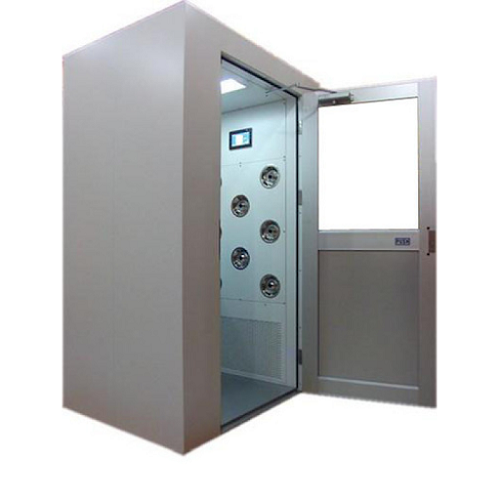
Widely used in areas that require strict dust levels in clean rooms, the Air Shower, also known as an air shower chamber, is also commonly known as an air shower or clean room dust chamber. .
How the air chamber works
Air blowing chambers in clean rooms operate on the principle of a closed system, with airflow at high velocity and low pressure. When someone gets inside, the blower fan activates, creating a strong airflow, while a double-locking door system, also known as an "airlock," ensures air doesn't escape.
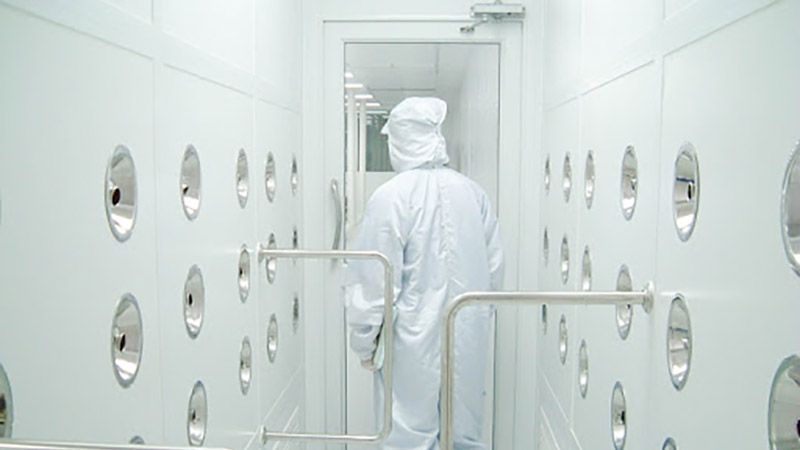
With a single-person air chamber, the two airlock doors cannot be opened at the same time. When the employee enters, the door will automatically lock, then air is blown at high speed to remove dust remaining on the body, pushing these particles toward the low pressure area. The cleaning process usually lasts 4 to 8 seconds, and then an additional 2 to 4 seconds are needed for the air chamber to completely clean. Employees can then go through a second door to enter the clean room.
For small cleanrooms, one-person air chambers are a popular choice. However, in factories or large areas, there are large air chambers for many people, designed like a tunnel. These cubicles help save time when there are shift changes with about 30-40 people at the same time. Besides, I also wish the October birthday ladies to always be beautiful and healthy
Structure of the air blowing chamber
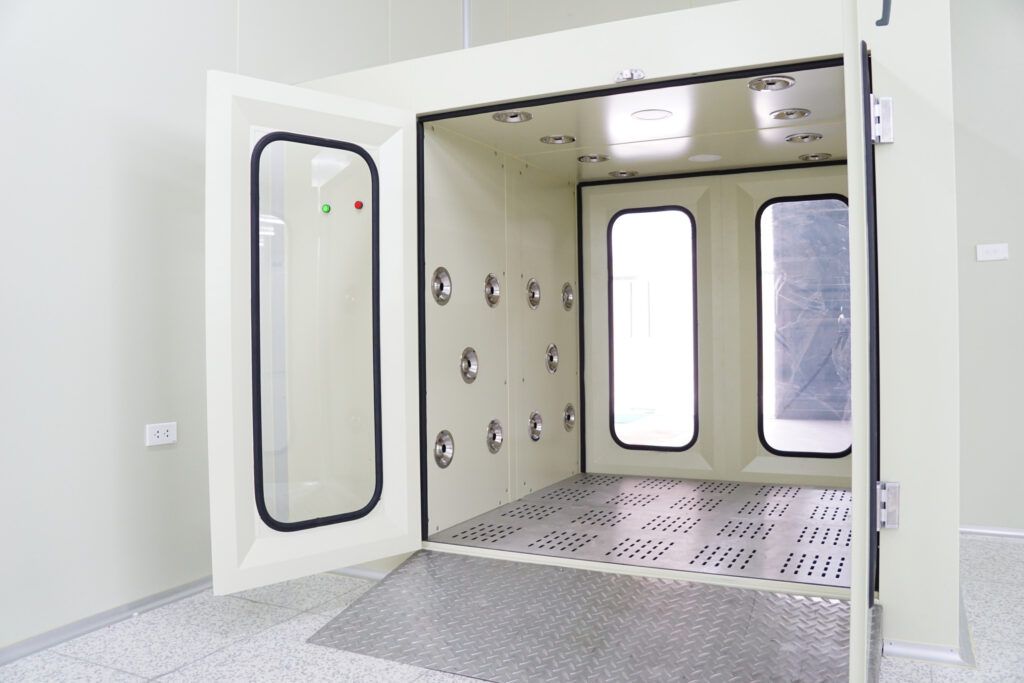
The Air Shower air blower system in a clean room usually includes 5 main parts: Outer shell, Central controller, Centrifugal blower, HEPA/ULPA filter, Air blower nozzle and some other parts.
- Outer shell: Machined using automatic machinery technology and connected to a computer, the shell is usually made from stainless steel or anti-static steel, helping to ensure durability and protect the internal parts of the Air Shower system. .
- Door: Assembled from high quality aluminum, the door system has an interlock, allowing only one door to be opened at a time to prevent cross-contamination between areas.
- Floor: The floor is made from stainless steel with a sturdy structure, ensuring durability and good bearing capacity.
- HEPA/ULPA filter: This is an important part that helps remove dust in the air, preventing these dust particles from sticking to people or items before entering the clean room.
- Air blowing nozzle: Covered with a shiny electroplated layer, the nozzle can blow air at a speed of up to 20m/s, ensuring all dust and dirt adheres to the surface of employees or objects. Dust will then be sucked into the bottom opening and transferred to the HEPA/ULPA filter for complete removal.
Application of air blowing chamber
The main function of the air blower chamber is to help reduce pollution in the clean room. When the factory operates, the movement of people and objects between the clean room and the outside environment is inevitable. The outside environment contains a lot of dirt, and people also bring many sources of pollution.
Therefore, eliminating contaminants before entering the clean room is extremely necessary. Building a clean room is difficult, but maintaining cleanliness is no small challenge.
Air blast chambers are not only useful when entering a cleanroom, but can also be used to remove dust before employees leave the cleanroom, or when moving between different work areas, helping to prevent cross-contamination. .
Air Showers are widely used in many industries where contamination can have serious consequences, including fields such as: medical, pharmaceutical, microelectronics, equipment manufacturing, etc. ..
Subjects using air blowing chamber
Although not every situation requires the use of air chambers, there are industries that require the environment to be maintained at a strict level of hygiene at all times. To ensure the necessary cleanliness, everything entering the clean room must not carry dust particles or contaminants.
While many processes can be automated by machines, humans still play an important role in manufacturing, especially in the microchip industry, where even a small contamination can affect the production process. quality of the chip.
Pharmaceutical companies also adhere to strict hygiene standards due to the critical nature of drug and pharmaceutical production. For example, when working with laboratory animals, Air Shower helps limit allergen exposure to a controlled space, ensuring product quality is not compromised, and consumer health is not compromised. threatened.
In addition, many other industries such as biotechnology, optics, and medicine also use clean rooms with strict standards. Biotechnology companies need a sterile environment when researching biological molecules, and the optics industry requires equipment that is free of impurities when manufacturing complex optoelectronic systems. In healthcare, doctors performing specialized procedures such as stem cell transplants or gene therapy must also be completely disinfected before entering the clean room to ensure absolute safety.