Solution Indicators
Quick visual checks are often the most practical way to verify sanitizer concentration, confirm chemical presence, or support routine process control in labs, food production, healthcare environments, and industrial cleaning workflows. When speed matters more than instrument-based analysis, Solution Indicators provide a simple and reliable screening method that helps operators make fast decisions at the point of use.
In this category, the focus is on indicator papers and test strips designed for solution testing, especially where peroxide and peracetic acid monitoring is part of daily operations. These products are widely used for spot checks, cleaning validation support, and concentration control without adding unnecessary complexity to routine testing tasks.
Where solution indicators fit in practical testing
Solution indicators are commonly selected when users need a fast, low-effort way to assess whether a chemical solution falls within an expected range. They are especially useful in environments where operators must check disinfectants, cleaning agents, or process solutions directly on site rather than sending samples for laboratory analysis.
Compared with broader screening tools such as water test papers or general-purpose chemical papers, this category is better suited to applications that depend on targeted reaction chemistry. That makes it relevant for hygiene programs, sanitation procedures, and maintenance routines where a clear visual result can support day-to-day compliance and operational consistency.
Common applications for peroxide and peracetic acid testing
Peroxide- and peracetic-acid-based chemistries are widely used because they are effective oxidizing agents in cleaning and disinfection processes. In practice, teams may need to confirm whether a prepared solution is still active, whether dilution is within the intended range, or whether a process bath remains suitable for use.
This is why both high-level and low-level measurement ranges matter. Low-range indicators can help with residual or fine concentration checks, while higher-range strips are more appropriate for stronger working solutions. Choosing the right range improves readability and reduces the risk of misinterpreting the result.
Representative products in this category
This category includes selected products from Johnson Test Papers, a manufacturer known for chemical test papers and strips used in laboratory and industrial settings. The listed products illustrate how solution indicators are often organized by analyte and by concentration range rather than by format alone.
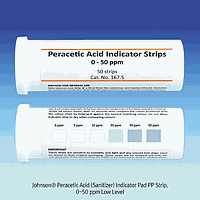
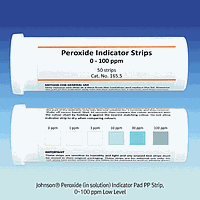
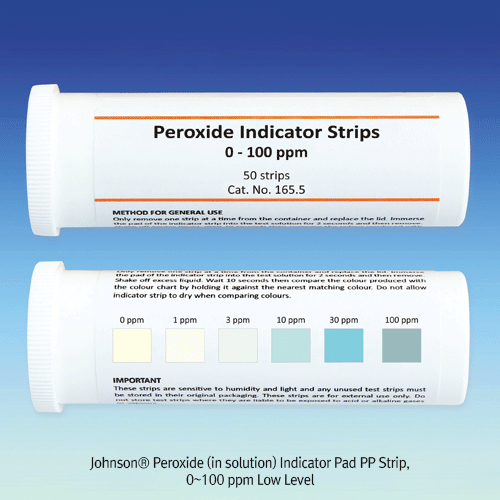
Examples include the Johnson Test Papers J2.222.1 Test Strip Peroxide Hi-level, PP 0~1000 and the Johnson Test Papers J2.165.5C Test Strip Peroxide, Lo-level, PP 0~100. For peracetic acid monitoring, the category also includes the Johnson Test Papers J2.168.5C Test Strip Hi-level Peracetic Acid, PP 0~500, 100stip and the Johnson Test Papers J2.167.5C Test Strip Lo-level Peracetic Acid, PP 0~50, 100stip. Together, these examples show how users can select a strip based on both the target chemical and the expected concentration band.
How to choose the right solution indicator
The first step is to match the indicator to the specific chemical being tested. A strip intended for peroxide should not be treated as interchangeable with one designed for peracetic acid, even when both are used in related sanitation processes. The chemistry behind the reaction and the color response are tied to the intended analyte.
Next, consider the expected concentration range in the application. If the working solution is relatively strong, a high-level strip is usually the more suitable option. If the goal is to detect lower concentrations or residual levels, a low-level strip will often provide a more meaningful reading. It is also worth reviewing handling convenience, strip count per pack, and how the result will be interpreted within the operating procedure.
Why indicator papers remain useful in industrial and lab workflows
Even in facilities that use advanced instruments, indicator strips still have a place because they are fast, portable, and easy to deploy across multiple testing points. They can support incoming checks, line-side verification, routine sanitation control, and quick troubleshooting when a process parameter needs immediate confirmation.
They also help standardize basic checks among different operators. A straightforward visual response can simplify training and make routine monitoring more consistent, especially in high-frequency testing environments. For broader paper-based testing needs, users may also compare this category with pH paper and comparator options when the application involves acidity or alkalinity rather than oxidizer concentration.
Good practice for using solution indicator strips
To obtain useful results, the test method should follow the product instructions closely, including sample contact time, reading time, and storage conditions. Indicator papers are designed for rapid screening, so result quality depends on consistent handling. Exposure to moisture, contaminated sampling tools, or delayed reading can affect interpretation.
It is also good practice to choose a strip range that matches the normal process window. A test strip that is too broad for the target concentration may be less informative, while one that is too narrow may not capture the actual operating range. In facilities using several paper-based checks, categories such as moisture detecting papers may support complementary inspection needs in storage, packaging, or environmental monitoring workflows.
Choosing with confidence
When the task calls for a fast visual check of peroxide or peracetic acid solutions, this category offers a focused selection of indicator strips suited to routine operational use. The main selection criteria are straightforward: identify the target chemistry, estimate the expected concentration range, and choose a strip format that fits the workflow.
By using the right solution indicator for the application, teams can make routine testing more practical and easier to repeat across shifts, sites, and procedures. That makes these products a useful part of a broader quality control and sanitation toolkit, especially where quick verification at the point of use is essential.
Get exclusive volume discounts, bulk pricing updates, and new product alerts delivered directly to your inbox.
By subscribing, you agree to our Terms of Service and Privacy Policy.
Direct access to our certified experts