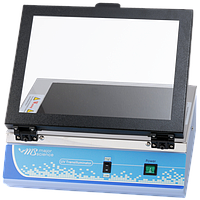
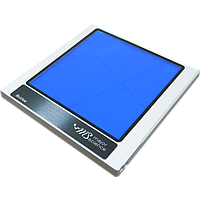
UV Transilluminator
Clear visualization is essential in many molecular biology and laboratory workflows, especially when checking nucleic acid bands, inspecting gels, or working with fluorescently stained samples. A UV Transilluminator provides a practical light source from below the sample, helping researchers and technicians observe results more easily during routine analysis and documentation steps.
On this category page, you can explore compact and standard-format systems, along with replacement UV lamps used to maintain reliable operation over time. The range is especially relevant for laboratories that need stable UV wavelengths such as 312 nm or 365 nm for gel observation and related applications.
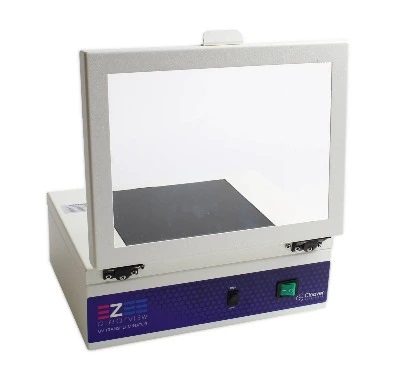
Where UV transilluminators fit in the lab workflow
These instruments are commonly used in life science and analytical laboratories where gel-based inspection remains part of daily work. By illuminating the sample platform from underneath, they make fluorescent bands or marked sample areas easier to detect, which supports faster visual checks before downstream analysis, imaging, or record keeping.
Compared with general-purpose lab lighting, a dedicated transilluminator is designed for more controlled UV exposure at a specified wavelength. That matters when the application depends on consistent viewing conditions, whether the goal is routine gel inspection, quick confirmation of sample separation, or compatibility with established staining protocols.
Common wavelength options and why they matter
One of the main selection points in this category is wavelength. The available products in this range include 312 nm, 365 nm, and dual 365+312 nm configurations, giving labs flexibility based on staining method, viewing preference, and workflow requirements.
For example, a unit such as the DaiHan DH.WUV00010 Transilluminator UV, Standard, 365nm WUV-L10, 230V is suited to applications that specifically call for 365 nm illumination. If your process requires 312 nm, models such as the DaiHan DH.WUV02020 Transilluminator UV, Standard, 312nm WUV-L20, 120V or compact WUV-M20 variants may be more appropriate. Laboratories that want broader flexibility may prefer a dual-wavelength option like the DaiHan DH.WUV02050 or DH.WUV00050, both configured for 365+312 nm operation.
When comparing models, it is helpful to start from the dye or fluorescent response used in your procedure, then confirm the required wavelength, instrument size, and power version. This simple approach usually narrows the selection much faster than comparing model codes alone.
Compact vs. standard models
The category includes both compact and standard transilluminator formats. Compact models are often a practical choice where bench space is limited or where the instrument is used for routine checks rather than higher-throughput handling. Examples include the WUV-M10 and WUV-M20 series, available in 365 nm or 312 nm versions and offered in either 120 V or 230 V configurations depending on the model.
Standard models provide a larger working area and can be a better fit for laboratories that handle bigger gels or prefer more working surface during observation. The WUV-L10, WUV-L20, and WUV-L50 examples in this category illustrate how format and wavelength can be combined to match different operating needs.
If you are also comparing broader lab product ranges from the same supplier, it may be useful to browse other DaiHan laboratory equipment for related bench instruments and accessories.
Replacement UV lamps and maintenance planning
This category is not limited to complete instruments. It also includes replacement UV lamps, which are important for maintaining light output and preserving consistent viewing conditions over the service life of the unit. In laboratory purchasing, this is often overlooked until performance drops or downtime interrupts work.
Examples in the range include the DaiHan DH.WUV01010 UV Lamp 365nm, 15W UVL365 for WUV-L10/-L50, the DaiHan DH.WUV01020 UV Lamp 312nm, 15W UVL312 for WUV-L20/-L50, the DaiHan DH.WUV01110 UV Lamp 365nm, 8W UVM365 for WUV-M10, and the DaiHan DH.WUV02110 UV Lamp 312nm, 8W UVM312 for WUV-M20. Choosing the correct lamp means matching both wavelength and compatible platform series rather than selecting by wattage alone.
For buyers managing multiple instruments, it is often worth planning lamp replacement together with other routine lab consumables, safety items, or handling equipment. In some setups, nearby categories such as lab apparels or material handling carts and trolleys may also support a more complete laboratory workflow.
How to choose the right UV transilluminator
A good starting point is the actual application: what sample type is being checked, what staining method is used, and how often the instrument will operate. Once that is clear, the most important practical criteria are usually wavelength, working size, and supply voltage. In this category, several models are available in 120 V or 230 V versions, so confirming local electrical compatibility is just as important as confirming the optical requirement.
It is also useful to think about whether you need a single-purpose instrument or a more flexible platform. A compact 365 nm unit such as the DaiHan DH.WUV00110 or DH.WUV00210 can be suitable for focused routine use, while a dual-wavelength standard model may make more sense when different teams or protocols share the same equipment.
Brand preference may also play a role in standardization. Alongside DaiHan, laboratories may also compare products from manufacturers such as Benchmark or Major Science depending on purchasing policy, installed equipment base, and application familiarity.
Who typically uses this category
UV transilluminators are relevant to university laboratories, biotech research facilities, quality control labs, teaching labs, and applied testing environments where gel observation remains part of the process. They are also useful in labs that need a dedicated bench instrument rather than relying only on larger imaging systems.
For procurement teams, this category supports both new instrument purchases and ongoing maintenance. That combination is valuable because it allows buyers to source complete units and compatible lamp replacements within the same product group, simplifying comparison and reorder planning.
Final considerations before ordering
Before selecting a unit, it is worth checking four basics: required UV wavelength, instrument format, voltage, and whether replacement lamps are readily available for the chosen platform. These details have a direct effect on day-to-day usability and long-term maintenance, especially in shared laboratory environments.
This UV Transilluminator category is designed for buyers who need practical options for gel and sample visualization without unnecessary complexity. Whether you are equipping a new bench, replacing an older unit, or sourcing compatible UV lamps, focusing on application fit and serviceability will usually lead to a more reliable choice.
Get exclusive volume discounts, bulk pricing updates, and new product alerts delivered directly to your inbox.
By subscribing, you agree to our Terms of Service and Privacy Policy.
Direct access to our certified experts