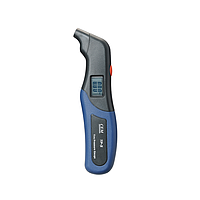
Portable pressure Meter
Field checks, maintenance work, HVAC balancing, laboratory verification, and process troubleshooting often require pressure readings to be taken directly at the point of use. In these situations, a Portable pressure Meter gives technicians and engineers a practical way to verify system conditions without relying only on fixed instrumentation.
Compared with panel-mounted devices, portable instruments are selected for mobility, quick setup, and flexible unit display. They are used across air, gas, vacuum, and liquid pressure tasks depending on the sensor type, pressure range, and connection method required by the application.
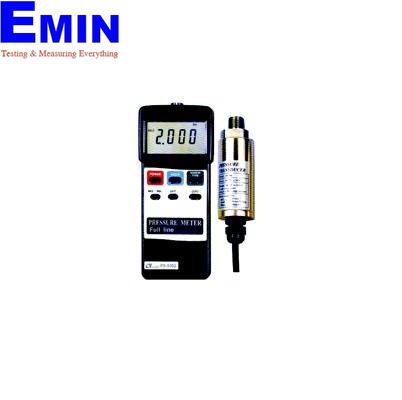
Where portable pressure meters are commonly used
Portable pressure measurement supports a wide range of industrial and technical work. Common use cases include checking compressed air lines, verifying pump and hydraulic behavior, testing low-pressure HVAC systems, measuring barometric or absolute pressure, and confirming differential or gauge pressure during commissioning and service.
These instruments are also valuable when pressure must be measured in multiple locations during the same job. A compact handheld unit can reduce setup time, while models with memory, hold, or logging functions help document test results for maintenance records or quality checks.
Different measurement needs call for different instrument types
Not every portable pressure device is intended for the same duty. Some models are optimized for absolute pressure, which is useful in altitude-related checks, reference measurements, or applications where atmospheric pressure matters. Others are designed for relative or gauge pressure, making them suitable for routine industrial pressure checks on pipes, vessels, pneumatic systems, and process equipment.
Low-pressure applications often require a manometer-style instrument with high sensitivity in units such as inH2O or mmH2O. For readers comparing formats, the broader manometers category is useful when focusing on fine pressure differences, airflow verification, or ultra-low pressure work.
There are also portable instruments built around external or optional transducers, which gives more flexibility in range selection. This approach can be useful when one meter body needs to support several pressure ranges rather than being limited to a single fixed input range.
Examples across low, medium, and higher pressure ranges
The products in this category illustrate how broad portable pressure measurement can be. For low-pressure work, the OMEGA HHP680 is aimed at ultra-low ranges, which can be relevant for clean, dry gas measurement and similar service tasks. In a different direction, the TESTO 511 pocket-sized absolute pressure instrument is designed for compact, everyday portability when atmospheric or absolute pressure readings are needed.
For general service and HVAC-related pressure checks, the PCE PDA 1000L offers a relative pressure measuring range with multiple selectable units, while the EXTECH SDL700 adds datalogging capability and supports use with separate transducers. Where a more specialized handheld smart manometer is needed, models such as the OMEGA HHP452 series provide absolute pressure measurement in several ranges.
Some applications go beyond lightweight handheld use and require higher stability or bench-style precision in a portable form factor. The YOKOGAWA MT300 digital manometer examples in this category reflect that more advanced end of portable pressure verification, especially where response mode selection and detailed readout are important.
Key selection criteria before buying
The first step is to define the pressure type: absolute, gauge, relative, or low-pressure manometric measurement. Choosing the wrong reference type can lead to incorrect interpretation even if the instrument itself is accurate. It is also important to match the measuring medium, because some devices are intended for air and non-explosive gases, while others can work with compatible liquid media as well.
Next, review the expected operating range and required resolution. A meter selected too close to the upper limit may reduce useful readability, while an oversized range may not provide the detail needed at lower pressures. Users who test several systems may also benefit from instruments offering multiple engineering units such as bar, psi, kPa, mmHg, inHg, or inH2O.
Other practical criteria include connection style, portability, battery life, IP rating, display readability, and data capture features. If the job includes trend recording or reporting, built-in logging can be more efficient than manual note-taking. When the requirement is tied to vacuum service or negative pressure conditions, the portable vacuum pressure range may be a more relevant comparison point.
Features that improve usability in the field
In real maintenance environments, convenience features can have a significant impact on productivity. Backlit displays, min/max capture, hold functions, zero correction, and quick unit switching all help when measurements are taken in tight spaces, mechanical rooms, or outdoor service conditions.
Data logging is especially useful for troubleshooting unstable systems. Instruments such as the EXTECH SDL700 and PCE PDA 1000L show how portable meters can support record keeping instead of only spot checks. This matters when pressure behavior changes over time or when measurement evidence is needed for maintenance documentation.
Compact construction is another advantage. Small units like the TESTO 511 are easy to carry for mobile work, while larger instruments may be better suited to test benches or repeated verification tasks where screen size, stability, or connection options matter more than pocket size.
Portable pressure meters in broader measurement workflows
Pressure is rarely evaluated in isolation. In HVAC, building services, and environmental monitoring, pressure readings are often interpreted together with temperature and humidity. For applications that require a wider view of operating conditions, related pressure, temperature and humidity monitoring instruments can provide useful context.
Likewise, absolute pressure instruments overlap with barometric tasks in some scenarios. A compact device such as the TESTO 511 or OMEGA HHC281 may be considered when atmospheric pressure is part of the measurement objective, while a dedicated barometer category may be more appropriate for applications centered primarily on barometric monitoring.
Choosing the right fit for your application
A good selection process starts with the real operating condition: medium, pressure range, reference type, and whether you need a quick handheld reading or a documented test record. From there, it becomes easier to narrow the choice between compact pocket meters, general-purpose handheld gauges, datalogging instruments, and more advanced digital manometers.
This category brings together portable solutions from brands such as OMEGA, TESTO, YOKOGAWA, PCE, EXTECH, and ELCOMETER, covering everything from ultra-low pressure and absolute pressure to broader industrial measurement tasks. If you are comparing options for field service, maintenance, or verification work, reviewing the pressure type and data handling requirements first will usually lead to a more suitable instrument choice.
Get exclusive volume discounts, bulk pricing updates, and new product alerts delivered directly to your inbox.
By subscribing, you agree to our Terms of Service and Privacy Policy.
Direct access to our certified experts