Connector press-fit machine
In PCB and backplane assembly, controlled insertion force is critical when installing press-fit connectors. A stable process helps protect plated through-holes, reduce the risk of bent pins, and maintain consistent electrical and mechanical performance across production batches. For manufacturers working with telecom, industrial electronics, server platforms, or automotive electronics, choosing the right connector press-fit machine is closely tied to product quality and line efficiency.
This category focuses on equipment designed for accurate connector insertion using monitored force, controlled travel, and repeatable setup methods. It is especially relevant where assemblies require dependable connector placement on large boards, mixed product runs, or traceable production parameters.
Where connector press-fit machines fit in assembly operations
Press-fit technology is widely used when connectors need to be mounted without soldering, relying instead on precise mechanical insertion into plated through-holes. In this process, the machine must apply force evenly, align the connector correctly, and maintain tight control over insertion depth or distance. That makes the equipment more than a simple press; it becomes part of a broader assembly and inspection workflow.
These machines are often integrated alongside upstream material handling and downstream quality checks. In more automated environments, they may work in coordination with a conveyor system or with optical verification steps that confirm board position and connector orientation before the press cycle begins.
Key capabilities that matter in real production
When evaluating a connector press-fit platform, the most important factor is not only nominal tonnage, but how well the machine controls the insertion event. In practice, manufacturers typically look for stable force delivery across the full stroke, repeatable positioning, and reliable error detection when insertion conditions move outside the expected window.
Features such as force monitoring, distance-based control, board thickness measurement, and automatic setup can help reduce operator dependence and improve consistency between shifts. For applications involving fine-pitch or high-density connectors, alignment support becomes even more important because small errors can lead to pin damage, rejected boards, or hidden reliability issues discovered later in the field.
Typical equipment options in this category
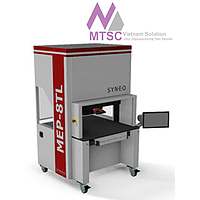
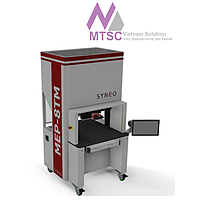
Within this category, SYNEO is a key manufacturer represented with several machine formats suited to different production needs. For larger boards and higher-capacity applications, models such as the SYNEO MEP-8TM Manual Electric Press and SYNEO MEP-8TL Manual Electric Press provide an electric press architecture with controlled operation and PC-based interface support.
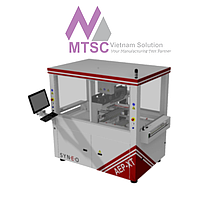
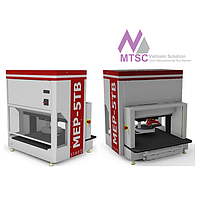
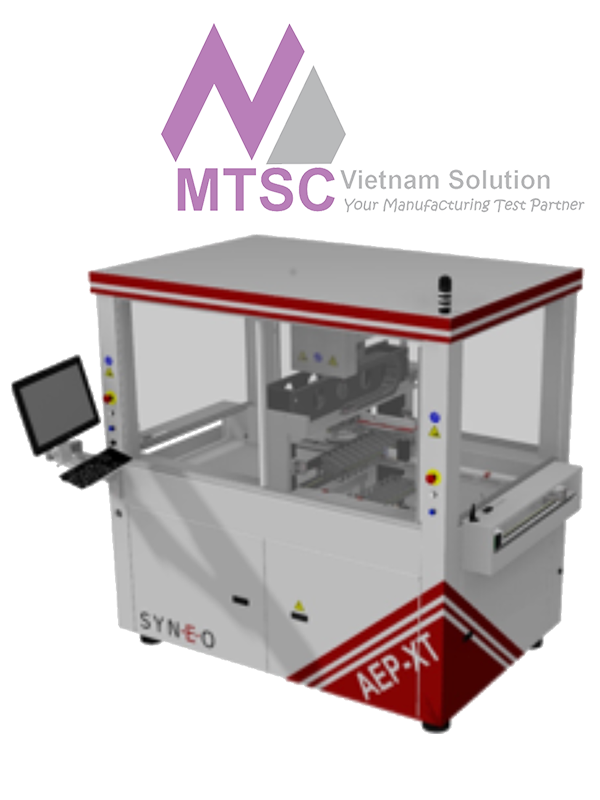
For more compact production cells or space-sensitive layouts, the SYNEO MEP-5TB tabletop connector press-fit offers a smaller-format solution while still supporting monitored insertion tasks. Where throughput, recipe handling, and flexible changeover are priorities, the SYNEO AEP-XT connector press-fit is relevant for operations that need automatic adjustment and vision-assisted alignment in a more advanced process environment.
How to choose the right machine for your application
The best selection depends on the board size, connector type, required insertion force, and the way your production line is organized. A large backplane or high-speed connector application may require a wider working area and stronger force capacity, while smaller boards or lower-volume work may be better served by a tabletop format that is easier to deploy and reconfigure.
It is also useful to consider how often your product mix changes. If your factory handles frequent model changes, functions such as automatic board width adjustment, faster recipe transfer, and simplified setup can reduce downtime. If the process is highly sensitive to placement accuracy, machines with vision alignment and true distance measurement may offer better process protection than a basic manual pressing approach.
Why process control is important for connector press-fit
Connector insertion is a mechanical process, but the quality outcome depends heavily on data and control. Excess force can damage boards or deform connector features, while insufficient force may lead to incomplete seating and unstable electrical contact. A well-configured machine helps operators work within the correct process window and provides a more repeatable result across different board designs.
Advanced platforms may support dynamic force adjustment, controlled height or force endpoints, and fault detection during the press cycle. These functions are valuable for companies that need traceability, lower defect rates, or better consistency in medium- to high-mix manufacturing. In many cases, connector press-fit equipment also works well alongside a vision inspection system to verify alignment and support quality assurance before or after insertion.
Applications across electronics and industrial manufacturing
Connector press-fit machines are commonly used in sectors where reliable board-to-board or cable interface connections are essential. Typical examples include communication hardware, control systems, industrial computing, power electronics, and electronic modules used in transportation or automation. The need becomes more pronounced when connectors are large, dense, or difficult to install consistently by hand.
In broader manufacturing systems, these machines can also complement automated assembly lines built around handling, placement, and inspection. For example, companies modernizing line architecture may review related solutions such as automatic workpiece feeding systems when planning a more efficient and repeatable production flow.
What to review before purchasing
Before selecting a machine, it is worth checking several practical points: the maximum board dimensions you need to support, the expected connector sizes, available factory utilities, and the level of operator skill in your production team. These factors influence whether a manual electric press, tabletop system, or more automated press-fit platform is the better fit.
You should also look at maintenance access, software usability, and how easily the machine can be adapted to future product changes. In B2B environments, the right choice is usually the one that balances process reliability, footprint, and changeover efficiency rather than simply choosing the largest or most complex machine.
Supporting a more consistent press-fit process
A well-matched connector press-fit machine can help manufacturers improve insertion consistency, reduce board damage, and build a more controlled assembly process for demanding electronic products. Whether the need is a compact tabletop system or a higher-capacity electric press for larger assemblies, this category brings together equipment intended to support repeatable connector installation in production settings.
If you are comparing options, focus on the actual needs of your boards, connectors, and workflow. That approach makes it easier to identify a solution that supports current output requirements while leaving room for better automation and inspection integration over time.
Get exclusive volume discounts, bulk pricing updates, and new product alerts delivered directly to your inbox.
By subscribing, you agree to our Terms of Service and Privacy Policy.
Direct access to our certified experts