For full functionality of this site it is necessary to enable JavaScript.
EMIN.COM.MM
0

Test on 13MHz RFID Tag-RLB Test Method

02/10/2018 10:17:05

Test on 13MHz RFID Tag-RLB Test Method Radio Frequency Identification (RFID), a wireless RF identification system, utilizes radio frequency (electromagnetic sensing, microware, etc.) to conduct the transmission, identification and swapping of wireless information.

Radio Frequency Identification (RFID), a wireless RF identification system, utilizes radio frequency (electromagnetic sensing,microware, etc.) to conduct the transmission, identification and swapping of wireless information. A complete RFID includes electronic tag (Tag), reading device (Reader) and main computer (Host). This application uses RLB to test the common 13MHz RFID Tag. This test method can also be applied for production line to rapidly compare the result with Golden Sample.


The Basic Understanding of the Test

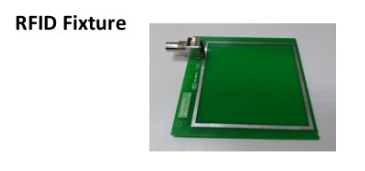
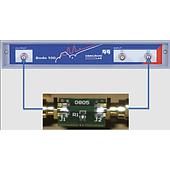
The test method of RFID Tag utilizes RLB and RFID Tag fixture. After connecting TG, fixture and RF terminal, normalize the signal and place DUT at the center of fixture to obtain Tag's frequency range.
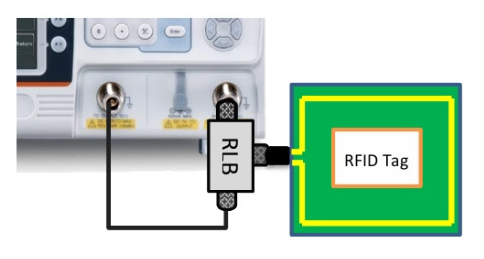
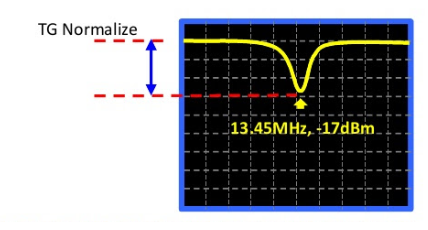
Illustration of Curve

This test method aims at obtaining the Return Loss data of DUT to find out its main operating frequency. The amplitude difference under TG Normalize line is the real test difference.
Required Equipment

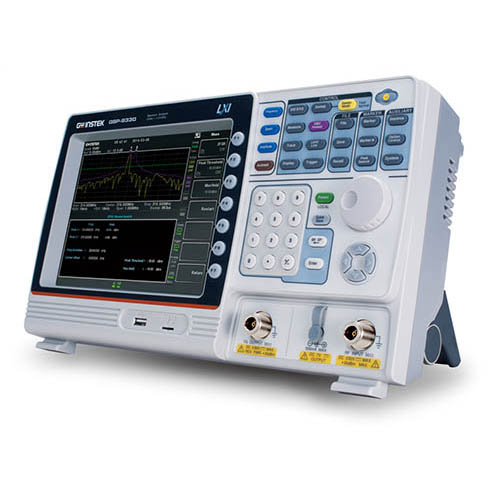
GSP-9330 / GSP-9300B

Option 01: Tracking Generator

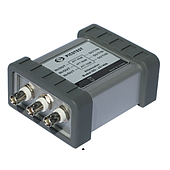
RLB-001: 1GHz Return Loss Bridge GKT-003: RLB Kit

GW RFID Tag Fixture

ADP-001 : N(M)-BNC(F) Adapter

Test Procedures

1.Connect TG, RF, RLB-001 and RFID Fixture

2.Activate GSP-9330 TG function

3. Execute TG Normalize

4.Connect DUT (RFID Tag)

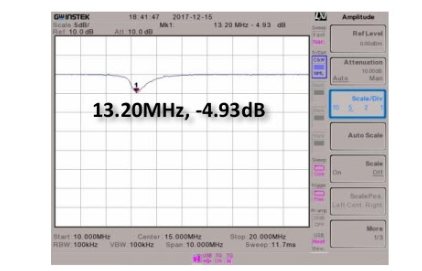
5.Use Min.Peak Search to obtain the frequency of the lowest amplitude

Test Result
Related News

What is the required TDS level for shrimp ponds?
06/12/2026 14:26:27

What is the ideal TDS level for a shrimp tank? Many people spend a lot of time monitoring pH, temperature, and filtration systems but overlook TDS. Only when shrimp grow slowly, their colors fade, they have difficulty molting, or die off sporadically do they start checking their water source and discover that this indicator has long been out of the right range

Signs that the electrodes in your TDS meter are degraded and need replacing
06/12/2026 11:43:51

TDS meters can operate reliably for many years, but the electrodes are the most subject to wear and tear. Each time a measurement is taken, the sensor surface comes into direct contact with water, dissolved minerals, and various other chemical components. This continuous process means the electrode's responsiveness gradually decreases over time.

Can metal detectors locate underground pipes and cables?
06/10/2026 19:17:37

Metal detectors operate on the principle of passive electromagnetic induction and can only detect isolated metal objects such as gold, copper, and iron. These devices cannot trace utility paths because they cannot differentiate the direction or depth of long, buried continuous pipes. For insulated electrical cables or plastic pipes, metal detectors are completely ineffective as there is no AC current to generate a magnetic field. Furthermore, the detection depth of standard consumer metal detectors is typically limited to 1 - 2 meters for small objects, whereas underground utility lines are often buried 3 - 5 meters deep or even more.

Stay Updated with Offers

Get exclusive volume discounts, bulk pricing updates, and new product alerts delivered directly to your inbox.

By subscribing, you agree to our Terms of Service and Privacy Policy.

Quick Support

Direct access to our certified experts