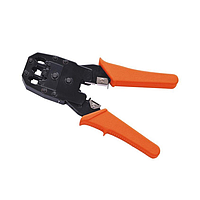
Copper Network tools
Reliable copper cabling depends not only on cable and connectors, but also on the quality of the installation tools used in the field. For structured cabling, telecom work, and routine network maintenance, the right crimping, stripping, compression, and punchdown tools help technicians achieve cleaner terminations, reduce rework, and maintain consistent signal performance.
Copper Network tools in this category are intended for practical installation and service tasks across RJ45, RJ11, RJ12, coaxial, and related copper networking applications. Whether the job involves preparing patch cords, terminating modular plugs, or handling punchdown connections on distribution points, choosing the correct tool type makes day-to-day work faster and more reliable.
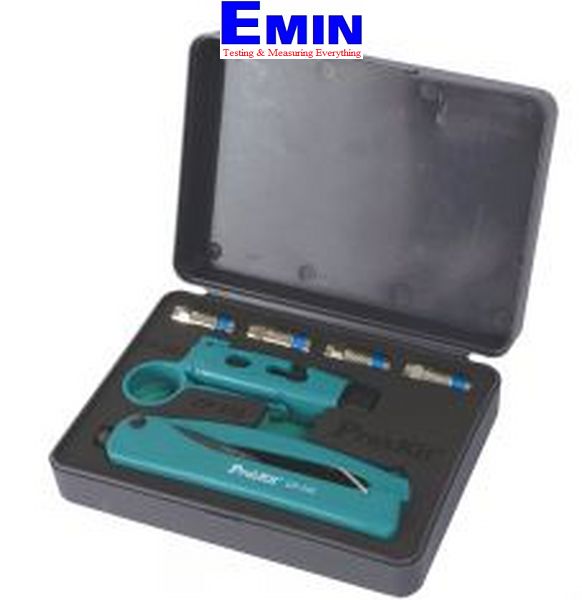
What this category is used for
In copper network installation, each stage of the job calls for a specific hand tool. Crimpers are used to attach modular plugs to cable ends, punchdown tools help seat conductors into terminals, and compression tools are commonly used for coaxial connectors. Many technicians also look for tools that combine stripping and cutting functions to simplify field work.
This makes the category relevant for electrical contractors, low-voltage installers, telecom technicians, IT maintenance teams, and industrial users managing local network infrastructure. If your work involves connector preparation or cable termination, this selection provides tools built around those core tasks rather than general-purpose assembly work.
Common tool types for copper networking
The largest group in this category is the modular crimping tool. These are designed for common plug formats such as 8P8C for RJ45 and, depending on the model, 6P and 4P modular connectors used in telecom and legacy voice applications. A suitable crimper should match the connector format you use most often and offer enough leverage for repeatable, clean compression.
For example, models such as the Proskit CP-376E, Proskit 808-376H, and Proskit CP-376VR are aligned with modular connector work, while the Proskit CP-333 adds stripping and cutting capability for technicians who want a more compact field tool. For coaxial applications, the Proskit CP-316 adjustable compression tool supports connector installation in a different cable ecosystem, and for terminal work, the Triplett TT-300 punchdown tool is intended for punchdown-style cable termination.
Where heavier conductor sizes are involved, tools such as the TOPTUL DKCB2567 heavy duty crimping tool or the Lobster AK2MA automatic crimping tool are more relevant to electrical terminal crimping rather than typical LAN plug installation. They still fit the broader copper connection workflow when the project includes power-related or larger conductor terminations alongside network work.
How to choose the right tool for the job
The first consideration is connector compatibility. A tool intended only for 8P8C plugs is a good fit for dedicated Ethernet work, while a multi-format crimper may be more practical for service teams supporting mixed RJ45, RJ11, and RJ12 connections. If your installations use pass-through plugs, a model specifically designed for that format, such as the Proskit CP-342, can help streamline conductor trimming and plug preparation.
The second factor is workflow. Some technicians prefer compact tools for service calls, while others need larger handles and stronger leverage for repetitive bench or site work. Tool length, handle material, and integrated stripping or cutting functions all influence comfort and efficiency over time.
It is also worth considering maintenance and replacement parts. Certain crimpers include replaceable blades, which can be useful for teams that rely on the same tool daily. If your work extends beyond copper networking into broader bench and field service tasks, related hand-tool categories such as repair kits may also be useful in a technician’s standard setup.
Representative brands and product examples
This category includes recognized hand-tool brands commonly used in technical environments. Proskit appears prominently for modular crimpers and connector preparation tools, covering compact crimpers, multi-format models, and tools intended for pass-through modular plugs. These options are suitable for routine RJ45 and telecom connector tasks where practicality and format coverage matter.
TOPTUL supports heavier-duty crimping needs, especially when larger conductor sizes are involved. Triplett is represented by a punchdown tool for cable termination tasks on structured cabling hardware, while Lobster provides an automatic crimping option more aligned with terminal-based electrical work. Brand selection should be driven by connector type, conductor size, and the actual installation method rather than by name alone.
Typical application environments
These tools are used across office network deployment, telecom maintenance, surveillance cabling, data cabinet work, and field troubleshooting. In many cases, the same team may need to prepare patch leads, terminate wall outlets, service telephone lines, and handle coaxial connectors in one project. A well-chosen tool set reduces the need to improvise with unsuitable hand tools.
They are also relevant in workshop and panel environments where cable routing and connector assembly are part of a larger installation process. For teams that regularly handle general fastening and mechanical support work together with cable termination, categories such as socket wrench sets or other assembly tools can complement a more complete field toolkit.
Practical selection tips for buyers and maintenance teams
For purchasing teams, the easiest way to narrow the selection is to map tools to connector families and usage frequency. If the work is mainly Ethernet cabling, focus on 8P8C-compatible modular crimpers. If the team supports mixed voice and data systems, a broader-format crimper that handles 4P, 6P, and 8P connectors may provide better operational flexibility.
For maintenance departments, it is useful to separate tools for modular plugs, punchdown termination, and coaxial compression rather than relying on one tool to do everything. This improves termination quality and extends tool life. In environments where uptime matters, keeping a dedicated tool for each connection type is often more practical than using multi-purpose alternatives for all tasks.
FAQ
Are all crimping tools in this category suitable for RJ45 connectors?
No. Some are intended for RJ45 only, while others support additional modular formats such as RJ11 or RJ12. Always match the tool to the connector type stated for the product.
What is the difference between a crimping tool and a punchdown tool?
A crimping tool attaches a plug or terminal to a cable, while a punchdown tool seats conductors into insulation displacement terminals, commonly used on patch panels, keystone jacks, or telecom blocks.
Is a compression tool the same as a modular plug crimper?
No. Compression tools are typically used for coaxial connector installation, whereas modular plug crimpers are designed for connectors such as RJ45, RJ11, and RJ12.
Choosing with confidence
The most suitable tool in this category depends on the connector style, conductor size, and the way your team actually works in the field. A compact modular crimper may be ideal for routine LAN service, while punchdown or compression tools are essential for more specialized termination tasks. Looking at application fit first will usually lead to a better result than comparing tools only by size or appearance.
By selecting copper network tools that match your installation method and cable standard, you can improve consistency, reduce failed terminations, and support cleaner network deployment across service, maintenance, and project work.
Get exclusive volume discounts, bulk pricing updates, and new product alerts delivered directly to your inbox.
By subscribing, you agree to our Terms of Service and Privacy Policy.
Direct access to our certified experts